From Industrial Design and Sensory Media to the Art of Play
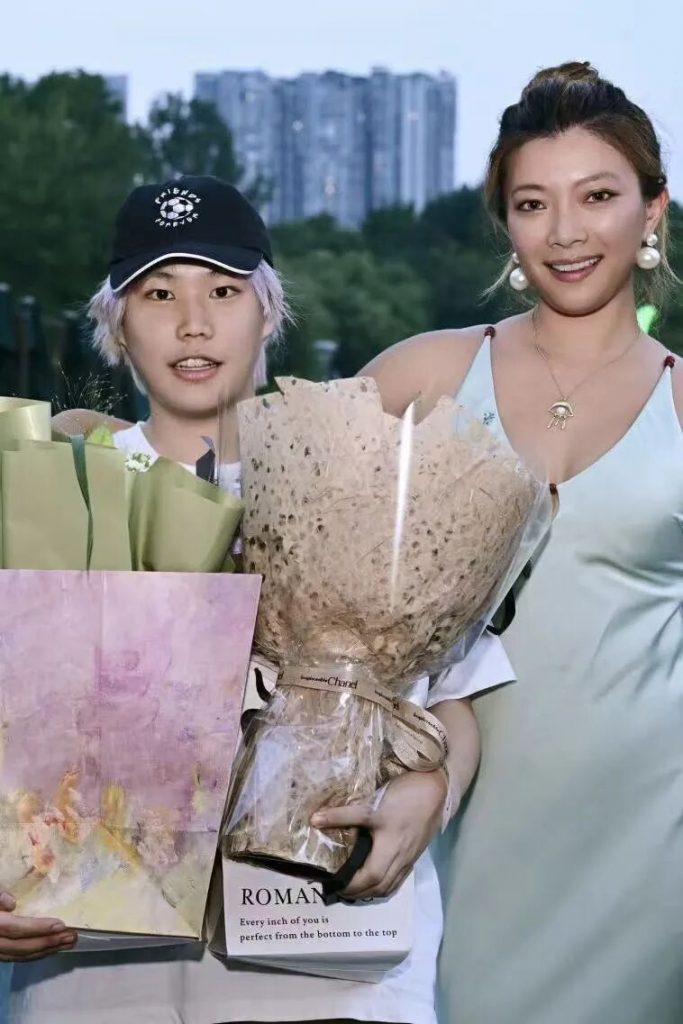
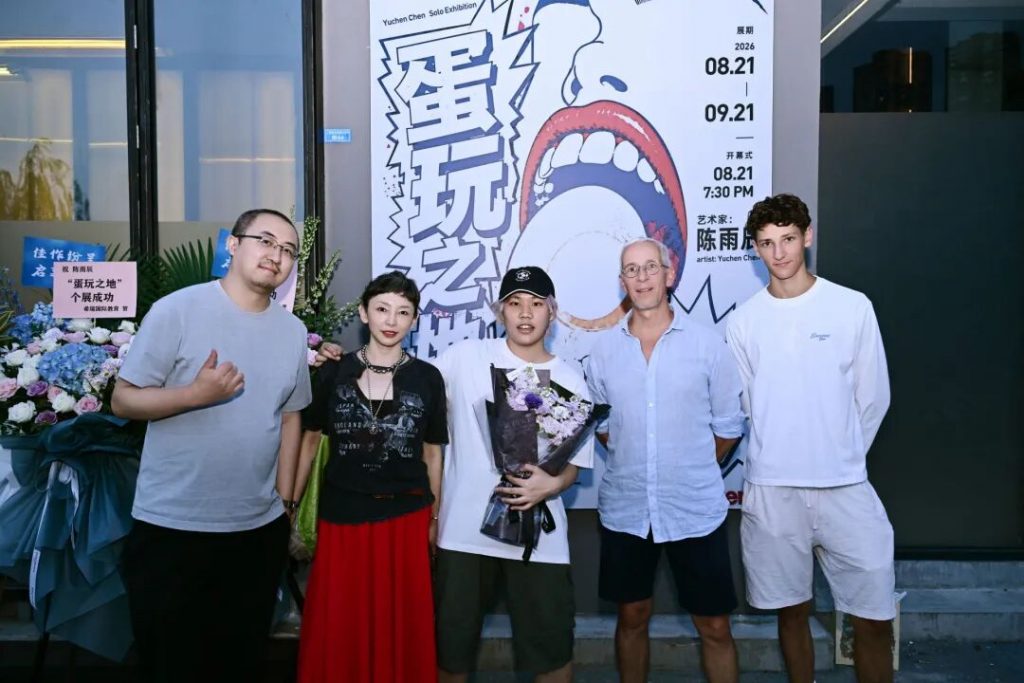
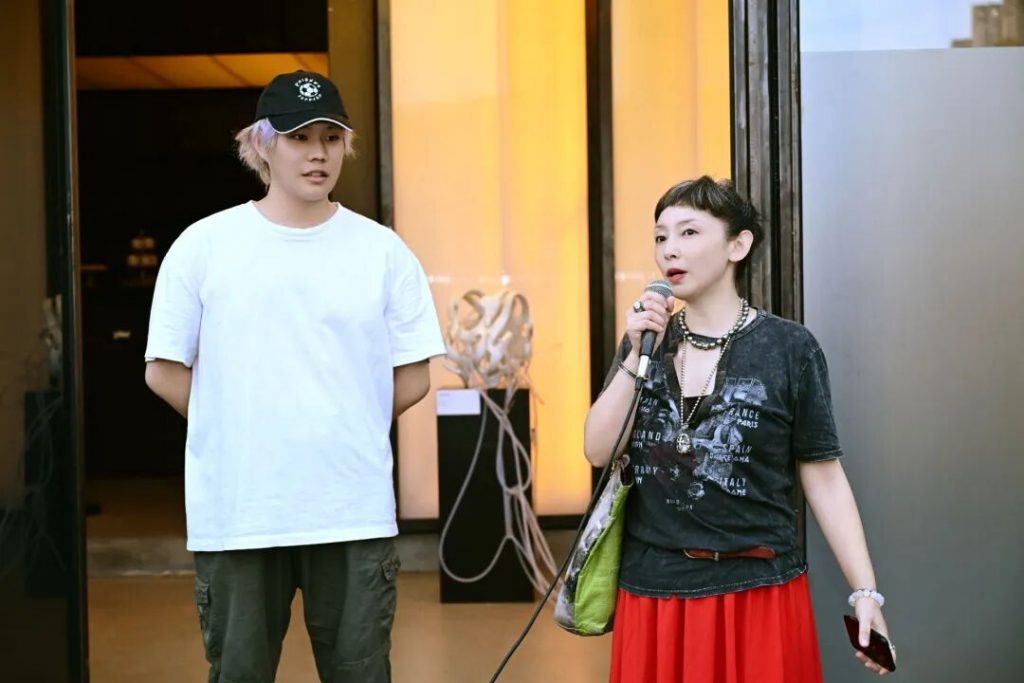
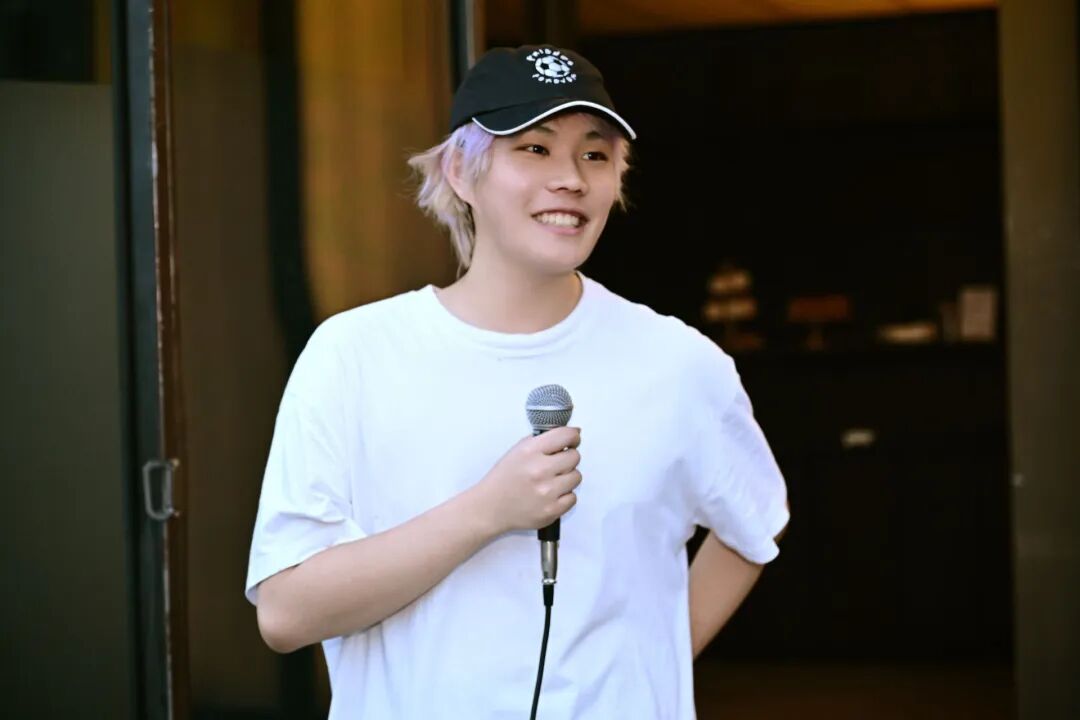
On August 20, 2026, one day before his solo exhibition How Egg Play opened at Donghu Park in Chengdu, artist Yuchen Chen, born in 2002, was still inside the gallery testing and adjusting his works.
When the camera started rolling, he did not begin by talking about his education or research.
Instead, he smiled and said:
“Hi, Backwall friends. I’m Yuchen Chen. You can also call me Goudan.”
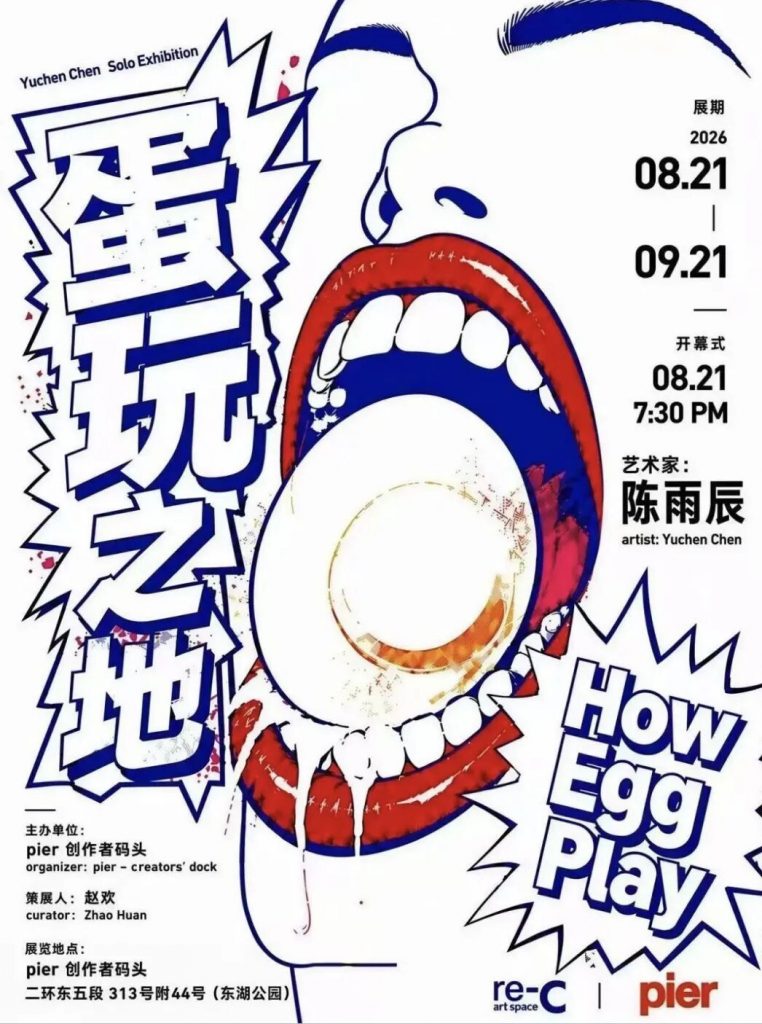
“Goudan,” literally meaning “dog egg,” was his childhood nickname. It is also where the exhibition title comes from.
“The ‘egg’ here really just refers to Goudan. Nothing deeper than that. The exhibition is exactly what the title says: a place where Goudan plays.”
It sounds casual, but the sentence captures something essential about Chen’s practice.
He does not feel the need to turn art into a heavy intellectual proposition, nor does he want viewers to enter an exhibition immediately looking for the “correct” interpretation.
For him, art can be formal and rigorous, but it can also be loose, funny, and spontaneous. It can begin as serious research, or simply with turning over a chocolate box, painting it another color, and seeing what happens.
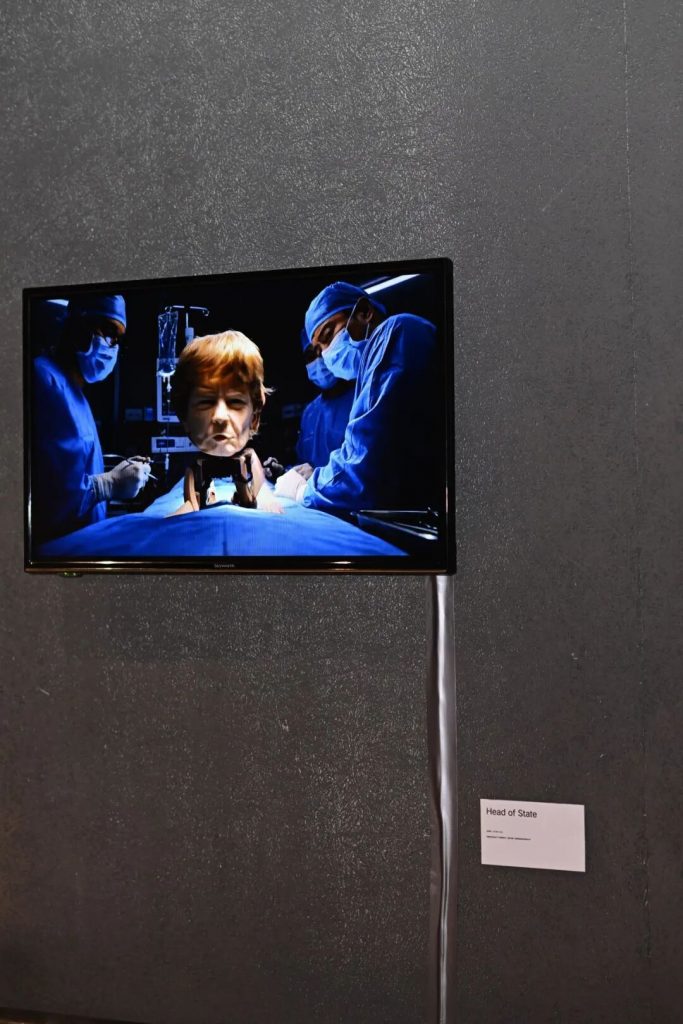
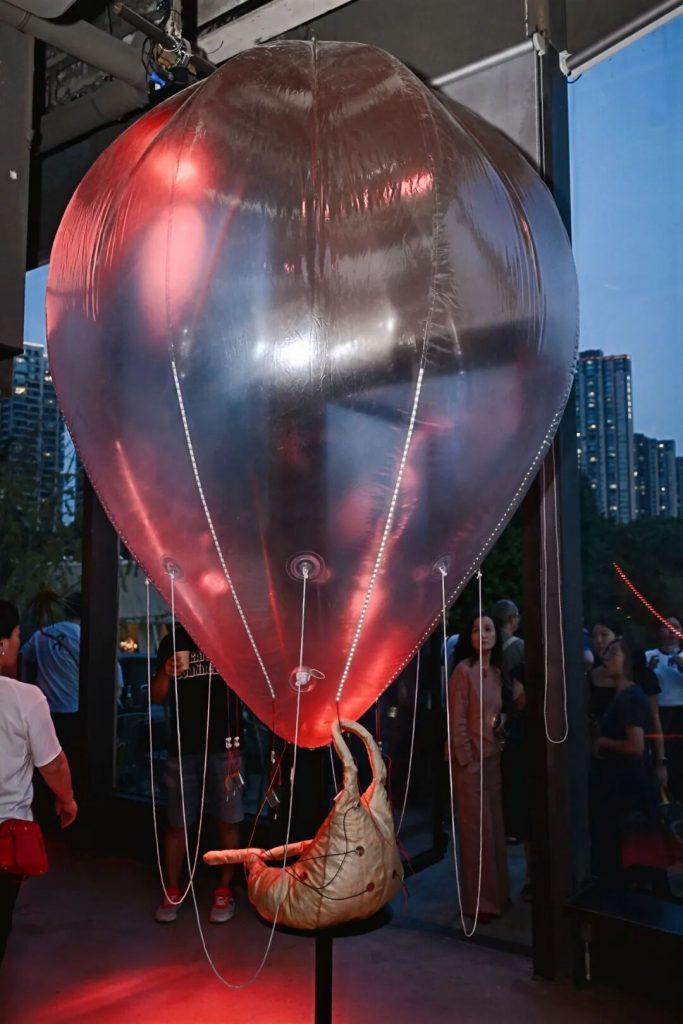
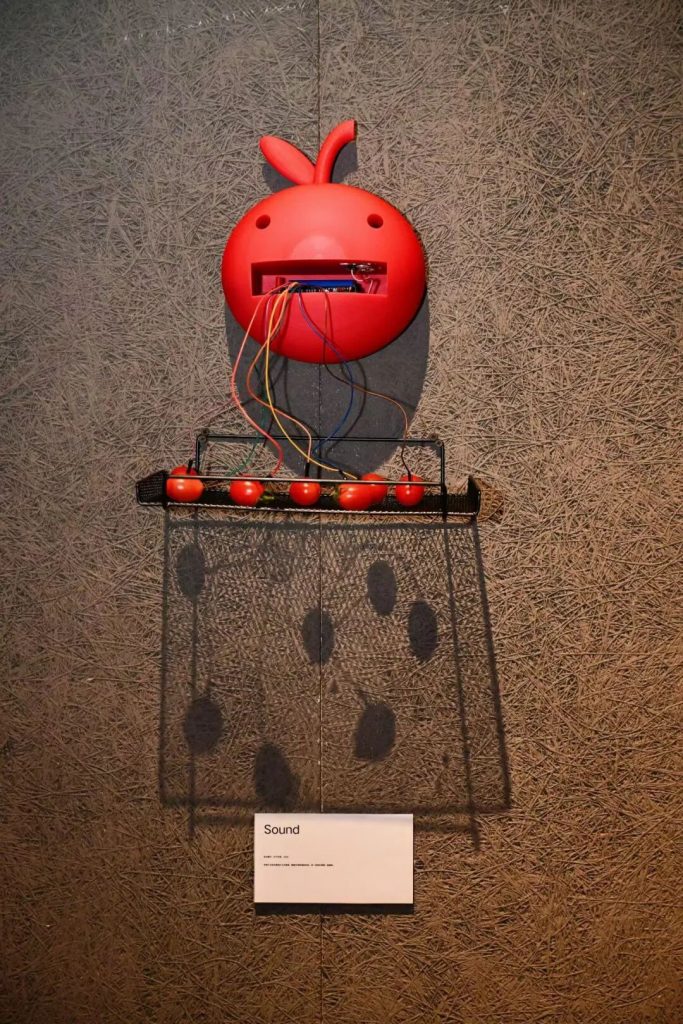
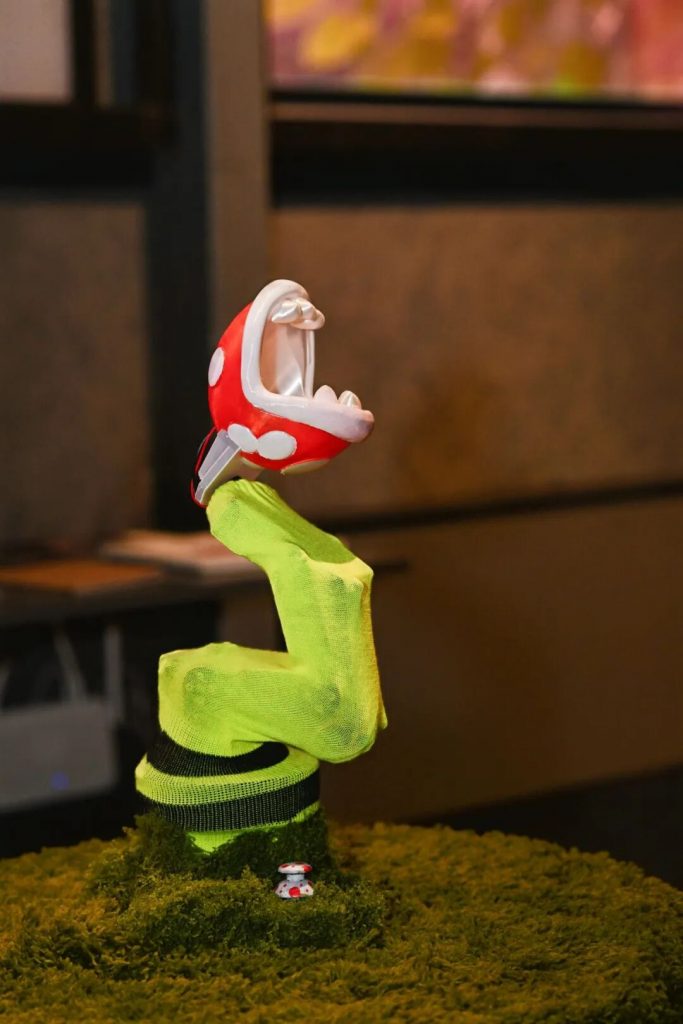
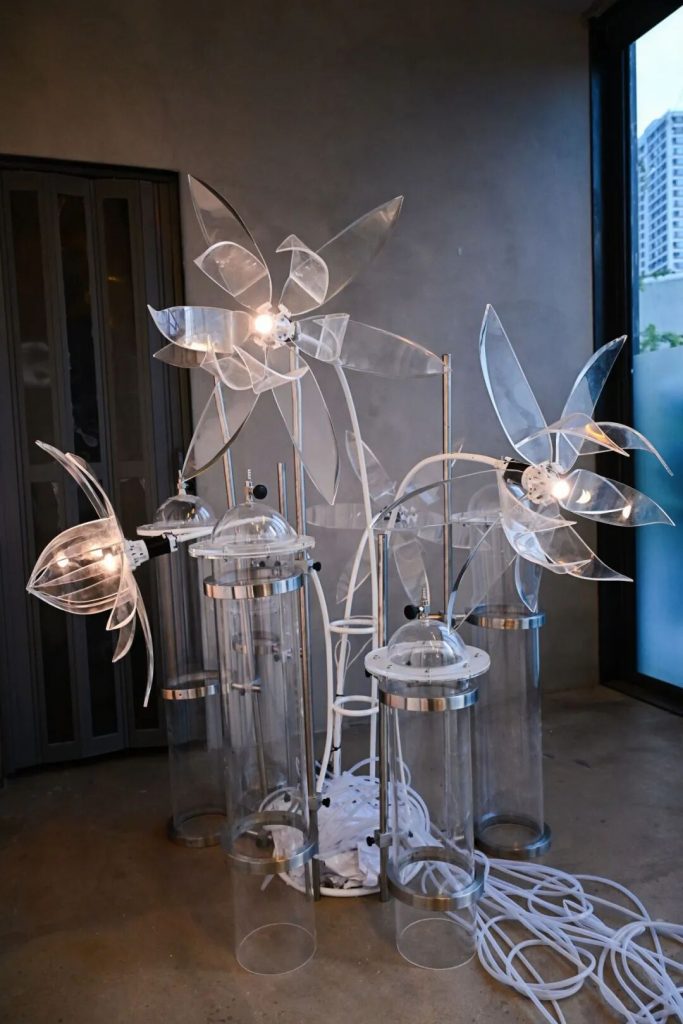
How Egg Play brings together works Chen created from high school through college and during his graduate school application period.
The works do not share one medium or a consistent visual style. But together, they return to a surprisingly simple question:
How can we use objects, materials, the body, and our senses to understand the familiar world again?
He Never Formally Studied Painting. He Just Kept Making Things.
Chen openly admits that he never received systematic training in traditional painting.
He did not begin with academic exercises in drawing, color, and figurative representation, nor does he see painting as the only gateway into art.
His early interest in art came instead from curiosity about ordinary things.
He might look at a chocolate box and wonder what would happen if one side were painted one color, the other side another, while the original packaging remained visible in between.
When he could not understand cellular structures in biology class, he simply drew them. Those drawings later became jewelry designs.
When he saw circuits and interactive modules online, he would buy similar parts and experiment on his own.
If they worked, they might eventually become part of an artwork. If they failed, he considered the time spent part of the process.
His practice rarely begins with a grand theme followed by materials chosen to illustrate it.
More often, it starts with curiosity and develops through making, testing, failure, and adjustment.
Looking back, Chen says:
“My work seems kind of all over the place. But each piece actually comes from something I happened to be interested in at a particular moment in my life.”
Within the history of contemporary art, this approach is hardly unfamiliar.
From Marcel Duchamp’s repositioning of everyday objects, to Fluxus and its embrace of play, chance, and action, to today’s interactive and participatory practices, art has long expanded beyond the quality of a finished image.
It can also be about reorganizing relationships between objects, bodies, functions, and habits of perception.
Chen is not consciously reenacting those historical ideas.
Instead, he seems to arrive at similar questions intuitively:
What happens when an object no longer performs its original function?
What if the viewer does not simply look, but hugs, touches, enters, or plays with the work?
RISD: Taking an Egg “Out of the Paper”
Chen studied Industrial Design at the Rhode Island School of Design.
Despite the name of the major, the education he received was not simply about producing commercially viable products.
Instead, RISD encouraged an experimental way of thinking.
In one class, students were asked to draw an egg on paper and then figure out how to “take the egg out of the paper.”
Some students cut the drawing out.
Some performed the gesture of pulling the egg away.
Others used adhesive material to transfer the graphite marks, allowing the egg to leave the original sheet in another form.
On another occasion, the instructor told students not to bring paper or pencils because they would only be watching a film.
Once they arrived, however, the instructor suddenly asked everyone to make a drawing using whatever they could find.
One of Chen’s classmates drew on a wooden panel with lemon juice, then heated the surface. As the lemon juice oxidized and darkened, the invisible marks slowly appeared.
The point of these exercises was not simply to produce the strangest solution.
They were designed to challenge assumptions about drawing, materials, and objects.
Is an egg on paper an image, an object, or an idea that can be redefined?
Does a drawing require paint and a brush?
Does design have to solve a practical problem?
At RISD, Chen gradually developed a working method based on contact with materials first.
He would explore what different materials might do together and allow ideas to emerge through making, critique, failure, and remaking.
For him, undergraduate study became a long process of experimentation.
Artists and designers constantly looked at one another’s work, challenged one another, and searched for their own ways of thinking through materials.
Making was not simply a way to express an idea already fully formed.
Objects themselves could help generate thought.
Between Art and Design, There Is No Need to Choose Too Quickly
Chen’s father also studied art before eventually moving into architecture-related work and devoting more of his energy to his career.
Watching his father’s relationship with art made Chen aware early on that a person can build a stable profession while gradually losing touch with something they once deeply loved.
Because of this, Chen never considered art a hobby separate from design.
Nor does he believe “designer” and “artist” need to be mutually exclusive identities.
Industrial design often asks whether a product is convenient, safe, durable, manufacturable, and useful.
An artist might keep going beyond those questions.
What if a smartphone could be eaten?
What if the phone itself were made from edible material?
How would that change our relationship to objects?
Such an idea might never become a commercial product, but it could open an entirely new way of thinking.
For Chen, art offers conceptual experimentation, while design provides technical structure.
Art expands the question.
Design can help certain ideas become physically possible.
Throughout modern design history, these fields have never been completely separate.
From the Bauhaus and its attempt to unite art, craft, and industrial production, to critical design, speculative design, and interactive design today, many practitioners are no longer interested only in making products “work better.”
They also use design to think about technology, bodies, ethics, and future ways of living.
Chen’s practice belongs to this open territory.
He is in no hurry to decide whether he is primarily an artist, designer, or curator.
Each identity gives him another way to understand the world.
“No matter whether I continue in design or move into another field, art will always remain an inseparable way for me to see things.”
From Shuaidian: Bringing Young Artists From Different Educational Backgrounds Together
Before becoming the subject of a solo exhibition, Chen had already taken part in several curatorial projects focused on emerging artists.
Shuaidian, curated by Huan Zhao and presented at the Xu Liaoyuan Museum, was the first major public exhibition in which Chen became deeply involved as a curator.
The project brought together young artists from RISD, the School of the Art Institute of Chicago, the Central Academy of Fine Arts, Tsinghua University Academy of Arts & Design, Sichuan Fine Arts Institute, and local art schools in Chengdu.
Chen had noticed a recurring problem.
Chinese students who study abroad often return home unable to connect the cultural and professional networks they developed overseas with China’s contemporary art scene.
At the same time, young artists educated in China have their own experiences and visual languages, but may have few direct opportunities to engage with international art schools.
Chen wanted the exhibition to create a two-way connection.
Young artists trained abroad could return to the Chinese art context, while emerging practices from China could enter a broader network of exchange.
Through the process, he began to notice how dramatically different backgrounds could shape artistic expression, even when artists were responding to similar subjects.
For example, artists addressing gender and women’s experiences in China and abroad often worked through very different materials, narratives, and visual languages.
The important question was not which approach looked more “international.”
It was how different social experiences shaped the way each artist understood the issue.
Curating, in this sense, became more than bringing works together in a room.
It became a way for different systems of knowledge and experience to look at one another.
Chen later helped organize an exhibition in Beijing exploring entertainment culture and play, as well as Recall, a collaborative project with the China Academy of Art.
That exhibition deliberately included classroom exercises, sketches, studies, and unfinished works.
Audiences are accustomed to seeing finished results.
For young artists, however, hesitation, experimentation, revision, and failure are often much closer to the reality of artistic development.
The Most Important Skill in Curating Is Making the Idea Work in Real Life
When asked what matters most in curating, Chen does not begin with theory, aesthetics, or writing.
His answer is simple:
“Coordination.”
An exhibition may involve academic ideas, but it also involves an enormous number of practical details.
How much mounting putty needs to be purchased?
How do media, operations, installation, opening schedules, and audience circulation fit together?
When exactly should a door open?
How many seconds should visitors wait before entering?
At what point does anticipation become irritation?
All of these details affect how someone experiences an exhibition.
There is something distinctly “industrial design” about Chen’s approach to curating.
An exhibition is not finished simply because artworks have been installed.
It is also an interactive system made up of time, bodies, information, lighting, sound, movement, and behavior.
How viewers enter, pause, touch, move, and leave becomes part of the work.
Chen also does not see a conflict between curating and art-making.
For some artists, an entire exhibition can itself function as an artwork.
Curating and making do not necessarily compete for attention.
They can strengthen one another.
Curating teaches him to see individual artworks within larger structures.
Making art, meanwhile, allows him to understand the uncertainty and difficulty artists experience when working directly with materials.
“Post-2000s” Is Not an Artistic Style
Chen was born in 2002.
It would be easy to describe How Egg Play simply as “the first solo exhibition of a Gen Z artist.”
But Chen does not feel strongly attached to generational labels.
“I feel like everyone is just a friend. Age isn’t really the issue.”
For him, artists of different generations are not naturally separated from one another.
What creates distance is often a lack of knowledge about the social conditions each generation lived through.
A younger viewer might struggle to understand Chinese art from the 1980s or 1990s without knowing its historical circumstances.
Once that context becomes visible, however, the work can still communicate across generations.
Art does not change neatly from “post-70s” to “post-80s,” “post-90s,” and “post-2000s” styles.
Generational labels can help describe social change, but they can also flatten the complicated experiences of individuals.
What matters more than age is whether an artist can transform personal experience into a language that others are able to feel.
From Harvard Media Studies: Can the Senses Become a Language?
After completing his undergraduate degree, Chen received graduate admissions in several directions, including fine art and design research.
He spent three or four months deciding what to do.
Eventually, he chose Harvard University’s Master in Design Studies program, focusing on media.
What attracted him was not simply the name of the university, but the program’s approach to media and sensory experience.
How do humans perceive the world?
Does language have to consist of words and sounds?
Can vibration, frequency, touch, bodily sensation, or relationships between humans and other living beings become media for transmitting information?
A visually impaired person, for example, may understand space through sound, and may also interpret the environment through physical vibration.
The relationship between a community’s beliefs, customs, and animals might also form a particular system for understanding the world.
For Chen, these questions belong equally to art and design.
Art expands imagination.
Design provides technical tools.
Art allows questions that do not need to be immediately practical.
Design studies how people actually interact with objects, environments, and systems.
This is also where the idea of “play” in How Egg Play becomes more significant.
Play is not an escape from thinking.
It is a method of knowing.
Children understand the world through touching, taking things apart, imitating, and playing.
As adults, we increasingly rely on language, categories, and established knowledge.
In the process, we may gradually lose the ability to encounter things directly through our senses.
Chen wants his work to reactivate that capacity.
Before explaining, get closer.
Before judging, feel.
Before asking what something means, first see what else it might become.
AI Can Produce the Result. It Cannot Replace the Process of Tinkering.
Chen is not opposed to artificial intelligence.
As someone who grew up during rapid technological change, he is willing to understand and use AI.
He also recognizes that generative technologies are reshaping illustration, modeling, rendering, and design.
Some professional skills once built around specialized software may eventually be partially automated.
But this has not made him abandon hand-making.
For Chen, woodworking, ceramics, circuitry, installation, and material experimentation matter not only because of the object produced at the end.
Their value also comes from resistance, error, and accident.
AI can quickly generate a visual answer.
Physical making forces the artist to deal with material reality.
Wood cracks.
Clay deforms.
Circuits fail.
Weight and scale change the original idea.
These moments when materials refuse to cooperate can push the work in unexpected directions.
Technology can make processes more efficient.
But art does not always need to arrive at the result as quickly as possible.
For Chen, time that appears “wasted” can also be part of learning how the world works.
Half Wandering Around, Half Messing Around
Chen rarely watches short-form videos and often does not understand the internet memes his friends talk about.
He jokes that he seems to live in a “second-tier world.”
But his life is far from isolated.
Outside, he likes walking without a destination, hanging out in parks, and riding his bicycle.
Sometimes, when he has nothing else to do at night, he rides all the way from southern Chengdu to Sansheng Township and beyond.
At home, he spends his time woodworking, making ceramics, experimenting with circuits, and testing different materials.
He describes his life in two parts:
“Half the time I’m outside wandering around. The other half I’m at home messing around with things.”
Wandering reconnects the body with the city.
Messing around reconnects the hand with objects.
Neither activity seems especially goal-oriented.
Yet together they form the most honest foundation of Chen’s artistic practice.
We live in a time obsessed with efficiency.
Every action is expected to produce a result.
Every form of learning should become a skill.
Every artist is expected to quickly develop a recognizable style.
Chen’s practice preserves something deliberately “unproductive.”
He allows himself to draw cells because he does not understand biology class.
He studies frequencies simply because vibration interests him.
He buys an interactive module because he wants to take it apart.
And he allows some experiments to lead nowhere at all.
This kind of play is not a lack of seriousness.
It is a willingness to temporarily give up control over the outcome and allow the world itself to offer another direction.
How Egg Play: A First Solo Exhibition and a Moment of Looking Back
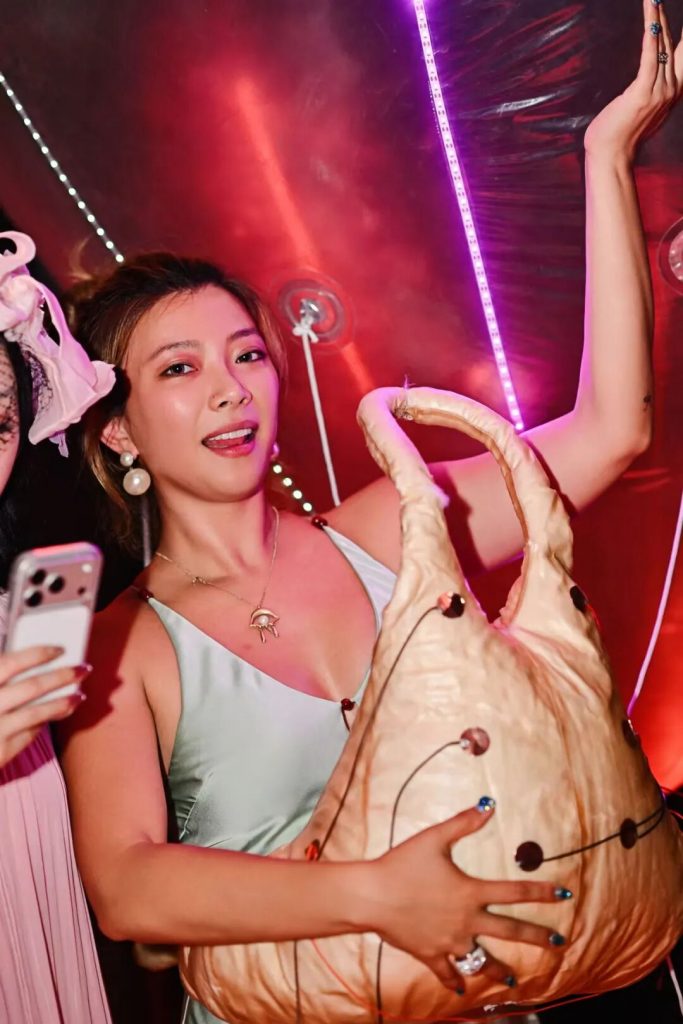
How Egg Play is Chen’s first solo exhibition.
It does not attempt to define a mature visual style too early, nor does it reduce his complicated educational background to a single label.
Instead, the exhibition feels like a temporary pause for reflection.
Works from high school, undergraduate study, and graduate applications are placed together so that Chen can look again at what connects these seemingly scattered experiments.
What emerges is not a commitment to one material or one fixed subject.
What connects the works is something more personal:
the things he was genuinely curious about, deeply interested in, and excited to play with at different moments of his life.
“If I had to summarize the theme of my work,” Chen says, “it would probably be my way of understanding the world—and whatever I happened to love and want to play with at that moment.”
The “egg” that grew out of his childhood nickname is therefore more than a joke.
It is something like an undefined starting point.
A seed that has not yet hatched and still contains multiple possibilities.
Inside How Egg Play, that egg can be enlarged, dismantled, rearranged, or temporarily freed from standard answers.
For Chen, a first solo exhibition is not a declaration that a mature style has been completed.
It is an opportunity for earlier experiments to encounter one another again.
For viewers, the exhibition asks a similarly simple question:
If we stop immediately asking what an artwork is “for” or what it “means,” can we still approach it the way we once approached the world for the first time?
Can we touch it?
Stay with it?
Play with it for a while?
Perhaps this is where art begins again.
Exhibition Information
Exhibition
How Egg Play
Artist
Yuchen Chen
Curator
Huan Zhao
Opening
August 21, 2026, 7:30 PM
Exhibition Dates
August 21–September 21, 2026
Venue
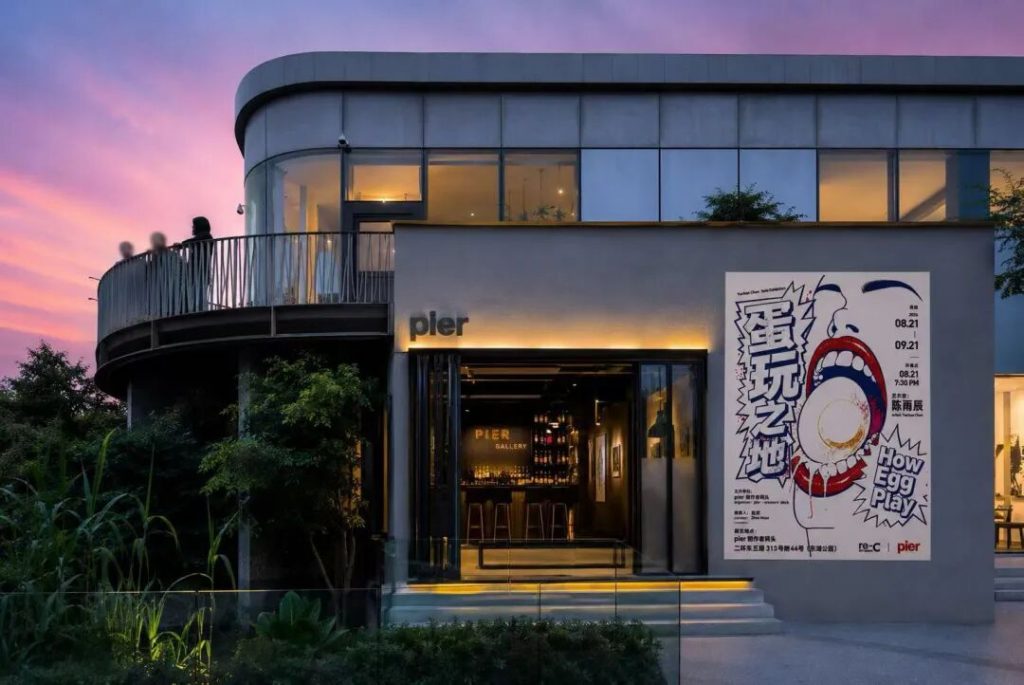
pier Creator Wharf
Address
No. 44, 313 East 5th Section, Second Ring Road, Chengdu
Inside Donghu Park, next to Yushang Hemei Art Museum
Organizer & Collaboration
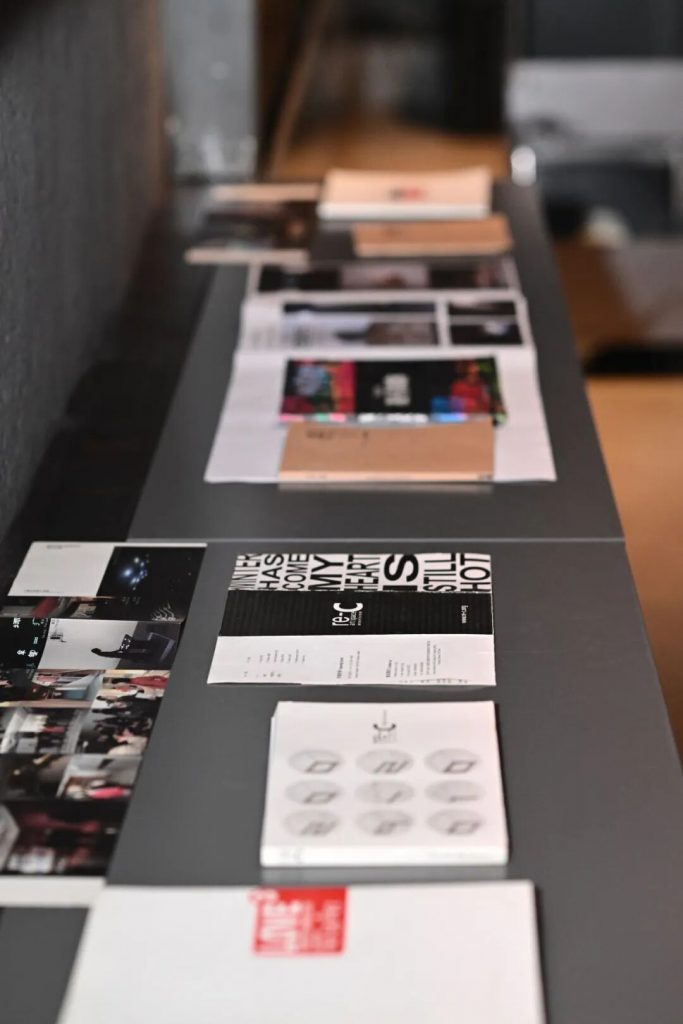
pier Creator Wharf × re-C art space
This exhibition marks the first project in the new long-term collaboration between re-C art space and pier Creator Wharf.
re-C art space will officially establish its presence at pier and begin operating from the site. Moving forward, the two organizations will collaborate on exhibitions, artistic production, public programs, and interdisciplinary projects, creating an ongoing platform for emerging artists in Chengdu and experimental practices across different media.
About the Artist
Yuchen Chen, born in 2002, is an artist, designer, and curator.
He received his undergraduate degree in Industrial Design from the Rhode Island School of Design (RISD) and is currently pursuing a Master in Design Studies (MDes) at Harvard University, with a focus on media.
His research explores how human sensory experience can function as a medium for transmitting information, and how interactive sensory systems might develop into a new form of “human language.”
Working across installation, objects, moving image, and interactive media, Chen investigates how perception, media, and meaning are constructed—and how they shift through looking, touching, sensing, and participation.
Alongside his artistic practice, Chen is also actively involved in organizing and curating projects for emerging artists, seeking to build connections between international art education networks and contemporary art practices in China.