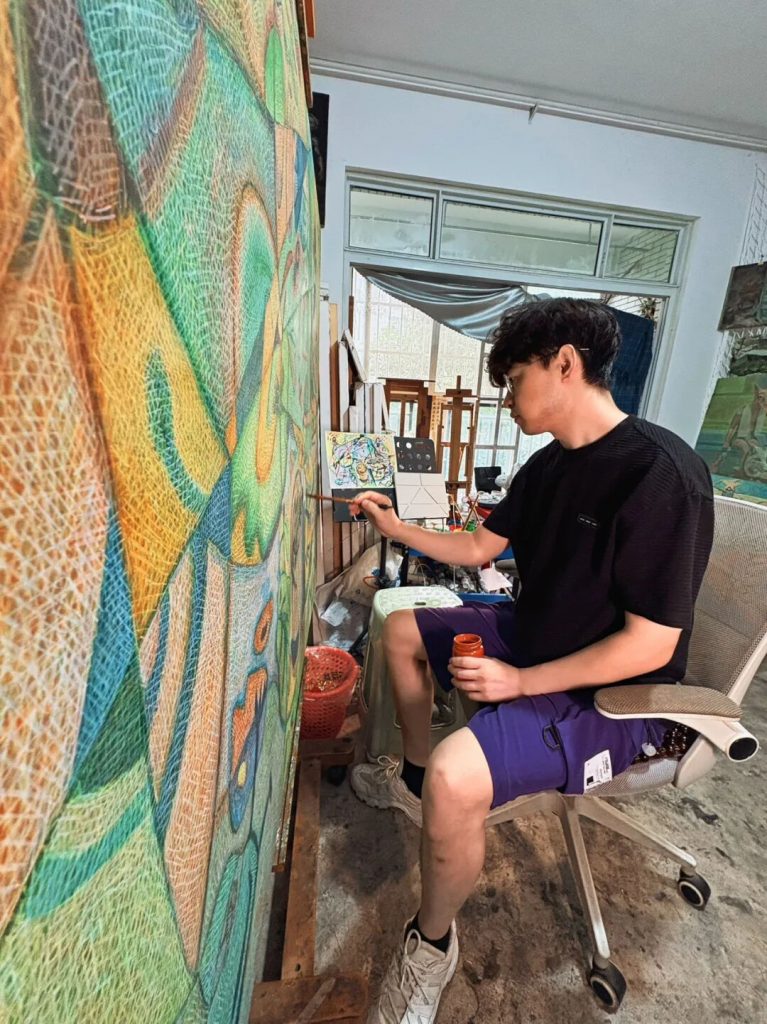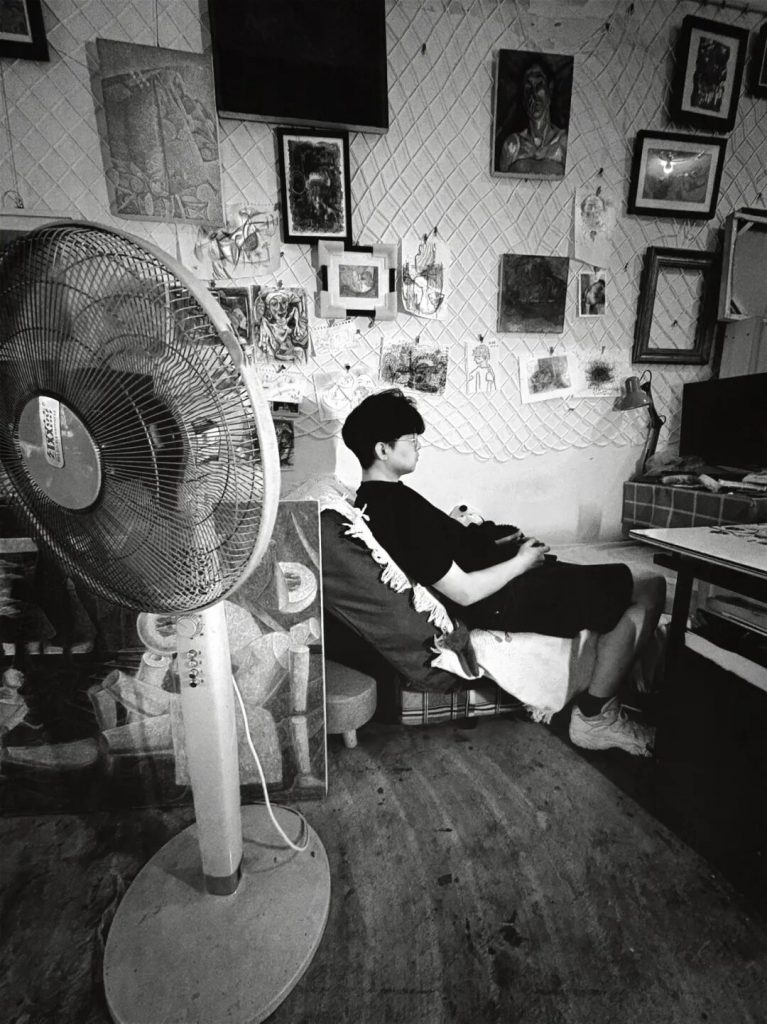
On the afternoon of August 6, 2026, in Wanhe Residential Community near Siyicun Village, Xindu, Chengdu.
There are no traditional art institutions here, nor the busy atmosphere of commercial galleries in the city center.
The studios of young artists are hidden among ordinary residential neighborhoods, where life and artistic creation exist side by side without clear boundaries.
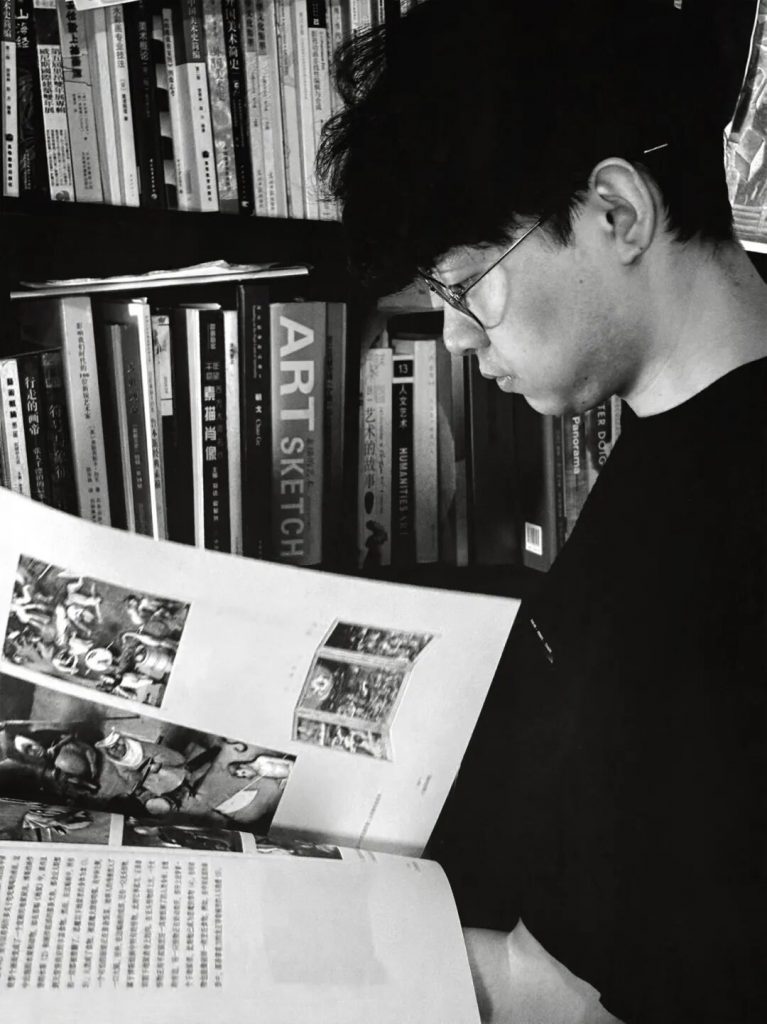
Painting, reading, thinking, and the endless hours spent facing the canvas together create a different way of living as an artist.
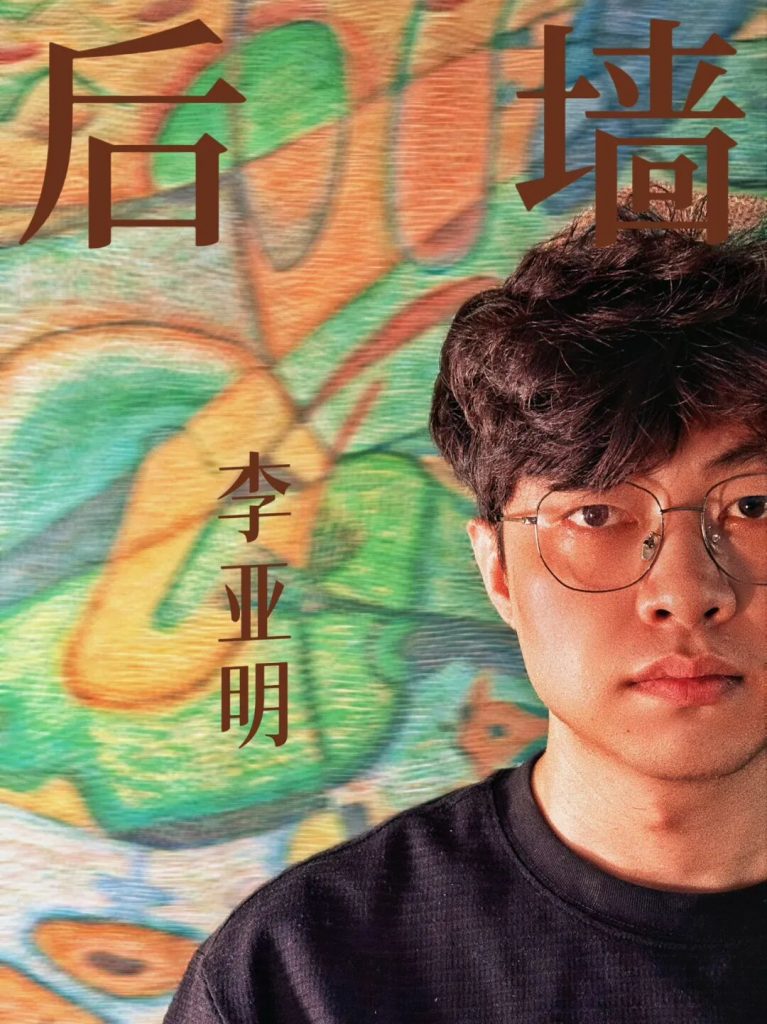
This is where I met young artist Li Yaming.
Unlike many emerging artists who are eager to define themselves through a recognizable label, Li Yaming appears to be patiently searching for his own visual order through years of painting practice.
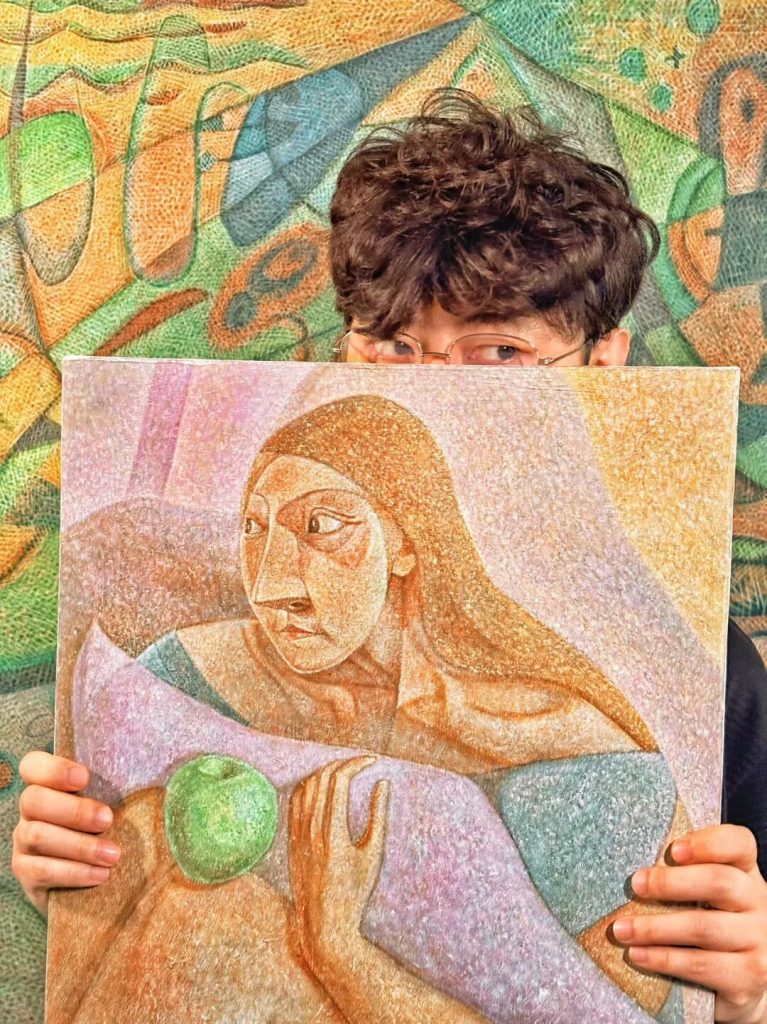
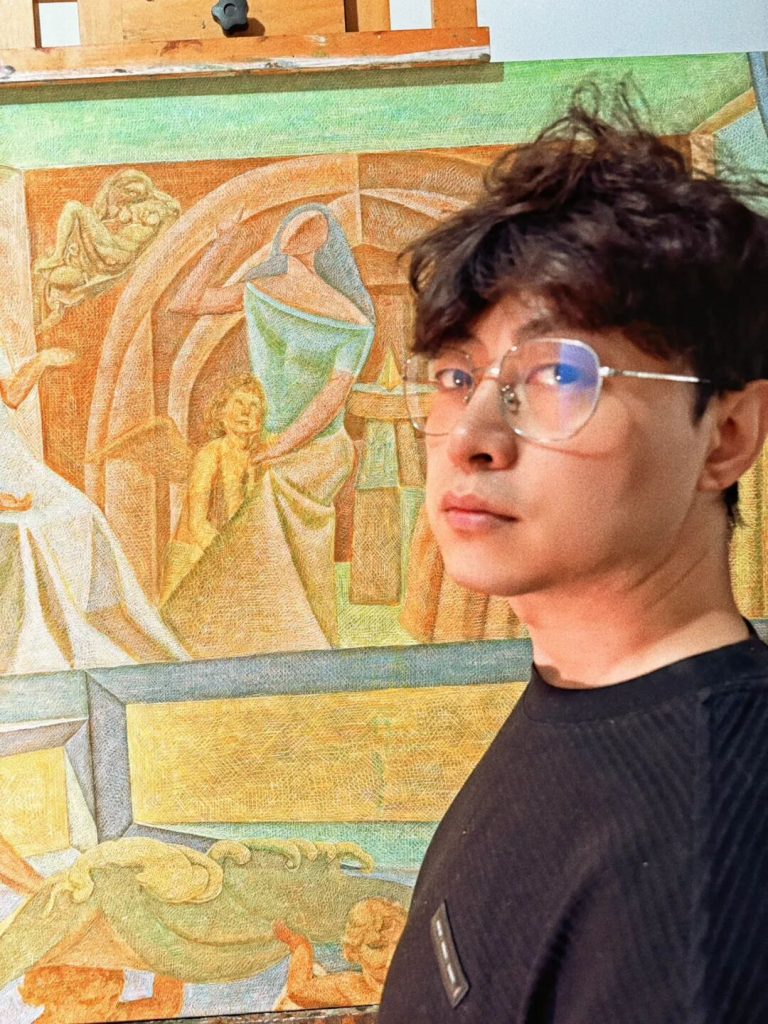
His works are filled with gentle colors, dreamlike spaces, and figures that exist somewhere between reality and imagination.
Yet beneath these seemingly quiet and poetic images lies a deeper exploration of loneliness, self-expression, and the relationship between individuals and the world.
From Hebei to Chengdu: A Persistent Choice to Paint
Li Yaming was born in Hebei in 1992.
His connection with painting did not appear suddenly.
It gradually developed during his childhood.
“When I was young, adults often told me that I was good at drawing.”
That encouragement became his first realization that painting could become a way to connect with the world.
During middle school, he began seriously studying painting.
Later, he entered an art vocational school in high school.
Like many students from northern China preparing for art entrance examinations, he once dreamed of entering one of China’s top art academies.
To achieve that goal, he spent several years retaking entrance exams.
It was a period filled with uncertainty.
“At that time, I was simply determined. I wanted to move toward the highest possibility.”
Looking back today, that experience was not only about passing an exam.
It became an important form of training for his artistic journey.
Painting is not a path that brings immediate rewards.
It requires long-term dedication, the ability to face loneliness, and the willingness to repeatedly encounter failure.
Those experiences eventually became part of the way he approaches art.
Beyond the “Academy Dream”: Rediscovering Painting Itself
After entering the oil painting program at Tianjin Normal University, Li Yaming began to reconsider what painting truly meant.
During high school, he had imagined art academies as places representing a better future, greater opportunities, and the possibility of becoming an artist.
But after entering university, he gradually discovered that the most important question was not:
Where do you study?
but:
Why do you paint?
During his university years, he began to understand that painting was not a symbol of identity.
It was a lifelong practice.
Later, he came to Chengdu and studied with artist He Duoling through graduate-level research at Sichuan Conservatory of Music.
This experience became a significant turning point in his artistic development.
He Duoling’s understanding of painting language, composition, and the relationship between artistic practice and everyday life deeply influenced him.
However, Li Yaming did not simply imitate his teacher’s visual style.
“He influenced me greatly, but his work is too profound. With my current understanding, it would be impossible to reach that level. So eventually, I had to find my own direction.”
This is a question every young artist must face:
How do you inherit tradition while also moving beyond it?
True learning is not about copying.
It is about absorbing, transforming, and rebuilding your own language.
“Silent Series”: An Inner Monologue of a Young Artist
One of Li Yaming’s important bodies of work is the “Silent Series.”
During our conversation, he described it this way:
“I feel like it is similar to Munch’s The Scream, but my work is a kind of silent scream.”
This description reveals the emotional foundation of his practice.
His paintings often include isolated figures, enclosed spaces, and symbolic images.
These figures are not simply telling a specific story.
Instead, they represent a psychological condition.
They exist in the world, yet they seem unable to fully enter it.
They want to communicate, yet remain silent.
This contradiction forms an essential emotional structure within Li Yaming’s paintings.
In contemporary art, personal experience is not merely private storytelling.
An artist’s loneliness, confusion, and search often reflect broader experiences shared by a generation.
For young creators today, important questions remain:
How can we preserve individuality in an age of overwhelming information?
How can we develop a truly personal voice?
Between Classical Painting and the Future: Creating a Personal Dream World
Looking closely at Li Yaming’s paintings, one discovers a unique visual relationship.
His works contain both the structural awareness of classical painting and influences from contemporary visual culture.
The Renaissance study of space, figures, and form;
Surrealism’s exploration of imagined worlds;
The visual symbols of video games and animation;
All of these elements enter his creative language.
“I want to learn from the very beginning.”
Rather than immediately entering the formal games of contemporary art, he prefers to return to the foundation of painting itself.
For Li Yaming, modernity does not mean abandoning tradition.
True contemporaneity comes from understanding history and finding a personal way to respond to it.
Angels frequently appear in his paintings.
“Angels represent freedom. I want myself to be like an angel, flying inside the painting.”
This sentence can be understood as a metaphor for his entire practice.
Painting becomes a space of freedom beyond everyday reality.
The Spiritual Strength Behind Gentle Colors
One of the first things viewers notice in Li Yaming’s paintings is his use of color.
Blue-green tones, pink hues, and soft combinations create a dreamlike atmosphere.
But these gentle colors do not represent simplicity or comfort.
Instead, they carry complex emotions.
Tenderness and loneliness exist together.
Fantasy and reality exist together.
Fragility and persistence exist together.
Li Yaming mentions that his color language may have been influenced by video games, animation, and his personal environment.
But ultimately, these influences enter his own experience and become something transformed.
An artist’s style is rarely something deliberately designed.
More often, it slowly emerges through years of continuous creation.
“Later I realized that perhaps the work chose me, rather than me choosing the work.”
This reflects a moment when an artist begins to understand the deeper relationship between himself and his practice.
Chengdu and Siyicun: Another Living Space for Young Artists
After living in Chengdu for six years, Li Yaming has gradually adapted to the rhythm of the city.
Compared with his previous environment, Chengdu offers young artists a more open and relaxed atmosphere.
Especially in areas like Siyicun Village in Xindu, more and more young creators are beginning to establish their studios and creative spaces.
They may not have large studios.
They may not yet have a mature market.
But they have time.
They have the possibility of continuing to create.
This emerging artistic ecosystem is not a traditional art district.
Instead, it is a more everyday, community-based art environment.
Artists work and live within ordinary urban spaces, creating new relationships with the city.
Artists as Long-Term Builders
At the end of our conversation, we discussed the professional reality of being an artist.
Li Yaming believes that becoming an artist shares similarities with entrepreneurship:
“It is about starting from something small and gradually creating greater possibilities.”
Artists must face the market.
They must also face reality.
But focusing too much on the market can cause artists to lose sight of creation itself.
He says:
“Now I think more about how to improve my work, rather than only thinking about how to sell it.”
Perhaps this represents an important stage in the growth of young artists.
From proving oneself to understanding oneself.
From seeking recognition to developing a language.
From waiting for opportunities to creating value.
Conclusion: Painting as a Long Journey of Self-Discovery
If artists in the past often needed to enter certain cultural centers to gain recognition,
today more and more young artists are building their own creative spaces within their everyday lives.
Li Yaming is one example.
Rather than rushing to create a recognizable label, he continues exploring within painting itself:
Where is the boundary between reality and imagination?
How can personal experience become artistic language?
How can individual loneliness become a way of communicating with the world?
These questions may not have immediate answers.
But the value of art exists precisely in the continuous search for them.
Near Siyicun Village in Xindu, Chengdu, a young artist continues to face the canvas every day.
Continuing to paint.
Continuing to search for a world that belongs to him.
Artist Profile
Li Yaming (b.1992, Hebei, China)
Li Yaming is a painter based in Chengdu. His practice explores the relationship between personal memory, imagination, and contemporary life through oil painting. Drawing from classical painting traditions, contemporary visual culture, animation, and personal experience, he creates dreamlike images that examine loneliness, identity, and the search for individual expression.