In recent years, more and more young artists have begun searching for their own creative spaces on the edges of cities.
Unlike traditional art centers, these places are not defined by dense cultural institutions or established commercial systems. Instead, they offer something different — a more independent environment where artists can return to the studio itself, back to the place where ideas, experiments, and works are born.
For many emerging artists, a studio is not simply a place to make artworks. It is also a space where they rebuild their relationship with themselves and with the world.
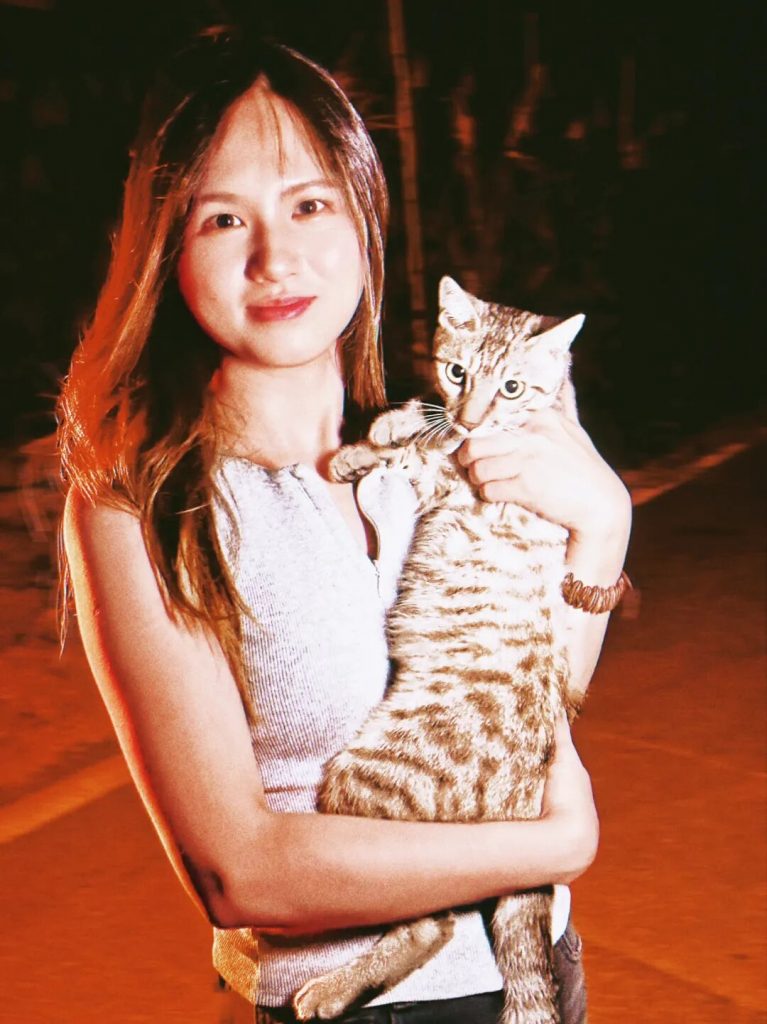
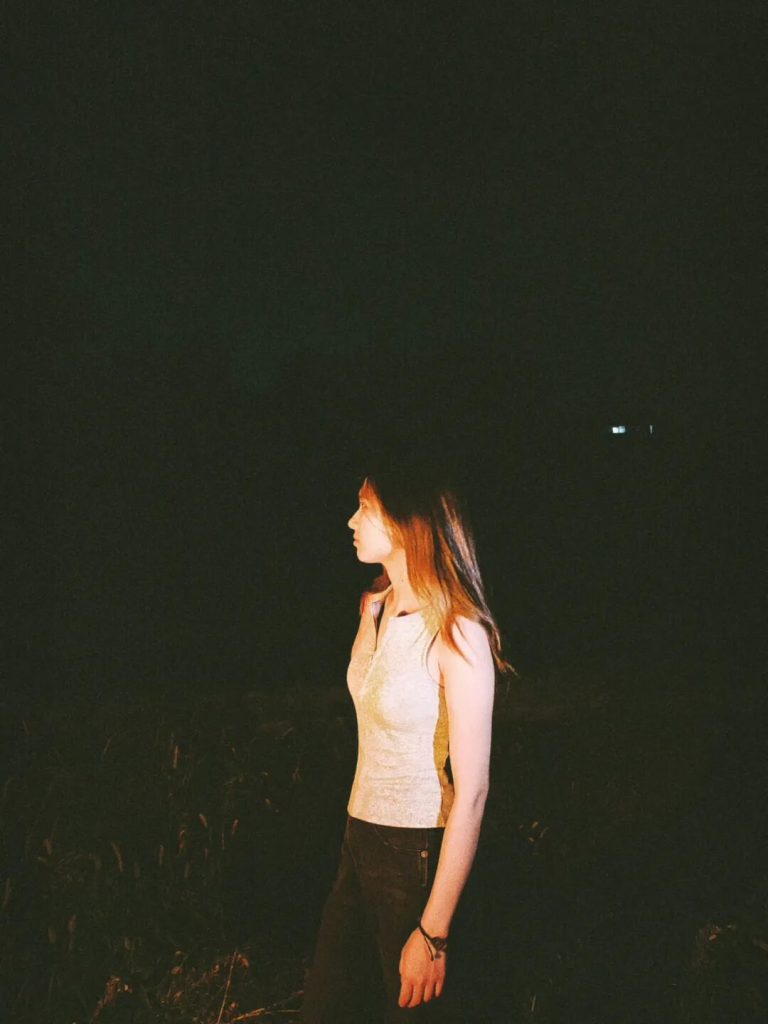
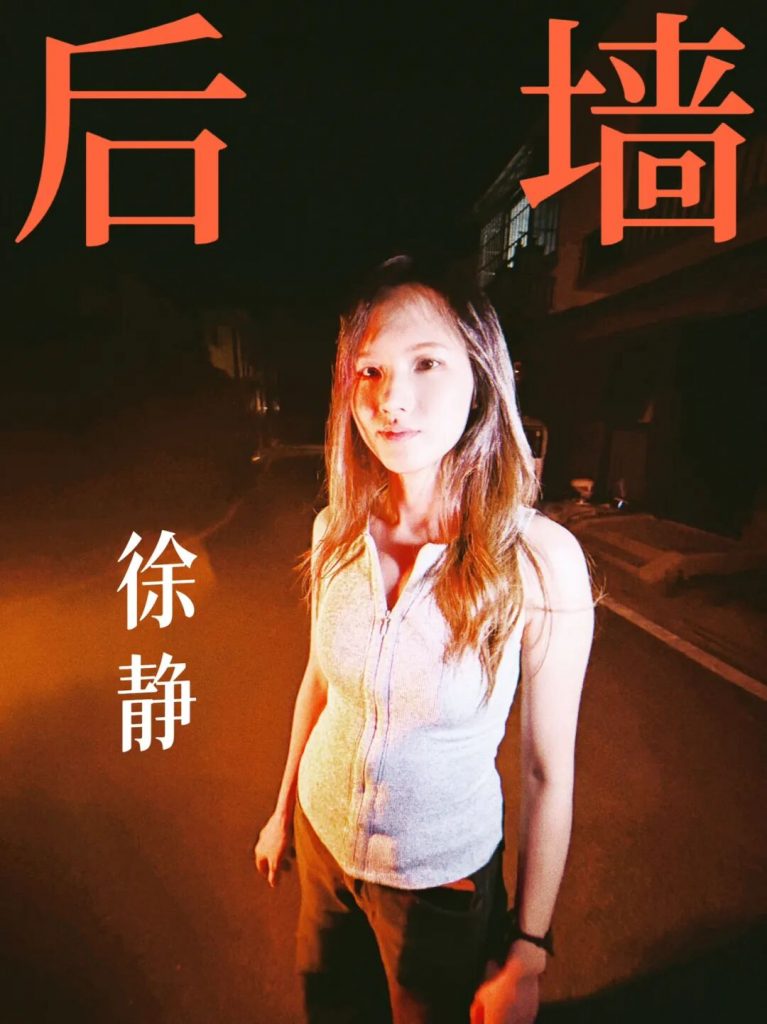
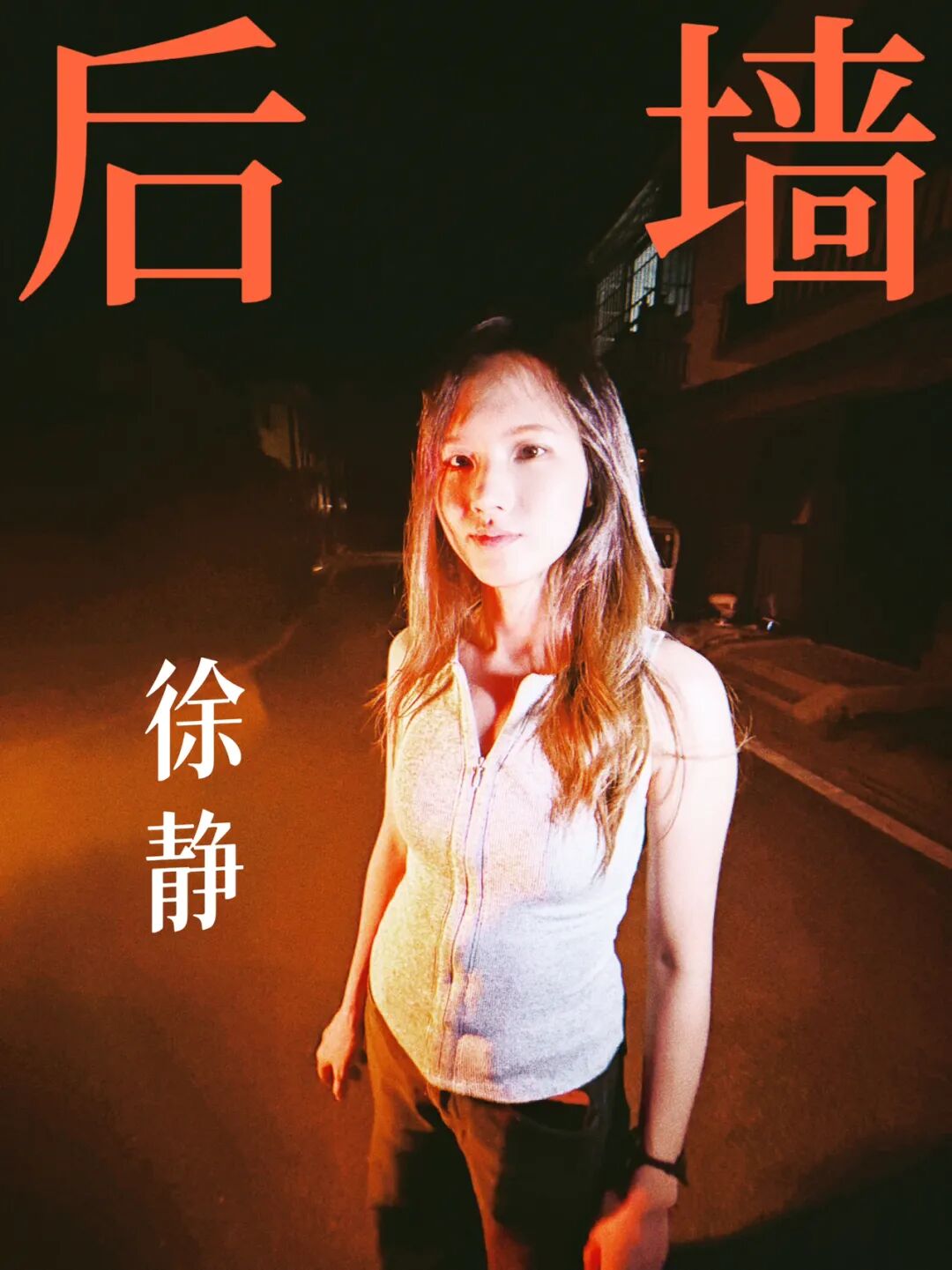
On the evening of August 5, 2026, Backwall visited Siyicun Village in Xindu, Chengdu, and entered the studio of young artist Xu Jing, who has been working and living nearby.
At this moment, she is developing her own artistic research and creative practice.
Unlike many young artists who decide early on that they want to become professional artists, Xu Jing did not begin with a clear destination.
Even her decision to study sculpture was partly accidental.
Yet through years of working with materials, the human body, and personal experiences, she gradually discovered a creative path that belongs to her own.
Beginning with Sculpture: Learning to Understand Herself
Xu Jing was born in Chongqing in 1999.
In 2019, she entered the sculpture department of Chengdu Academy of Fine Arts (formerly Sichuan Conservatory of Music Chengdu Academy of Fine Arts).
Sculpture education requires patience.
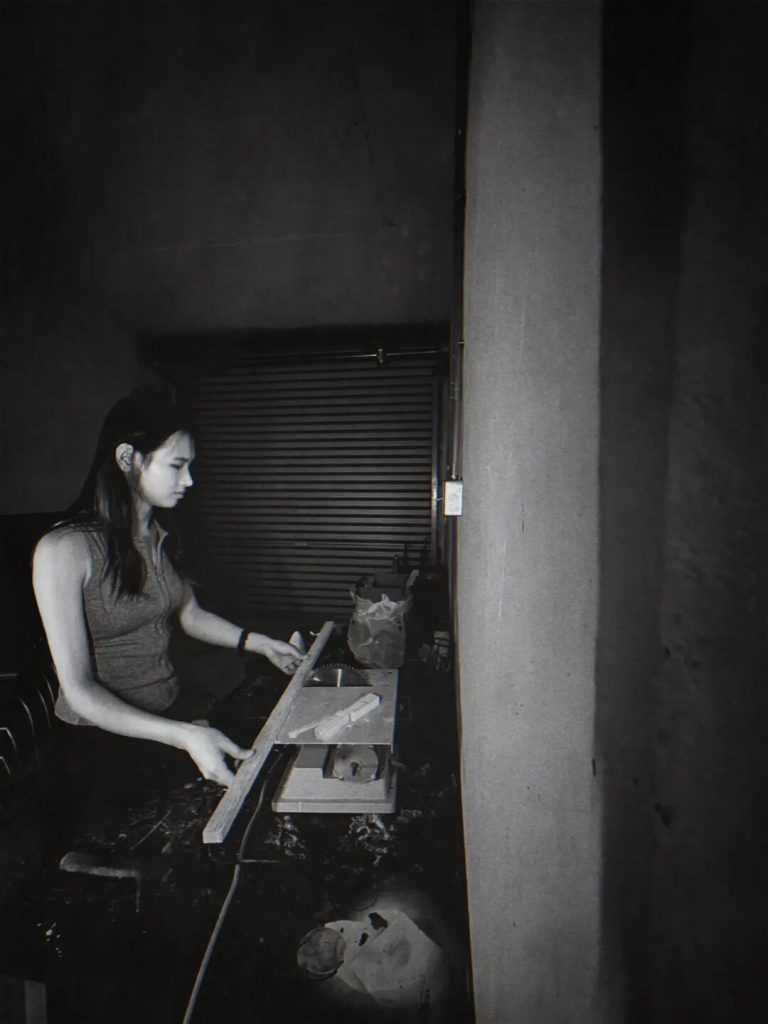
Clay figure studies, material experiments, and the physical process of making demand that artists develop the ability to face difficulty over long periods of time.
“When I first started making sculptures, it was actually quite painful,” she recalls.
The biggest challenge was the distance between what she imagined and what her hands could create.
She knew what she wanted to express, but she did not yet have the ability to fully realize those ideas.
Years later, however, she began to understand the value of that experience.
Sculpture training gave her more than technical skills. It taught her how to continue moving forward when facing uncertainty and frustration.
“It really shaped my mindset,” she says.
For young artists, what remains from art education is often not a fixed visual style, but a way of confronting the unknown.
From Material Practice to Personal Experience
If her early sculpture training focused primarily on materials, Xu Jing gradually began turning her attention inward.
She started exploring family relationships, childhood experiences, personal memories, and the ways these experiences shape a person’s identity and understanding of the world.
Her works do not simply reproduce the past.
Instead, they revisit and reinterpret it.
For Xu Jing, personal history never truly disappears. It continues to exist within everyday life.
The way people react to situations, their emotions, and their judgments are often connected to experiences from the past.
For her, artistic creation has become a process of self-understanding.
“You can begin from a very personal perspective, but eventually you need to look at it objectively.”
This transformation has become an important part of her practice.
She does not want her artworks to become only private emotional expressions.
Instead, she hopes to discover something within personal experiences that can connect with others.
How Family Memories Become an Artistic Language
Xu Jing’s current practice is deeply connected to family relationships.
However, she is not interested in traditional family narratives.
What she explores is a deeper question:
How does a person develop their identity within a family structure?
Different generations often grow up in completely different environments, creating different values and perspectives. Within the same family, these differences can create tension, conflict, and misunderstanding.
Behind these small personal experiences are larger social transformations.
Xu Jing speaks about her own experience as a “left-behind child” in China.
For her, this is not simply an individual memory.
It is connected to broader social changes — China’s rapid urbanization, population movement, and the transformation of family structures.
The changes of an era eventually enter ordinary families.
And they also enter the work of a young artist.
A Young Artist Beyond the Limits of Medium
Xu Jing’s practice does not remain within the traditional boundaries of sculpture.
Moving from sculpture toward installation, she continues searching for forms that better carry her ideas.
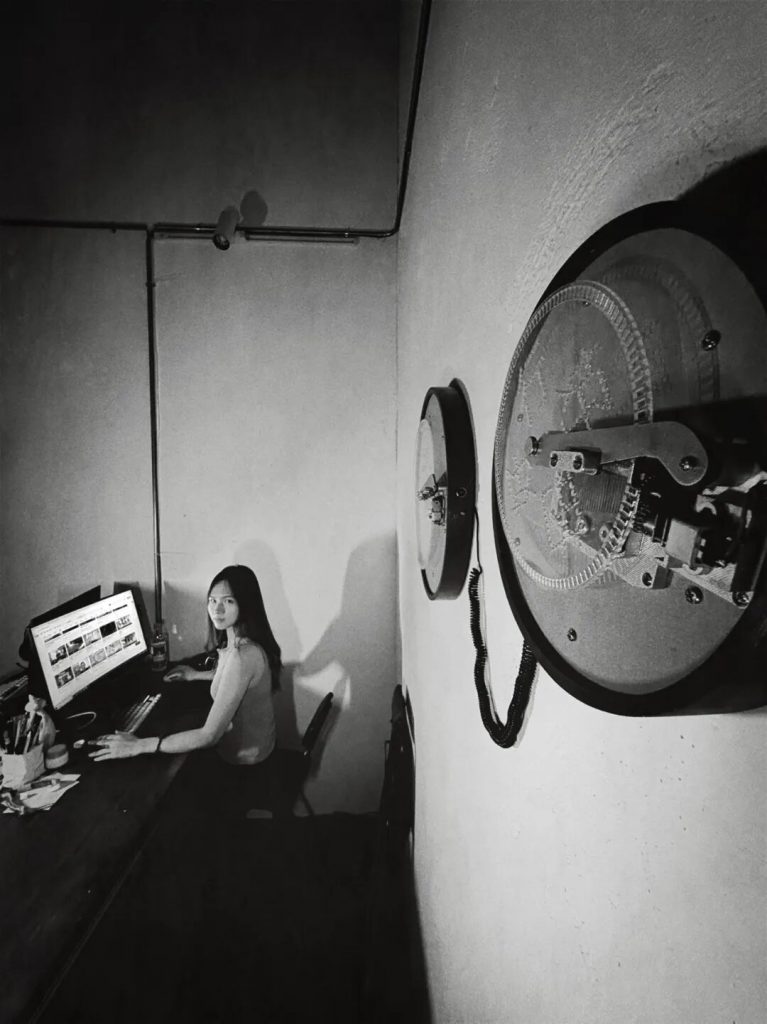
Mechanical structures, textiles, and spatial relationships have all become elements within her work.
She believes:
Artists should not be restricted by a single medium.
The important thing is finding the right form to carry an idea.
This approach also reflects the characteristics of a younger generation of artists.
They no longer strictly separate painting, sculpture, video, or installation.
Instead, they focus more on the final experience and ideas created by the work.
The medium is simply a language.
What truly matters is what the artist wants to discuss.
Building Her Own Creative Rhythm
Xu Jing is still exploring her path as an artist.
She openly admits that she does not yet fully support herself financially through art.
However, she believes that with continuous creation, being an artist can become a long-term profession.
This belief does not come from fantasy.
It comes from accumulation.
When she first established her own studio, her goal was simply to have a freer environment for making work.
Schools have fixed schedules, but artistic inspiration does not follow a timetable.
Over time, the studio became more than a workspace.
It became a place for independent creation, conversations, and exchanges with other artists.
This is also why many young artists choose spaces outside traditional urban centers.
These places are close enough to the city while still maintaining a slower and freer rhythm of life.
Young Artists Do Not Have Only One Future
Looking ahead, Xu Jing does not want to define herself through a single direction.
She does not believe she must always use one specific medium, nor does she want to limit herself to only one subject.
Family experience remains an important starting point for her current practice, but the future is still open.
Perhaps this openness is exactly where the strength of young artists lies.
They are not rushing to prove that they have already reached maturity.
Instead, they develop their own artistic language through continuous exploration, experimentation, and uncertainty.
Today, Siyicun Village in Xindu is becoming a new living environment for young artists in Chengdu.
But what deserves attention is not only the location itself.
What matters is the group of emerging creators growing within these spaces.
Xu Jing is one example among many.
Through her own artistic language, she is transforming personal memories into creative expression.
Between the past and the future, she continues searching for a shape that truly belongs to herself.
Artist Profile
Xu Jing (b.1999, Chongqing, China)
Xu Jing graduated from the Sculpture Department of Chengdu Academy of Fine Arts. Her artistic practice explores memory, family relationships, personal identity, and the connection between individual experience and broader social transformation. Working across sculpture and installation, she investigates how materials can carry emotional memory and human experience.