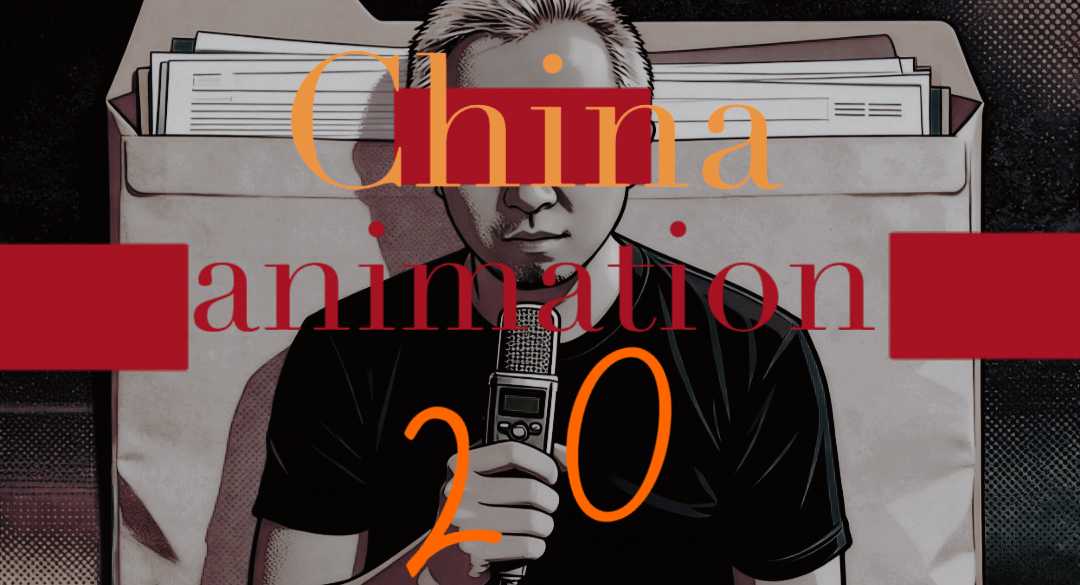
Foreword: Two Decades in the Making
Twenty years ago, when the term “Dongman” (animation and comics) was barely a blip on the radar of academia or industry, Dongke was there, documenting the field as a dedicated media outlet. These twenty years have been a gritty, uphill battle—a journey from being the world’s “outsourced factory” to becoming a “hub of original IP.” We’ve visited the educators sowing seeds in their ivory towers and sat down with the entrepreneurs weathering the storms of the market.
This special feature is the distillation of Dongke’s 20-year observation. In this first installment, we’ve selected five academic pioneers and five industry leaders. Through their eyes, we’re reconstructing the epic saga of the “Rise of Chinese Animation.”
Part I: The Academic Foundation — Building the “DNA Bank”
Before the industry even took shape, art schools were the final bastions of idealism. These five educators set the aesthetic tone for Chinese animation from their respective corners of the map.
- Xiao Ou (CAFA): Guarding the Dignity of Originality When Professor Xiao Ou founded the Animation Department at the Central Academy of Fine Arts in 2002, his mission was clear: “Ground it in fine arts, prioritize original design.” His “master studio” system pulled CAFA away from the “processing plant” mindset, turning it into a vanguard for experimental animation and independent style.
- Wu Guanying (Tsinghua): The Philosophy of Motion Known as the “King of Character Design,” Professor Wu integrated animation into the Information Art & Design framework. He championed “kinetic thinking,” believing a design only works if it holds up in motion. He left us more than just the “Fuwa” mascots; he left a complete aesthetic system that blends traditional culture with modern design.
- Chen Changzhu (Sichuan Fine Arts/SCCM): Mastering the Fundamentals Coming from a background in printmaking and comics, Professor Chen never wavered on one point: “You can’t have a lens in your mind if you don’t have precision in your hands.” He knew comics were the bedrock of animation, providing a rock-solid drawing foundation for students in Western China.
- Huang Qiuye (Jiangnan University): The “Pan-Animation” Vision Professor Huang introduced the concept of “Pan-Animation Design.” At Jiangnan, animation isn’t just film—it’s the core of commercial design and interactive media. This forward-thinking approach took animation off the screen and into the broader world of visual production.
- Zhou Zongkai (Sichuan Fine Arts): The Bridge-Builder Professor Zhou didn’t just start the animation program at Sichuan Fine Arts; he also fueled the rise of “Cycwi Animation.” He knew education couldn’t exist in a vacuum. By fusing “industry, education, and research,” he closed the gap between the classroom and the office, jumpstarting the industry engine in Western China.
Part II: Industry Pioneers — Setting Standards in the Wilderness
If the schools are the labs, the companies are the battlefield. These five leaders carved out a path for industrialization with literal blood, sweat, and tears when there was no map to follow.
- Shen Leping (Sparkly Key Animation): The Long Game Shen Leping and The Legend of Qin are synonymous with “long-term branding.” He views animation as a high-stakes, collaborative industrial machine. His success lies in his focus on “systems and talent pipelines,” shifting Chinese animation from a “one-off project” mindset to a sustainable business model.
- Wang Yunfei (Its_Carton): The Reformer From the Flash animation era to directing feature films, Wang Yunfei has survived multiple “make-or-break” transitions. He’s not just a creator; he’s a fearless manager. His journey—from Happy Stuff to Monkey King Reborn—embodies the “do or die” entrepreneurial spirit of Chinese animators.
- Zhang Tianxiu (Magic Dumpling): Chinese Stories, Global Language With Martin Morning and Lousi Kongfu, Zhang proved that international co-productions actually work. He advocates for “relevance and style,” using a global pre-sale model to crack the code on how to actually make money in this business. He’s proof that Chinese stories, built to international standards, can travel.
- Yin Yuqi (Original Force): From Hand-Drawn to 3D Yin’s career is a miniature history of Chinese tech. Starting as a hand-drawn artist in ’96, he jumped headfirst into 3D in the 2000s before founding Original Force. Driven by “professional intuition,” he transformed from a traditional craftsman into a modern tech-driven producer.
- Wu Hanqing (Vasoon): The Light That Never Goes Out The story of Wu Hanqing and Kuiba is one of the most moving chapters in our history. As a veteran producer, she refused to “cut corners” in the industrial process. She left behind more than just a body of work; she left an “open-window” honesty and a fierce, almost lonely devotion to original Chinese animation.
Part III: Dongke’s Observation — Why We Record
The Role of Media: Bridge and Archive As a professional outlet dedicated to this space for 20 years, Dongke has acted as the “observer” and “connector” between these icons.
- Recording the Pain Points: We were there to record Chen Changzhu’s worries about the “industry base” hype and Wang Yunfei’s tears when the funding dried up.
- Witnessing the Shift: We saw animation grow from a sub-branch of the Decoration Department (Tsinghua) into an independent college (Sichuan Fine Arts). We watched the total pivot from 2D outsourcing to 3D originals.
- Passing the Torch: We’ve always tried to get these leaders’ insights into the hands of students, creating a healthy dialogue between hiring managers and job seekers, and between policy and the market.
Closing: “The Rise of Guoman” is More Than a Slogan
Looking back at these ten interviews, we realized that the “Rise of Chinese Animation” is really about two things: restructuring aesthetics and building an industry.
The educators solved the “who are we and what should we draw?” question. The entrepreneurs solved the “how do we survive and go the distance?” question. As witnesses to these twenty years, Dongke is honored to have been a part of it.
These archives are more than just records—they are lighthouses for those coming next. In uncertain times, it’s the people who actually get things done, one step at a time, who form the backbone of Chinese animation.