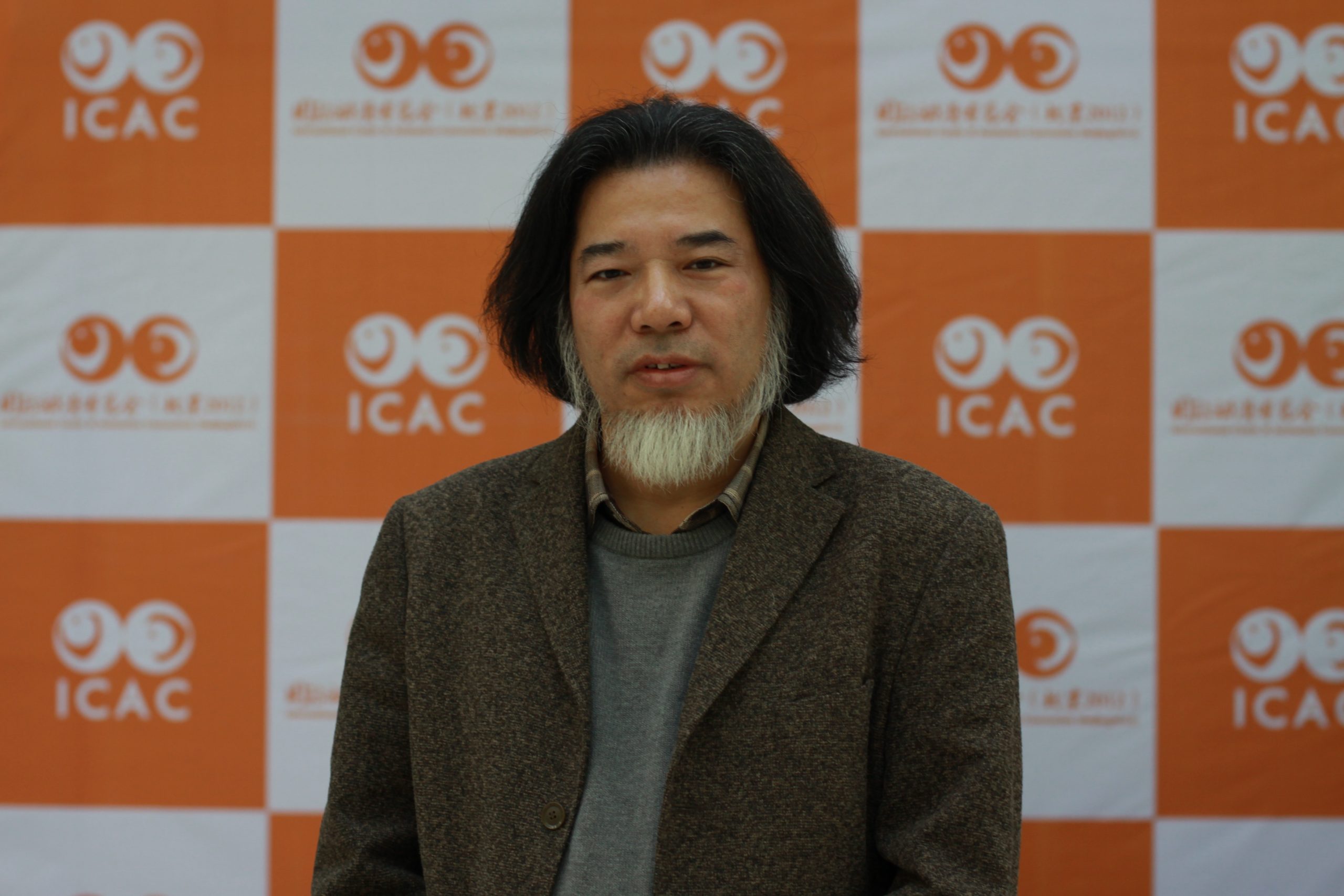
晓欧:央美动画的起点与一种教育理想
[The Profile | 人物名片]
Xiao Ou (Wen Debin)(1960-2020): Founder and former Dean of the Animation Department at the City Design School, Central Academy of Fine Arts (CAFA). A renowned director and educator, he created seminal works such as Houyi Shoots the Suns. He is the pivotal figure who navigated the transition of Chinese animation education from traditional figurative art to modern moving images.
01. Pioneering: Constructing “New” Images on an Artistic Bedrock
拓荒:在美院厚度上建立“新”影像
In 2002, the founding of CAFA’s Animation Department was more than a disciplinary expansion—it was a high-stakes “idealistic experiment” for Xiao Ou.
“It was ‘new’ because we stood at a unique set of coordinates,” Xiao noted. Rooted in CAFA’s deep tradition of plastic arts, Xiao insisted that animation is never a mere accumulation of technology. It is, first and foremost, Moving Image Art, where the core lies in Form and Original Design. He established a clear, defiant mandate: “Foundation in plastic arts, direction in cinematic animation, and a focus on original design”—a sharp contrast to the era’s emerging trend of “fast-food” commercial animation.
02. The Protocol: The Master-Studio System and Aesthetic Liberation
模式:导师制与艺术个性的释放
To kill mediocrity and “homogenization,” Xiao implemented a visionary Master-Studio System. He brought in legendary experts like Zhang Songlin and Yan Dingxian as consultants, alongside international visionaries like Wang Shuibo.
“We used the aesthetic conviction of masters to drive the curriculum,” Xiao explained. “Students weren’t just learning tools; they were in a dialogue with artists.” This allowed CAFA to shatter the “assembly-line” education model from day one, fostering diverse aesthetic leanings. Despite multiple campus relocations and harsh conditions, the raw passion of his first generation of students remained unbreakable—a testament to a genuine love for the craft.
03. Philosophy: The Contemporary Mutation of Tradition
理念:传统文化的当代转化
On the revival of the “Chinese School,” Xiao possessed a sharp cultural consciousness. He rejected the shallow imitation of tradition, advocating instead for Contemporary Language Transformation.
Originality, he argued, is not fabrication in a vacuum. He pushed students to decode the essence of Chinese heritage and recode it through modern cinematic language. “We are exploring a new generation of animation imagery—a Chinese temperament that resonates with the modern soul.”
04. Mission: Weaponizing Art into Capability
压力与担当:将优势转化为能力
As Dean, Xiao felt the crushing weight of responsibility—not for administration, but for his students’ futures. His obsession: How to translate CAFA’s artistic pedigree into practical, high-level capability in the shortest time?
“I wanted them to be more than just illustrators; I wanted them to be the backbone of the nation,” he stated. His ultimate vision was a “City Image Faculty,” where animation serves as a fluid medium for an artist’s attitude and life philosophy—a powerful weapon for delivering personal convictions.
[Dongke Retrospective | 动客回顾]
The light in Xiao Ou’s eyes at the end of the interview was unforgettable. He once said: “I embrace the challenge… to struggle for this glorious and arduous cause for a lifetime.” This was no mere departmental slogan; it was the raw, sincere manifesto of a generation of Chinese animation educators.