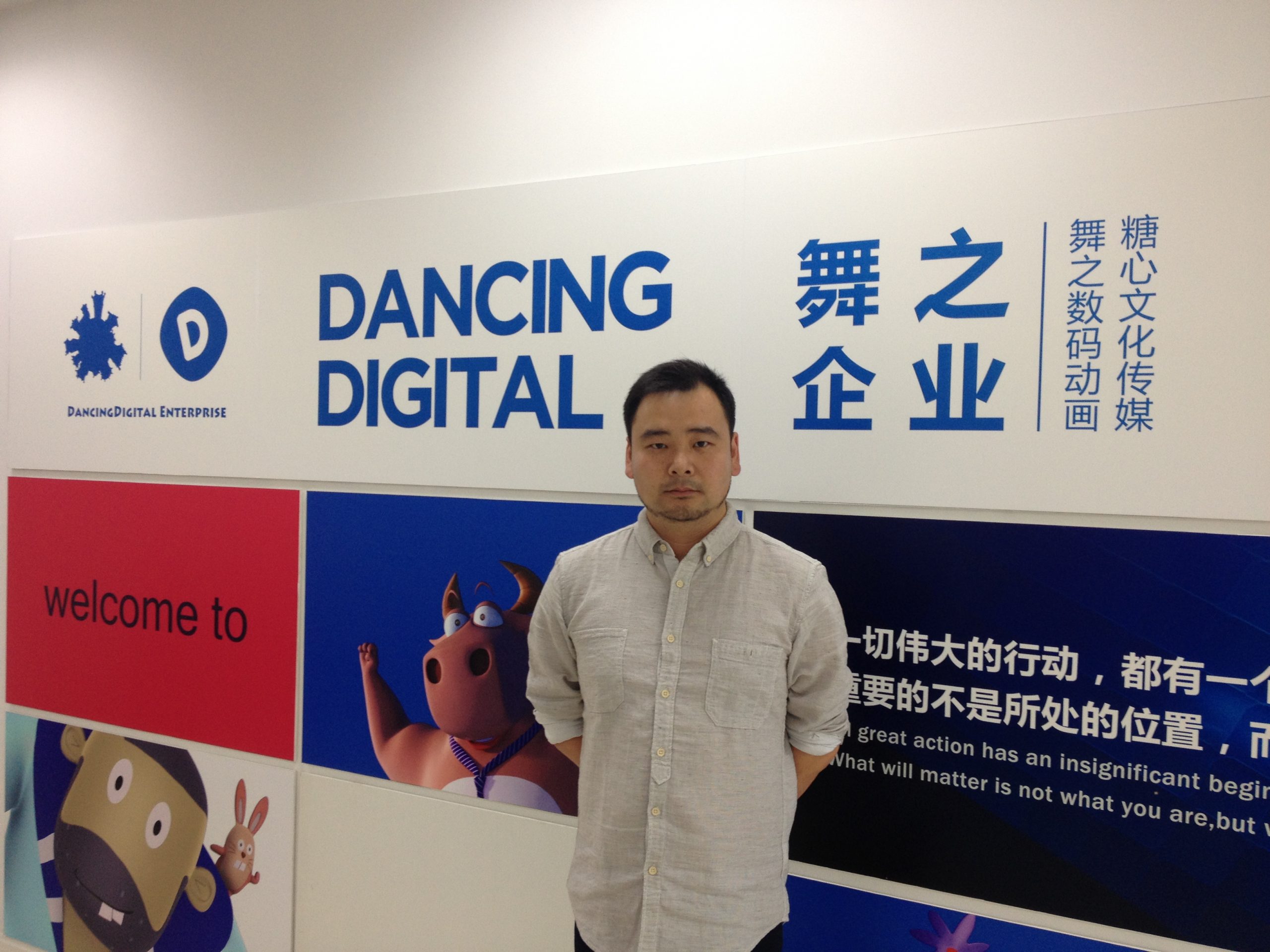
殷玉麒:从手绘手艺人到数字工业的“清醒转身”
01. Prologue: Hearing the “Cracks” Amidst the Glory of Hand-drawing
序幕:在手绘辉煌时听见的“碎裂声”
In 1996, Yin Yuqi entered Suzhou Red Eagle Animation. In that era, 2D hand-drawn animation was the “Orthodoxy,” and survival was dictated by a single rule: draw fast, draw precise. While his peers were immersed in the tactile sensation of pen on paper, Yin possessed a rare, restless foresight. He sensed the impending obsolescence of traditional methods, judging that “computers will eventually replace hands.” He realized that clinging to old techniques would only narrow his future path.
02. Active Downward Mobility: The Shenzhen “Baptism” with a 1,300 RMB Salary
主动下沉:1300元起薪的深圳“洗礼”
To master 3D animation, Yin made a choice that baffled his colleagues: he left his stable, high-paying job in Suzhou for Shenzhen. This wasn’t an upward move but a grueling “Reconstruction.” His salary plummeted to 1,300 RMB—barely enough to survive after rent. However, he completed a critical evolution here, systematically mastering 3D technology from scratch. He didn’t see himself as a genius, but as a Sober Practitioner who understood that during a structural shift in technology, early positioning is the only way to avoid being drowned by the tide.
03. Entrepreneurship: From “Incomprehensible” to “Wu-zhi Digital”
创业维艰:从“听不懂”到“舞之数码”
In 2003, Yin returned to Suzhou to start his own venture. His first company was named “KI MO” (Incomprehensible)—a name carrying an artist’s rebellion—but the reality was a brutal struggle for survival. By 2005, the company transformed into Wu-zhi Digital. Yin’s logic was clear: stop playing the “Artist” and start building a “Digital Industrial System.” He shifted from a project-based workshop to a standardized production line, focusing on high-end 3D content and CG visual effects.
04. Philosophy: The Convergence of Technology and Art
理念:技术与艺术的交汇
Yin believes that 3D animation is not just about software; it’s about using digital tools to reconstruct the soul of traditional art. He emphasizes “Industrial Logic”—where every frame is a result of a calculated pipeline. To him, the “Sober Pivot” meant letting go of the ego of the “Hand-drawn Craftsman” to embrace the efficiency and scale of the “Digital Architect.”
05. Legacy: The Architect of Digital Motion
结语:数字影像的构建者
Yin Yuqi’s journey represents a generation of Chinese animators who survived the digital revolution through sheer adaptability. He proved that the core of creativity doesn’t lie in the medium, but in the clarity of one’s vision. Today, Wu-zhi Digital stands as a testament to that early, painful, yet necessary “Sober Pivot.”
[Dongke · Tan Xiaozheng’s Perspective | 动客·谭小正视角]
In my brand management framework, Yin Yuqi is a textbook example of “Technical Positioning”. He understood that in the animation industry, “Hard Power” (Technology) is the carrier of “Soft Power” (Art). By sacrificing short-term stability for long-term technical sovereignty, he built a company that isn’t just a studio, but a Digital Asset Factory.