By Backwall
Afternoon of Nov 24, 2025
Chengdu · Yulin West Road
⸻
- An Afternoon Where Time Slowed Down
Chengdu winters can be lazy to the point you forget it’s winter at all.
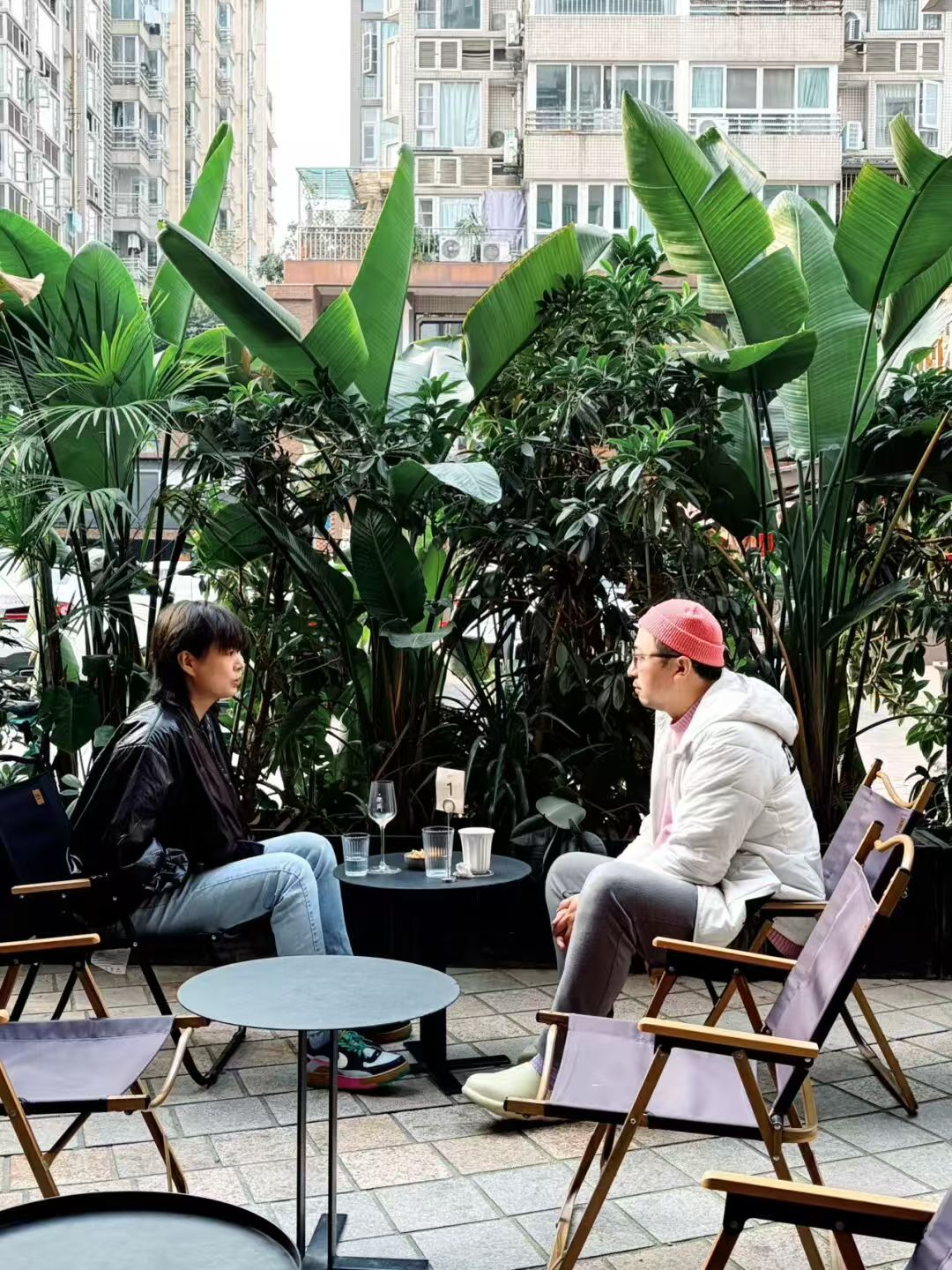
That afternoon on Yulin West Road, the sunlight was soft like a thin veil—
falling on the wall, on the wooden table, and on the quiet space between us.
Coffee drifted in from the street, kids were laughing somewhere outside,
and the whole moment felt like a painting slightly washed-out by light.
Zhu Xin sat by the window, backlit, her outline glowing warm gold.
Her quietness had the kind of softness that makes the whole room slow down.
We didn’t plan the conversation.
It just grew naturally, the way light grows longer across a table.
⸻
- “After my dad passed away, I finally learned how to see color.”
Her story started with a sentence spoken very softly:
“My dad passed away in 2018.”
No drama in her voice.
Just the steady weight of something that will never fully fade.
Like the dark underpainting of a large canvas.
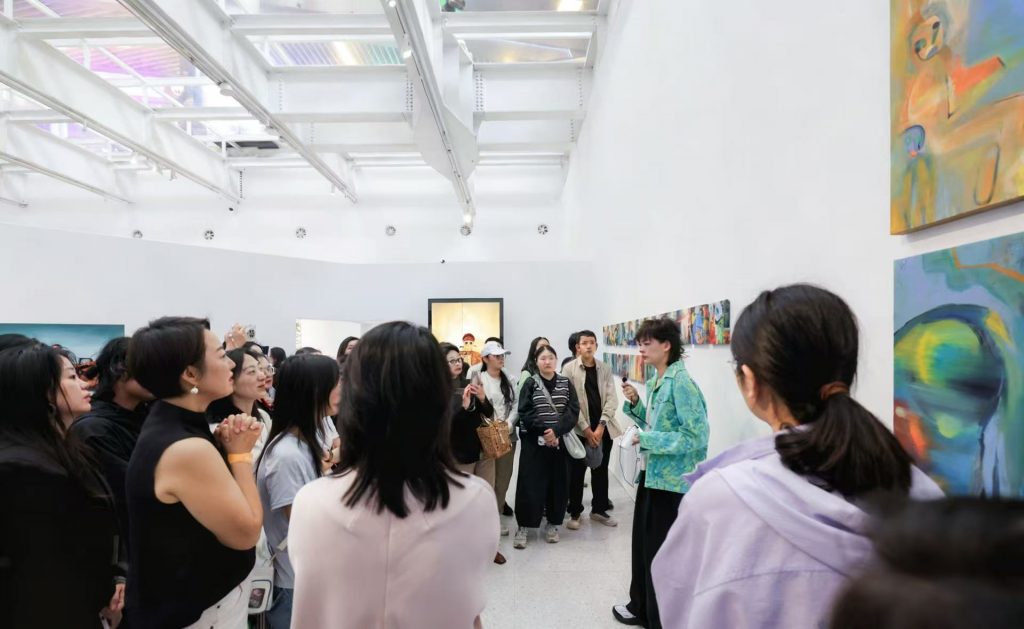
Back in college, most of her work was black, gray, deep blue—
the cloudy London sky, crowded Tube rides, cold river water—
all sinking quietly into her palette.
But after her father’s death, something flipped.
“It was like I went back to being a kid.
Suddenly everything looked bright again.
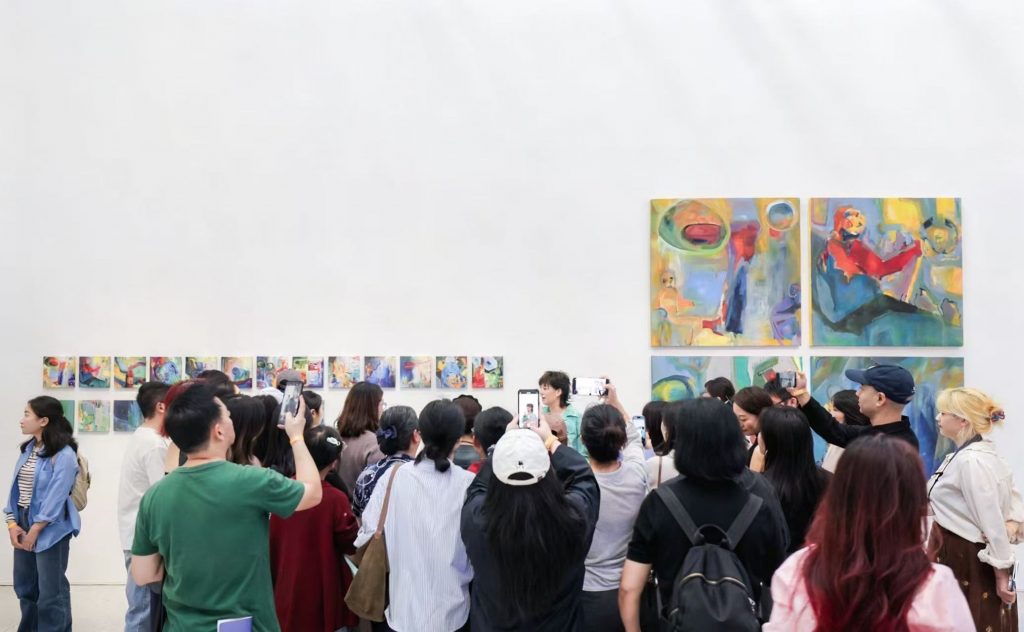
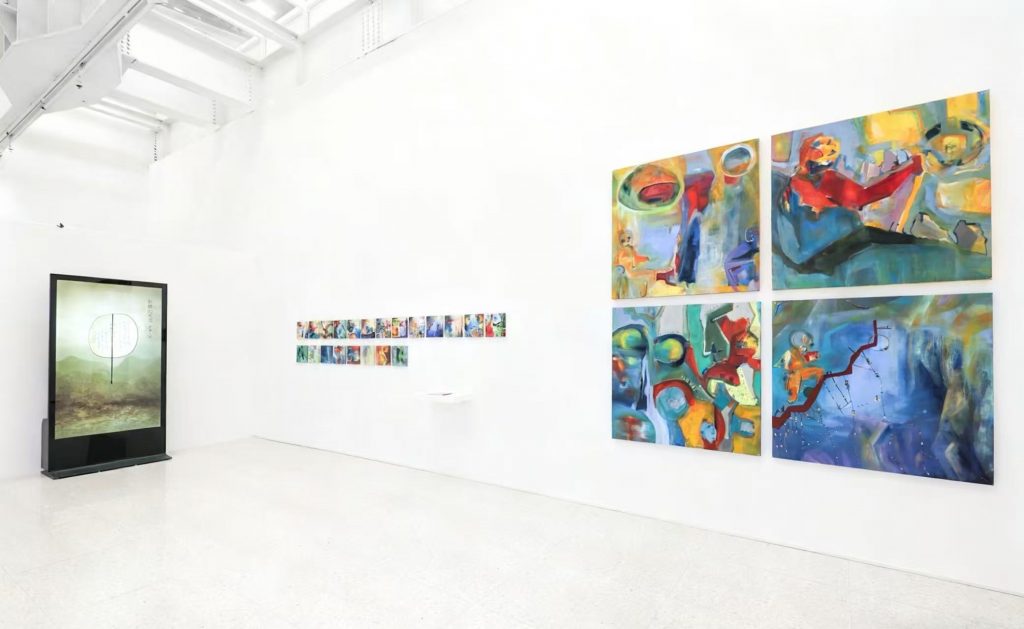
So my paintings turned super colorful.”
The colors weren’t “happy.”
They were new skin growing after a wound—
tender, painful, and real.
⸻
3. Four Years in London: She Didn’t Just Learn Art—She Learned How to Endure
Zhu says her time at the University of the Arts London shaped her deeply.
No grades.
No “right” or “wrong.”
No one telling you what to use or how to paint.
Just one question:
Why are you making this? And how far can you take it?
“They weren’t trying to shape us into a type of artist.
They were teaching us how to keep going—
how not to get tired of the world or of ourselves.”
Her classmates painted on metal sheets, built installations from trash,
made sculptures out of anything they could get their hands on.
She tried everything too.
But eventually, she went back to canvas.
“It felt like speaking my native language,” she said.
⸻
4. Two Years in Shenzhen: A Bit of Drifting, a Bit of Luck, and a Lot of Growing Up
After graduation, she didn’t return to Chengdu immediately.
She moved to Shenzhen.
There, she met a mentor—
an older artist everyone calls “Old Cai,”
who gave young artists free studios,
carried them to Hong Kong for shows,
paid out of pocket, never asking for anything back.
“He was a real blessing.
But the city was fast. Too fast.”
Responsibilities at home, grief that never fully settled,
and the rapid rhythm of Shenzhen eventually overwhelmed her.
She often felt breathless at night.
Those two years were meaningful, she said.
But they were also temporary—
like she had always known she wouldn’t stay.
So she came back to Chengdu,
back to somewhere her heart could land.
⸻
5. Coming Back to Yulin: Returning to a Street, and Also to Herself
Now she lives in the same neighborhood she grew up in.
The alley hasn’t changed.
The old convenience store is still there.
Only her father is missing.
She repainted the house in bright colors—
yellows, greens, blues, warm pinks—
like giving her memories a new skin.
“Sometimes I turn a corner,
and suddenly think of him again,”
she said with a small smile.
A smile with a shimmer of tears behind it.
The sunlight on her profile in that moment
felt like a painting being gently lifted by the wind—
soft colors, quiet stories.
⸻
6. She’s Trying to Step Out of “Loss,” But Not by Running Away — By Letting Go
Recently she started painting nature—
mountains, trails, the feeling of wind passing by your ears.
She wants to move beyond the sadness.
“I’m trying to switch themes.
But halfway through, I stop.
It doesn’t flow like it used to.”
That’s what healing sounds like.
Not sudden.
Not certain.
Just a slow, real movement forward.
⸻
7. Her Place in the Chengdu Art Scene:A Quiet, Independent Figure Standing Firm in Her Own Corner
Zhu speaks gently, but she’s sharp and honest.
She says she can often see a teacher’s shadow
in many young artists’ works.
But she herself refuses to look too much,
refuses to imitate, refuses to blend in too easily.
“I’m afraid of becoming like someone else.
And I’m afraid of people saying I look like someone else.”
It’s stubbornness, yes.
But it’s also clarity.
She wants to protect the way she sees the world—
that innocent, childlike clarity she’s carried since long before London.
⸻
8. At 30, She Lives Like a Plant: Soft, Resilient, and Growing in Her Own Direction
Zhu Xin is 30 now.
She carries her own 120cm canvases up six flights of stairs.
She cooks for herself.
She goes to the gym.
She can eat hotpot alone, watch movies alone—
she even did a gastroscopy alone.
She isn’t lonely.
She’s full.
She doesn’t like self-promotion and hates rejection,
but once her portfolio is ready,
she sends it bravely to mentors she respects.
She’s learning to grow up, but not to harden.
She’s growing the way plants do—
toward the light, but quietly healing in the dark.
⸻
- She Wants to Hold a Real Solo Show in Chengdu
When she mentioned this, her eyes lit up:
“I want to do a full solo exhibition here.
All original-size works.
No reduced prints.
A real, complete show.”
She said it softly,
but she meant every word.
⸻
10. As the Afternoon Light Faded, Her Story Felt Like It Was Just Beginning
When the air started to cool, she stood up and said:
“This was a good chat.
When you get over your cold, let’s grab a drink sometime.
We’ll probably talk even better.”
The sunlight slid down her shoulder,
warm and gentle.
In that moment, her whole presence felt like a soft brushstroke—
steady, healing, unfinished in the best way.
⸻
Why Write About Zhu Xin?
Because she’s honest.
Because her colors come from real stories,
her silence comes from real pain,
and her softness comes from real strength.
She isn’t trying to shock the world.
She’s simply laying the weight of life on canvas,
letting it spread, settle,
and then gently folding it back up.
A lot of artists chase the light.
She’s chasing a way of seeing.
And that, I think,
is worth recording.