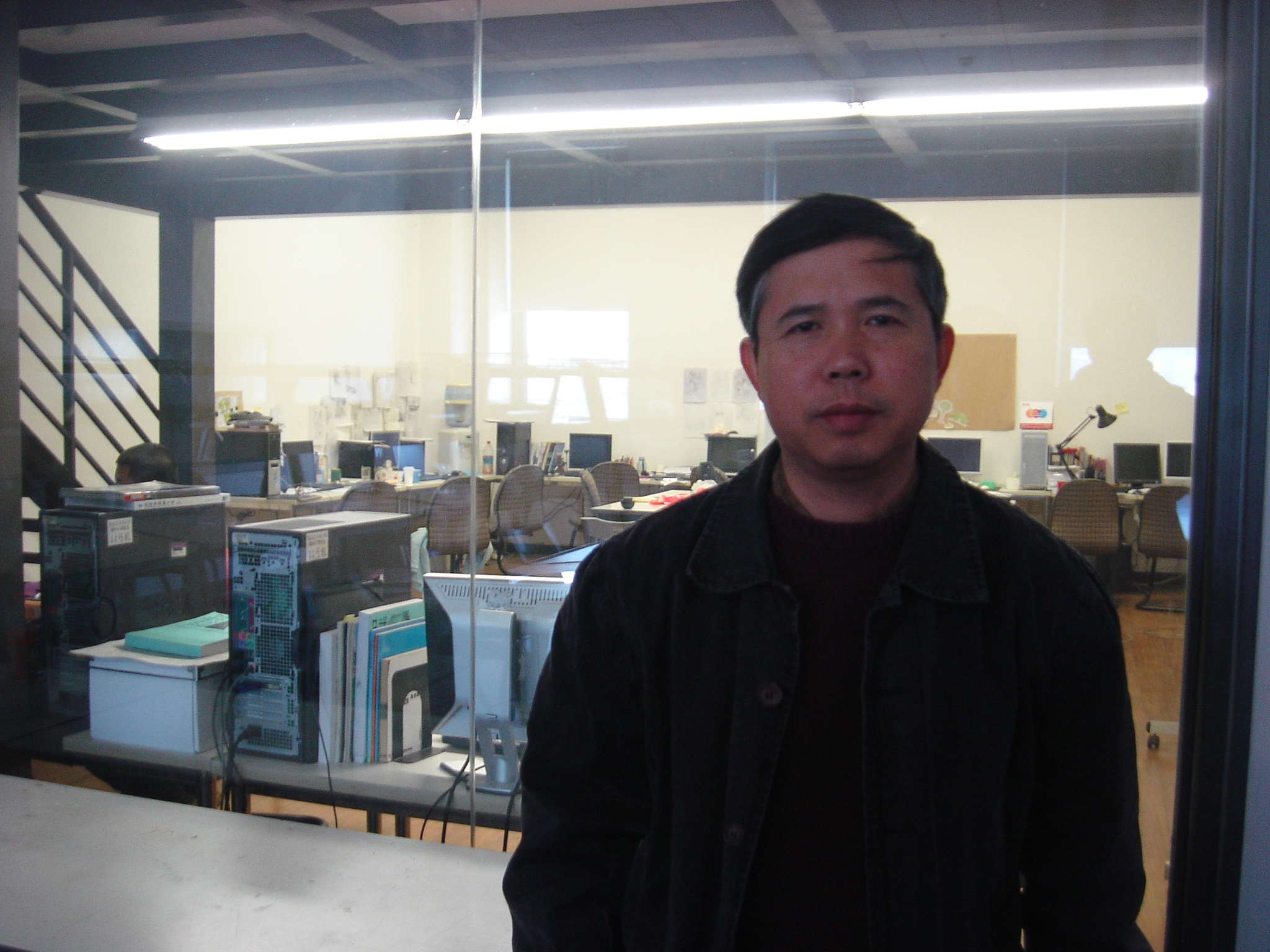
吴冠英:在运动中捕捉造型的灵魂
[The Profile | 人物名片]
Wu Guanying (1955–2022): Professor and Doctoral Supervisor at the Academy of Arts & Design, Tsinghua University. A titan of Chinese design and animation, he was a core creator of the Beijing Olympic Mascots “Fuwa” and the designer of the “Fu Niu Lele.” As a founding figure of Tsinghua’s animation program, he bridged the gap between peak traditional plastic arts and modern cinematic expression.
01. Cross-border: From Decoration Arts to “Information Imagery”
跨界:从装潢系走出的“信息影像”
At Tsinghua, animation wasn’t an isolated silo; it evolved within the Department of Information Art & Design. Wu Guanying recognized that in an era of radical media shifts, animation had to evolve.
“Animation is no longer just about linear storytelling or TV episodes. It must confront interactivity, virtuality, and cross-media integration,” Wu asserted. By merging animation with information design, he pushed students to explore multi-dimensional possibilities in visual expression and interface interaction. From day one, this gave Tsinghua animation a “Design Gene” that set it apart from traditional film schools.
02. The Core: Shifting from “Static” to “Kinetic” Thinking
核心:从“静态思维”转向“运动思维”
Though hailed as the “King of Form,” Wu’s understanding of imagery was profoundly dynamic. He observed that while students from decorative art backgrounds had solid foundations, they often fell into the trap of “static aesthetics”.
“Decoration is static; animation is kinetic. Form must be validated through motion,” he emphasized. He championed the artistic legacy of masters like Zhang Guangyu, viewing their work as a uniquely Chinese “Artistic Style System.” For Wu, the core competitiveness of Tsinghua animation lay in this sophisticated aesthetic system rooted in Chinese tradition.
03. The Path: Using the Full Production Pipeline as the Educational Skeleton
路径:以完整生产流程为教学骨架
To master animation as a complex, synthesis art, Wu constructed a comprehensive curriculum at Tsinghua covering everything from conceptualization and scriptwriting to art design and post-production.
He rejected the idea of training mere “illustrators.” Instead, he demanded that students understand every link in the chain. He believed that only by mastering the production pipeline could an artist transform a “flash of inspiration” into “sustainable operation”—a rigorous industrial mindset that prepared students to lead the industry.
04. The Message: Passion is the Only Ticket to Excellence
寄语:热爱是通往卓越的唯一门票
Throughout his career, Wu’s message to the next generation was one of “persistence” and “loyalty.” He acknowledged the industry’s volatility but remained a gentle encourager.
“True animators need a spirit of dedication. Only by persisting on a spiritual level can you avoid being phased out,” he often said. His own life was the ultimate testament to this unwavering commitment to the craft.
[Dongke Retrospective | 动客追思]
Wu Guanying passed away in the winter of 2022, but his legacy transcends his iconic designs. He left behind an “Aesthetic Philosophy” for Chinese animation education, proving that animation is not just drawings that move, but a soulful expression of national character.