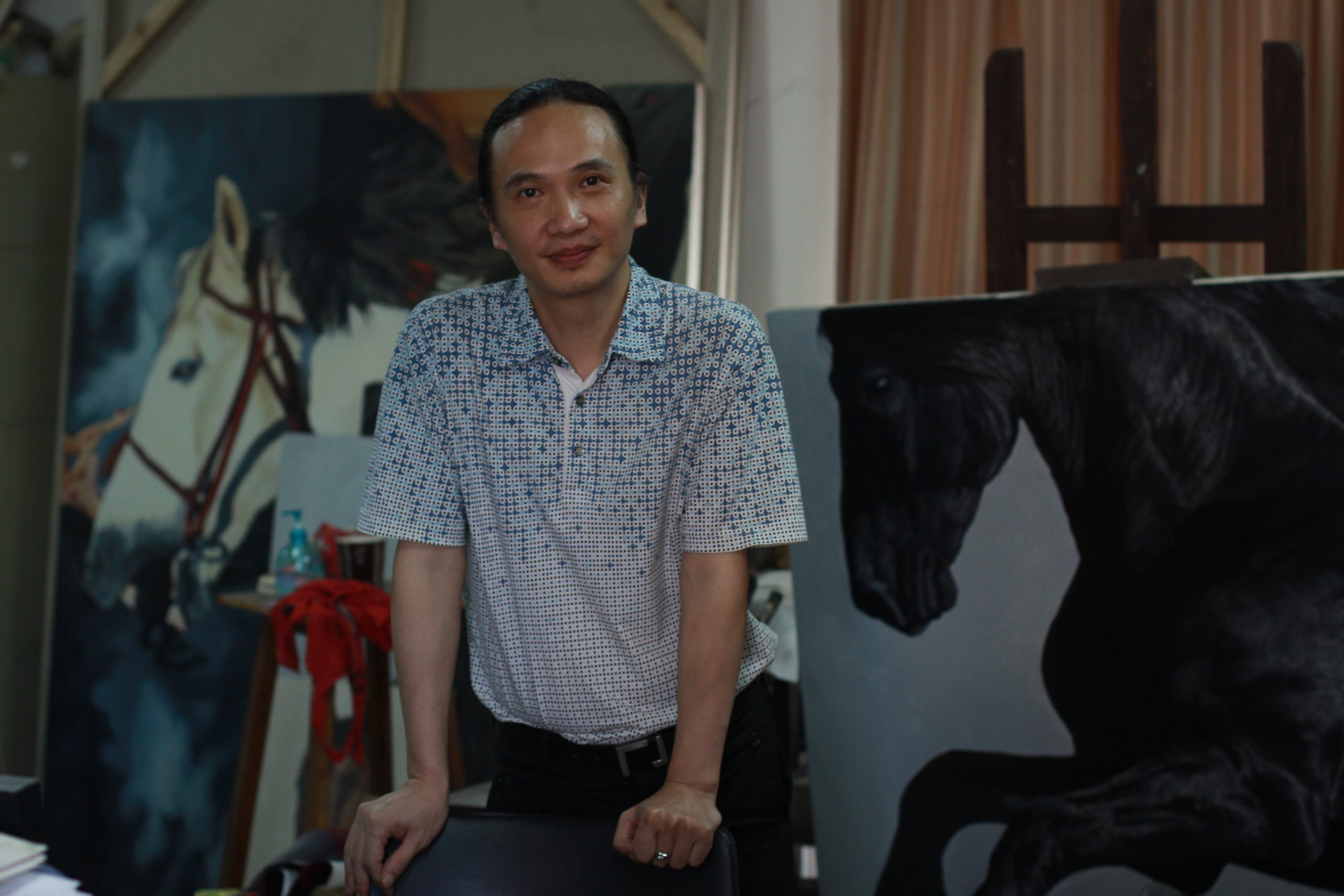
周宗凯:在教育与产业之间搭桥的人
[The Profile | 人物名片]
Zhou Zongkai: Vice Dean of the School of Film and Animation at the Sichuan Fine Arts Institute (SCFAI); Chief Director and Deputy General Manager of Chongqing Thriving City (Shimei) Animation. A pioneer of the “Industry-Academia-Research” model, he was among the first in China’s fine arts academies to advocate for animation as a major. He is the creative force behind regional cultural hits like Spicy Little Enemies.
01. Awakening: From Elite Preaching to Mass Culture Consumption
觉醒:从精英说教到大众文化消费
In the 1980s, while studying at the Central Academy of Craft Art, Zhou sensed a “cinematic narrative” in foreign comics. Later, teaching at SCFAI, he discovered that his “effortless” and relaxed comic columns garnered far more audience engagement than his technically rigorous, serious works.
“This realization was my ideological turning point,” Zhou noted. “Contemporary culture was shifting from elite preaching to accessible, relaxed mass consumption”. This insight became the catalyst for his mission to push animation from pure art into the industrial realm.
02. Pioneering: From “Underdog” to Social Sensation
拓荒:从“不入流”到社会热捧
In 1996, Zhou spearheaded the animation major at SCFAI—a discipline then dismissed as a “marginal” subject within the elite academy system. Initial students even protested being assigned to the class.
The tide turned in 1998 during an exhibition that exploded with unexpected success. With ad agencies clamoring for talent and national media coverage, the animation major finally secured its bedrock in the art world.
03. The Leap: The “Shimei Model” of Integration
跨越:产学研结合的“视美模式”
Zhou rejected the “Ivory Tower” isolation. In 2005, he co-founded “Shimei Animation,” a joint venture between SCFAI and the Chongqing Broadcasting Group, creating a seamless “Industry-Academia-Research” pipeline.
He mandated that “teaching and practice must run in parallel”. By involving students in real-world commercial projects and high-end production environments, he aimed to cultivate “Composite Talents” who master market logic as much as their craft.
04. Humanism: Rejecting the “Production Line Worker” Mentality
关怀:反对把人才当成“生产线工人”
As a cross-border leader, Zhou fiercely opposes treating talent as mere “laborers”. “The greatest tragedy of Chinese animation is the lack of concern for the individual,” he argued.
At Shimei, he prioritizes career planning and advanced academic opportunities for core staff. He believes that only by giving creators a sense of professional purpose can China escape the cycle of “mass-cloning garbage”.
[Dongke Retrospective | 动客回顾]
Zhou Zongkai embodies both the artist’s sensibility and the entrepreneur’s pragmatism. For over two decades, he has built a resilient bridge between the classroom and the studio, igniting the engine for animation in Western China.