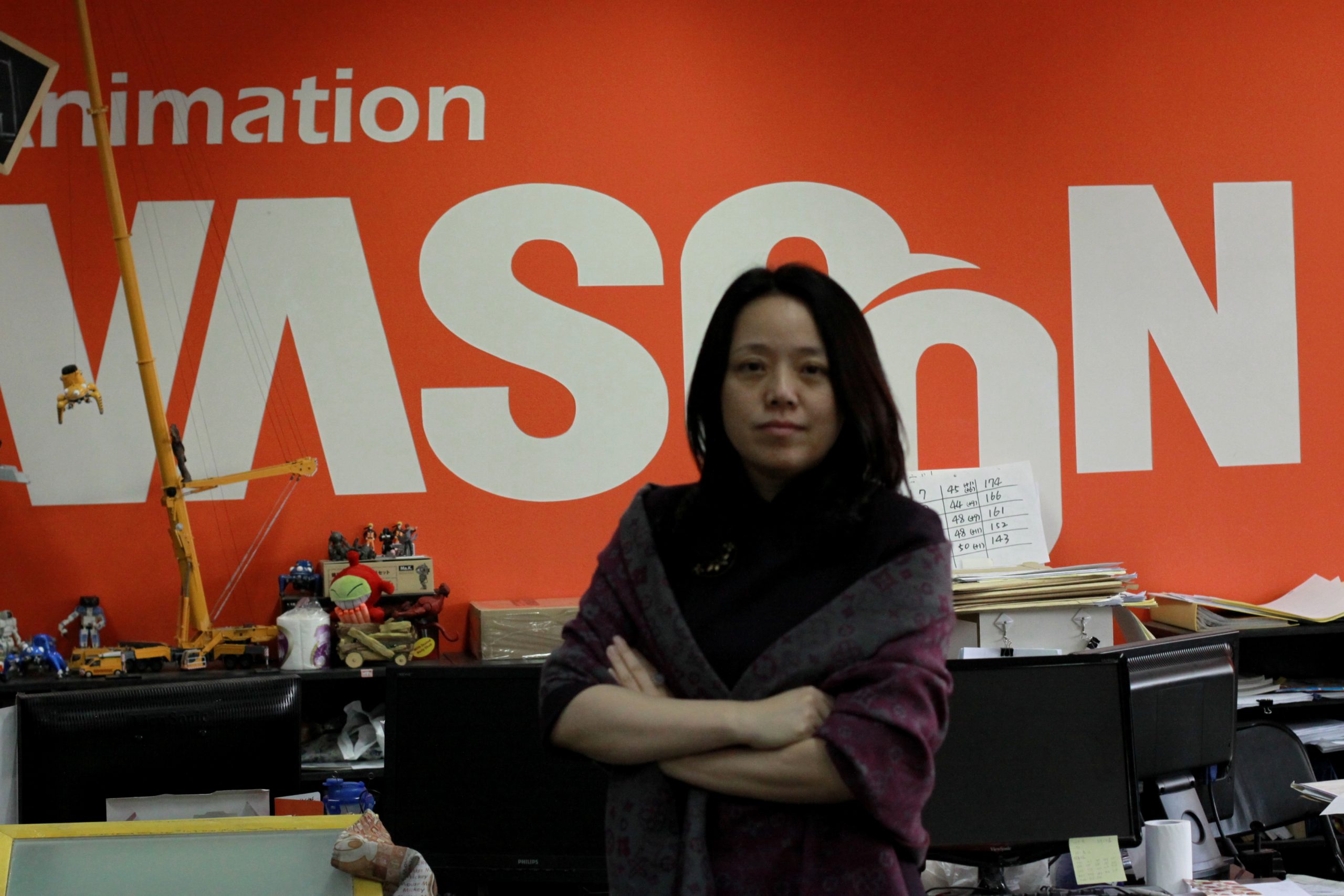
武寒青:一盏守护中国动画工业火种的“灯”
01. Origin: The Desperate Gamble of Five “Outsiders”
跨界缘起:五个“外行”的孤注一掷
In 1992, Wu Hanqing was a veteran literary editor at the Beijing Film Studio. A serendipitous encounter with a bookseller led her to form a team that, paradoxically, contained not a single professional artist. When the investor withdrew due to the daunting complexity of animation, Wu and her partner Wang Chuan had already resigned from their stable government positions. With “no path of retreat,” they founded Vasoon Animation (Qingqingshu), one of China’s first private original animation houses.
02. The 1996 Crisis: 10,000 RMB Cost vs. 8 RMB Sale
1996生死劫:一分钟成本一万,收购价八块
By 1994, the team was “sacrificing their very bodies” to produce over 70 episodes of The Flying Monkey King. However, a sudden policy shift in 1996 collapsed the advertising subsidy model that sustained production costs. While each minute cost 10,000 RMB to produce, television stations offered a staggering acquisition price of just 8 RMB. Wu kept the team alive by funding animation through scriptwriting fees, surviving within a “distorted market pricing system”.
03. The Industrial Obsession: Processes Spread Across the Table
工业化执念:摊在桌上的工艺流程表
Wu was a pioneer who recognized that “Industrialization” was the only savior for Chinese animation. She understood that individual inspiration cannot sustain an entire industry; it requires factory-like standardized workflows. For nearly twenty years—amidst debt and controversy—she meticulously refined the production standards that eventually enabled the creation of the epic Kuiba.
04. The Battle of Kuiba: An Honest Test and Unyielding Dignity
《魁拔》之战:诚实的试验与不认输的尊严
When Kuiba hit the big screen, Wu faced a brutal market. She refused to create “juvenile” content, insisting on high-quality shonen-style storytelling. Despite initial box office setbacks, she remained calm, viewing Kuiba as an “honest detection” of the maturity of China’s animation industry. She wasn’t just making a movie; she was testing the boundaries of original Chinese animation with the very survival of her company.
05. Legacy: The Missing Lantern, The Eternal Tree
结语:被错过的灯,永存的树
Wu Hanqing passed away, but she remains the acknowledged “Lantern Bearer” of Chinese animation. Her life was dedicated to two problems: how to give animators dignity and how to make Chinese animation a respectable industry. Her roots remain deeply embedded in the soil of the Chinese animation industry.
[Dongke · Tan Xiaozheng’s Perspective | 动客·谭小正视角]
Wu Hanqing’s life was the ultimate manifestation of “Brand Faith” over “Commercial Arbitrage”. In my brand management curriculum, Vasoon Animation stands as a heavy case study of “Credibility Assets”—even in the direst financial times, Wu never retreated an inch from the brand’s bottom line of “Quality”. This brand dignity is the most precious soul of the Chinese animation industry.