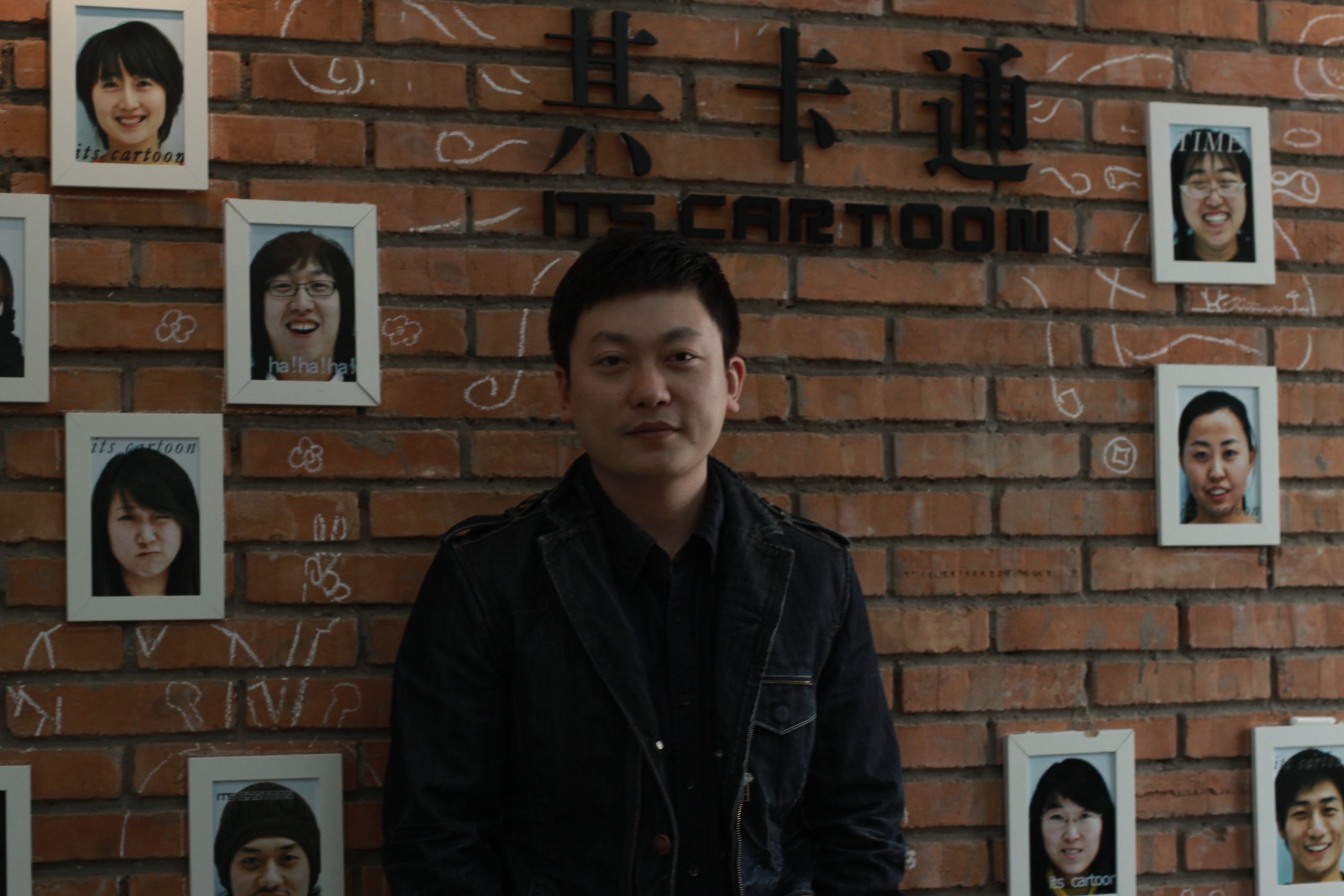
王云飞:在中国动画工业丛林里的长期主义实践
01. Prologue: From “Flash Legend” to Industrial Apprentice
序幕:从“闪客”英雄到工业学徒
Around 2000, during China’s first Internet Flash wave, Wang Yunfei was a top-tier “Flash Legend” known as “Yaima.” Despite his early success and keen sensitivity honed across seven advertising agencies during college, he wasn’t satisfied with being a mere “craftsman” of short stories. In 2002, he founded Its-Cartoons, stepping officially into the high-stakes “jungle” of film and television animation.
02. Transition Pains: The 2008 Turning Point and the Burden of 200 Lives
转型阵痛:08年的转折点与200人的重担
While Its-Cartoons’ hit Happy Stuff brought fame, the real test came with industrial scaling. 2008 marked a massive turning point. To chase ultimate quality, the studio expanded to 200 people. Wang found himself in deep reality-based anxiety: “My daily mission was simply securing the money to feed everyone.” While their production efficiency was described as “terrifying” by broadcasters, crisis lurked behind the scenes. In 2009, due to investor fallout and his own creative integrity—refusing projects with subpar scripts—Wang suffered millions in losses. Faced with the livelihood of 200 employees, he chose the hard road: personally meeting every departing staff member before retreating to a corner to weep in private.
03. The Gamble on The Singular Family: Trading Personal Assets for Credibility
豪赌《奇异家族》:以家产换信誉的博弈
By early 2010, at his lowest point, Wang found inspiration for The Singular Family. However, the company was broke. To keep the dream alive, Wang performed a rare “Credibility Gambit” in the corporate world. Backed by an eight-year trust with strategic investor Yuan Mei, Wang mortgaged his own house and car, injecting his entire personal wealth into the project. This “Success First, Profit Later” obsession not only preserved the creative spark but also established his unparalleled reputation within the industry.
04. Role Reconstruction: The Unity of Director’s Vision and Producer’s Logic
角色重塑:导演视角与制作人思维的对立统一
Today, Wang has pivoted from specific production tasks to focusing on screenwriting, storyboarding, and Chief Directing. In his view, a Chinese animation director isn’t just a “Creative Hub” but a “Resource Coordinator.” Recognizing the immaturity of the domestic animation industry, he emphasizes “Multitasking” and “Multi-line combat capabilities.” He successfully transitioned the studio from pure Flash to an industrial system integrating 3D and paperless animation, viewing past failures as his most valuable assets.
05. Legacy: Brand as Character—Knowing What Not to Do
结语:品牌如人,有所不为
In Wang’s eyes, Its-Cartoons survived because he chose “Long-termism” at every life-or-death juncture. He shuns short-term celebrity packaging, preferring to hide his true self behind a blue-haired, blade-wielding manga avatar. For him, the core of a brand is sincerity—staying true to the audience, employees, and partners even in the darkest hours.
[Dongke · Tan Xiaozheng’s Perspective | 动客·谭小正视角]
As noted in my brand management curriculum, Wang Yunfei’s journey is a classic case of “Corporate Direction vs. Product Direction.” He isn’t just filming movies; he is building the “Its-Cartoons Corporate Brand” through personal asset risks and talent cultivation.