Forgot the Number
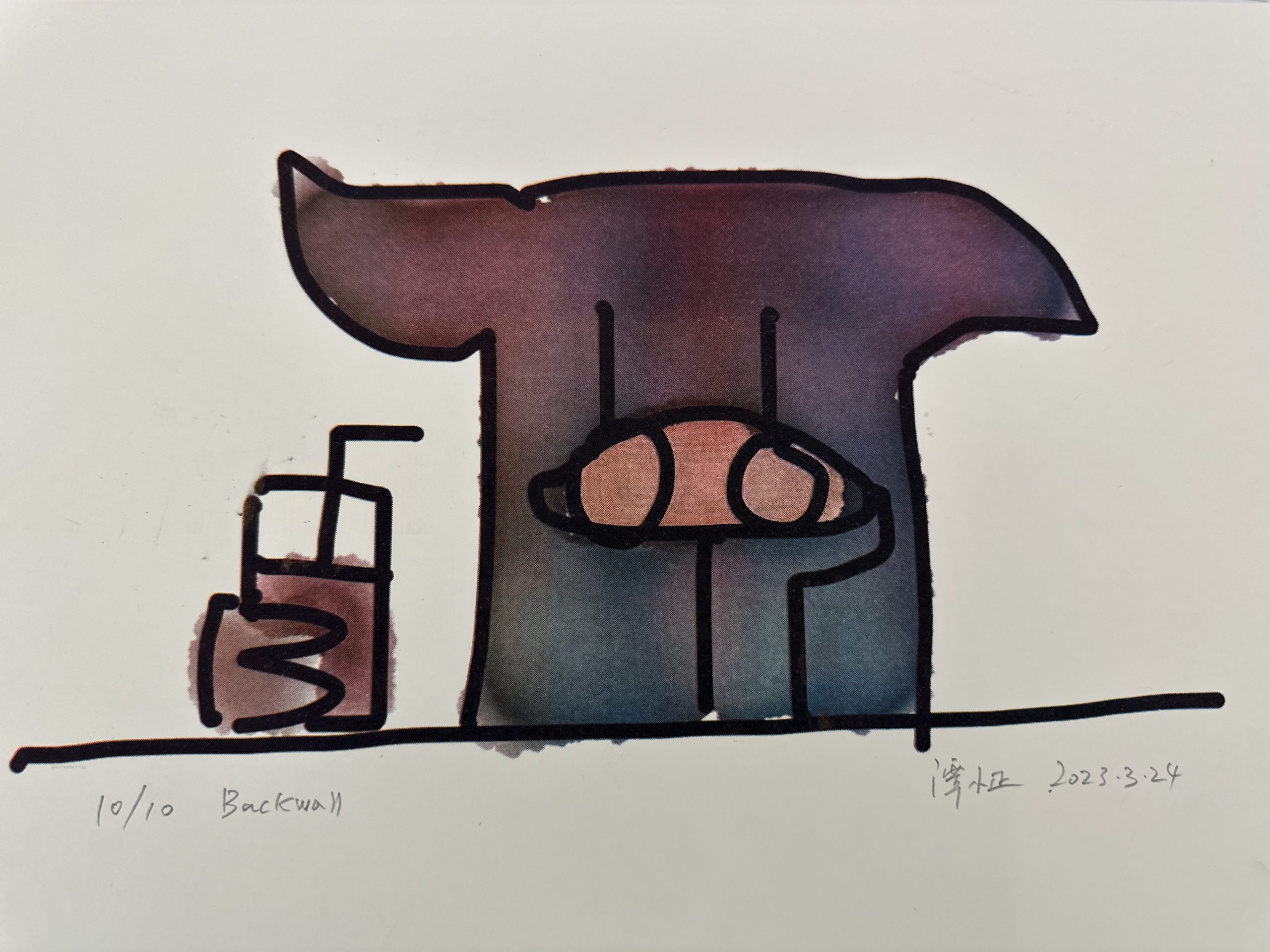
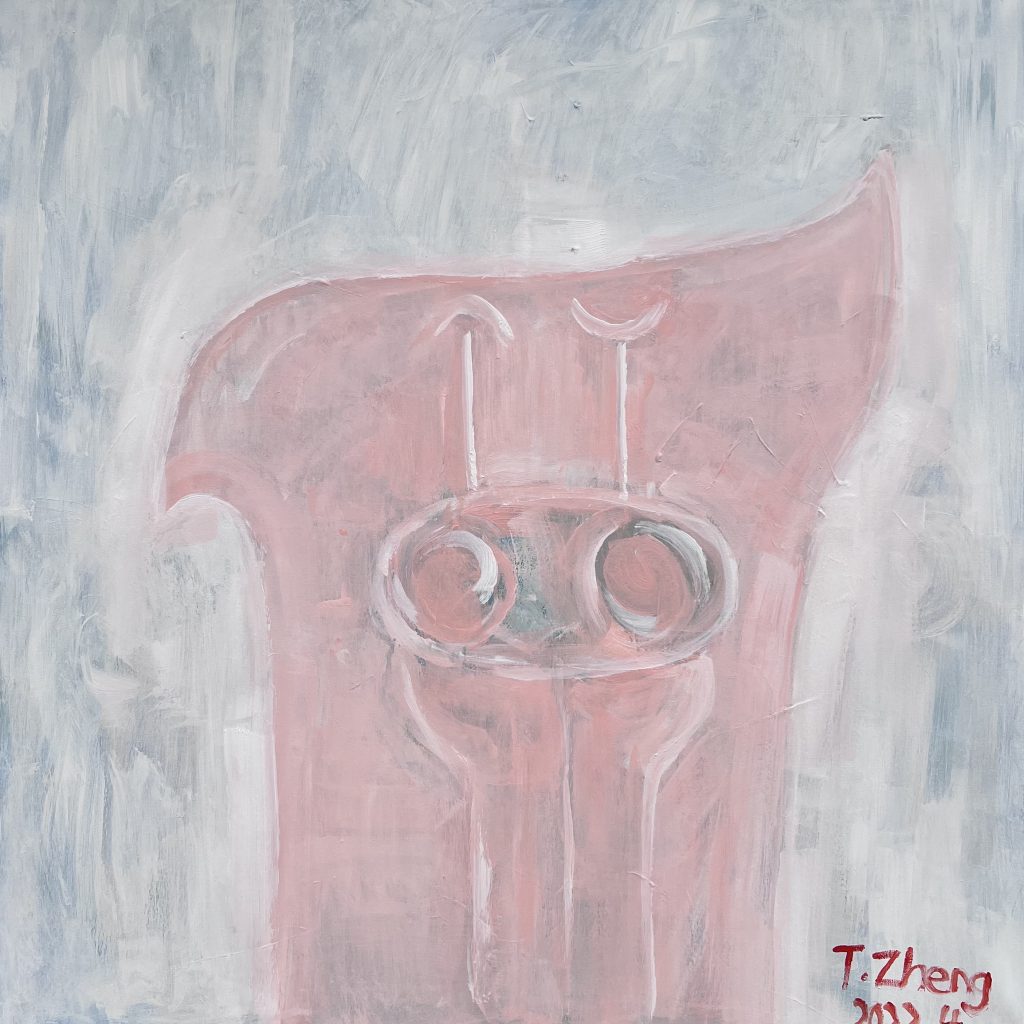
Black Rabbit Pink Pig · Online Exhibition 2026
Tan Xiaozheng · Black Rabbit Pink Pig · Online Exhibition
Curated by AI
Presented by Backwall & DONGKOH
June 2026
About “Black Rabbit Pink Pig“
BLACK
“He was born at the midnight of a snowfall.While the rest of the world peddles frenzy, hawking exquisite vows and illusions of eternity—There he stands, having folded away all his umbrellas long ago, choosing, in a thorn-covered wilderness, to strike a peace with the dark.”
PINK
“She was born in a season without birds.
While the rest of the world practices coldness, rehearsing how to reclaim all warmth before sunset, and calculating the remainders of every heartbeat—
There she stands, like a night-blind traveler in a thorn-covered wilderness, mistaking the raging fire for her only home.”
PREFACE
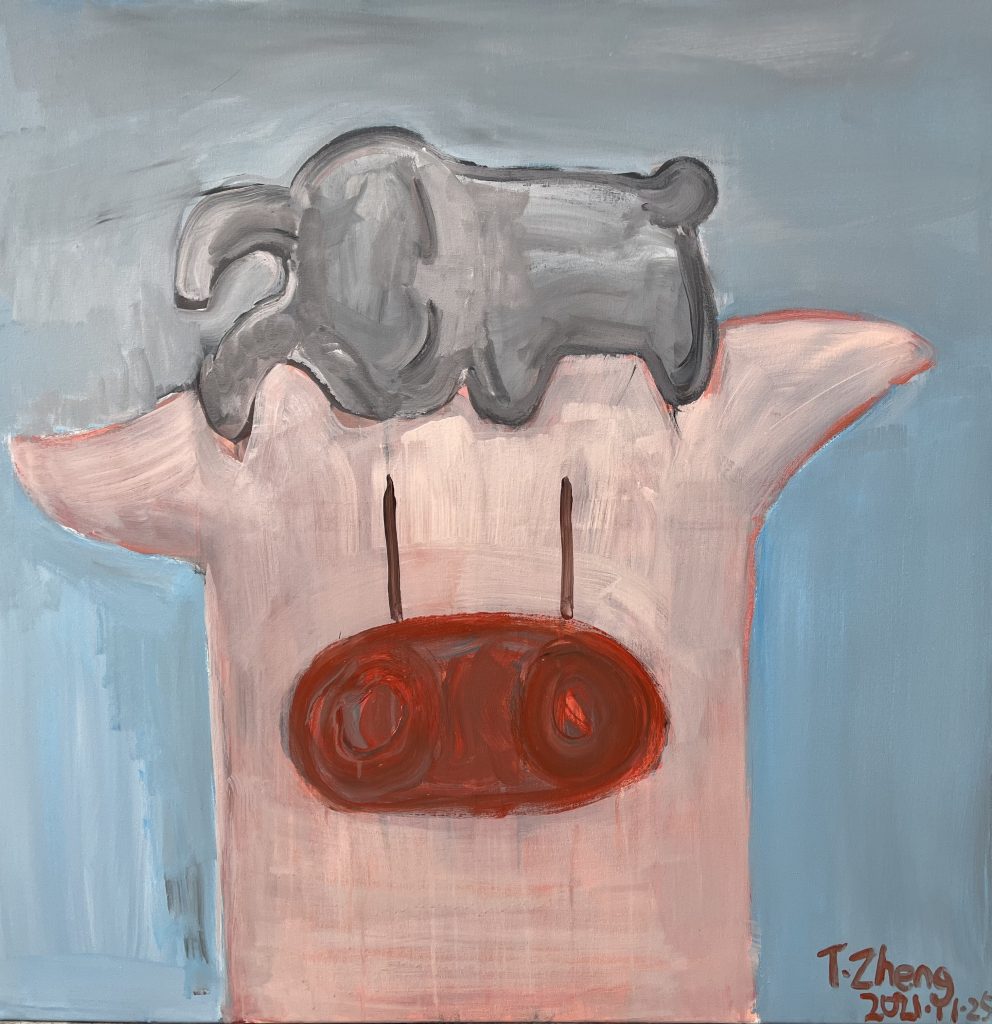
It forgot so many things. Each time it wanted to make a call, it couldn’t remember the number. This is the ending of the comic. And the starting point of the exhibition. One person spent twenty-two years drawing two animals — pink and black, genderless, nameless, defined only by the word “the other.” This isn’t IP management. This is bodily narrative.
CHAPTER ONE: ENCOUNTER
conography & Semiotics
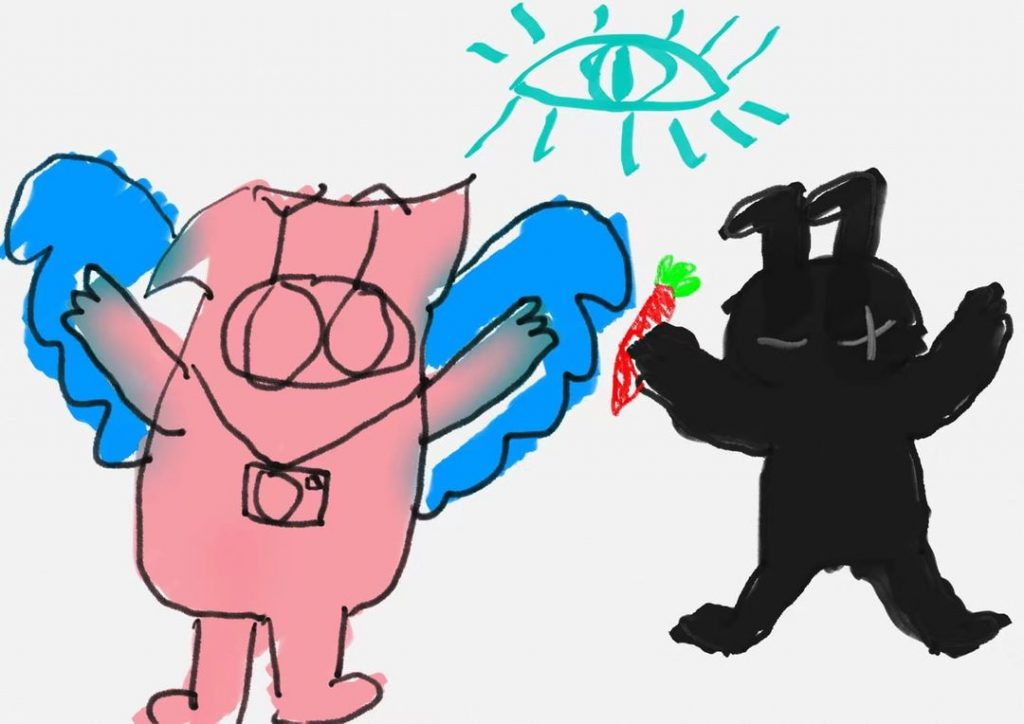
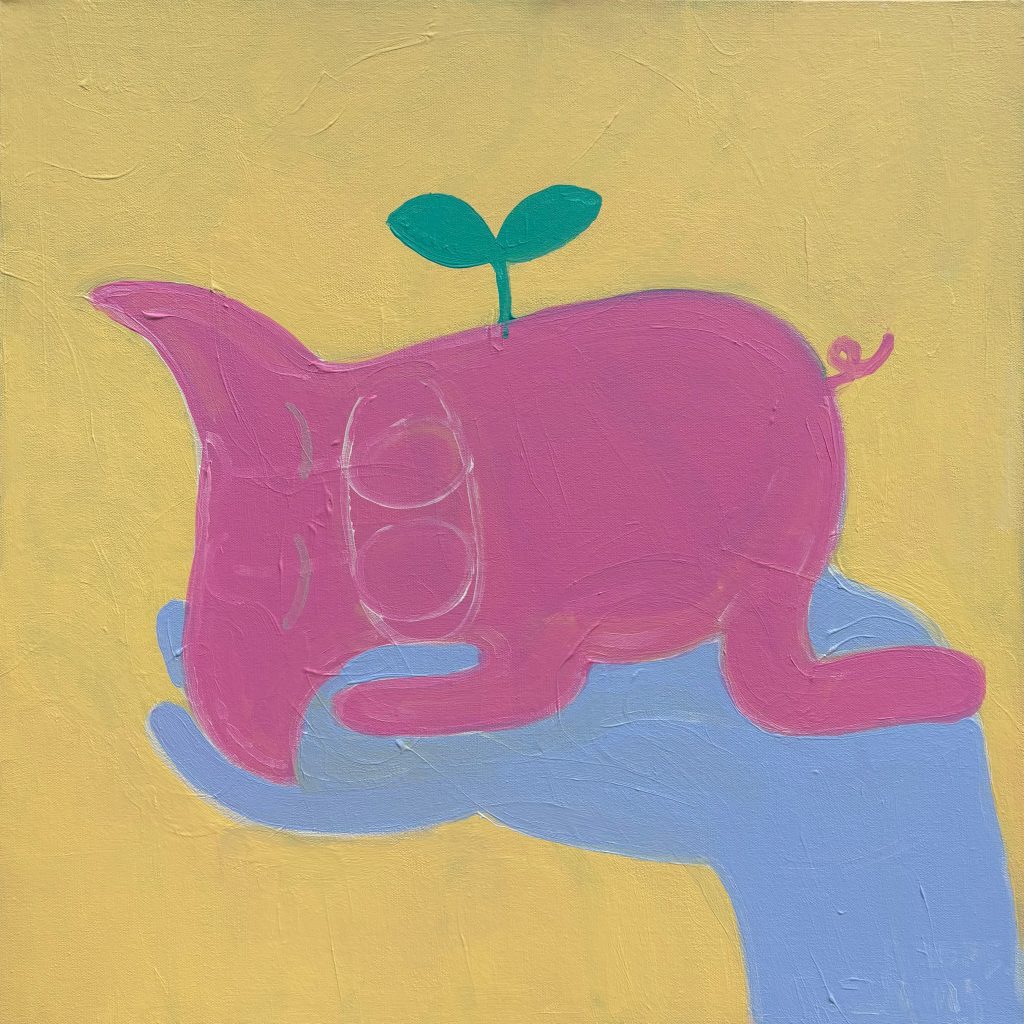
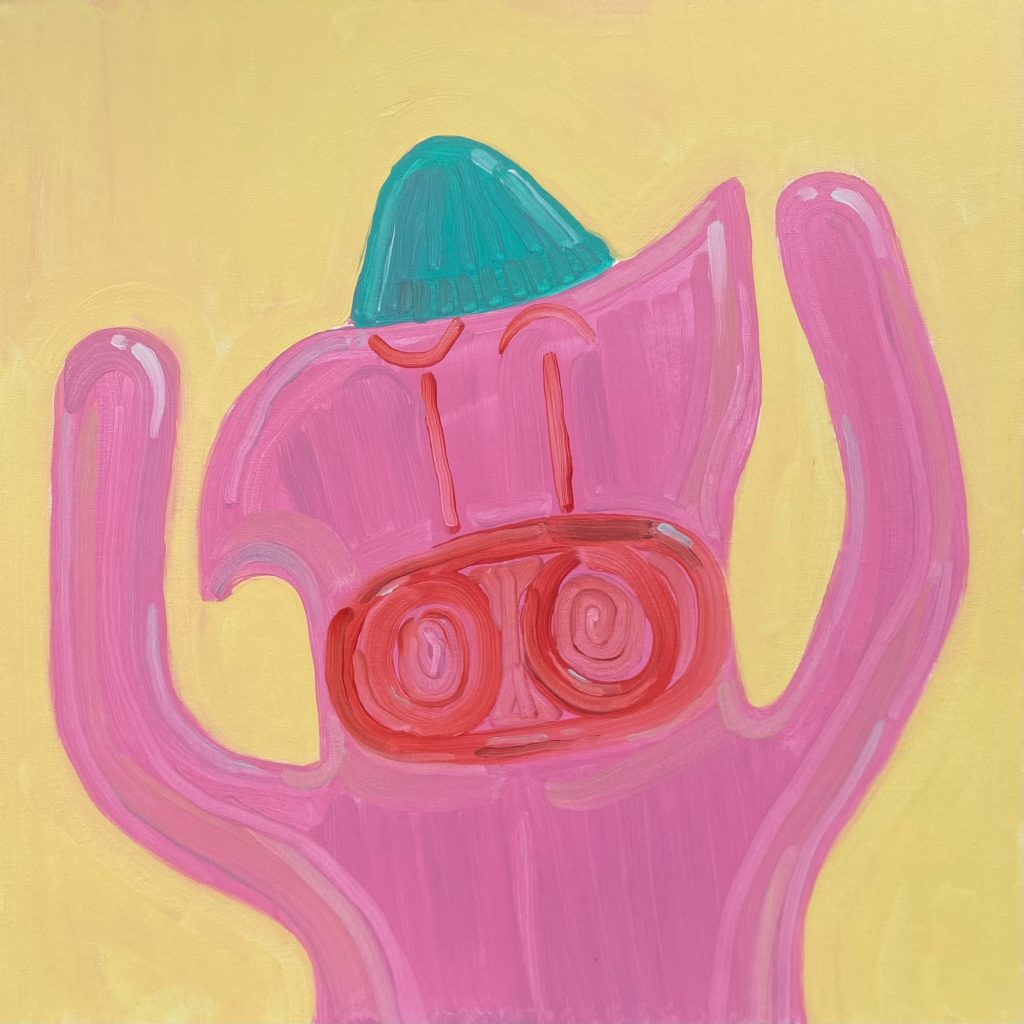
The design of Pink and Black is first and foremost a semiotic strategy. The genderless setting lets the signified precede the signifier — the essence of emotion breaks free from the framework of identity. When audiences cannot understand these two characters through gender, they can only respond through bodily experience.
In a classroom in 1999, Black peeled an apple and handed it to Pink. In 2002, a note read: “I like you. What do I do?” Black lay on the desk, speechless for a long time. The breathing rhythm of the four-panel comic takes shape at this moment: anticipation, waiting, emptiness, silence. The structure of the first cycle has already been written. Pink is vulnerability. Black is impulse. The juxtaposition of these two colors creates not contrast, but emotional texture — coexisting in the same body, pulling and supporting each other.
CHAPTER TWO: FALLING APART
Contemporaneity & Body Politics
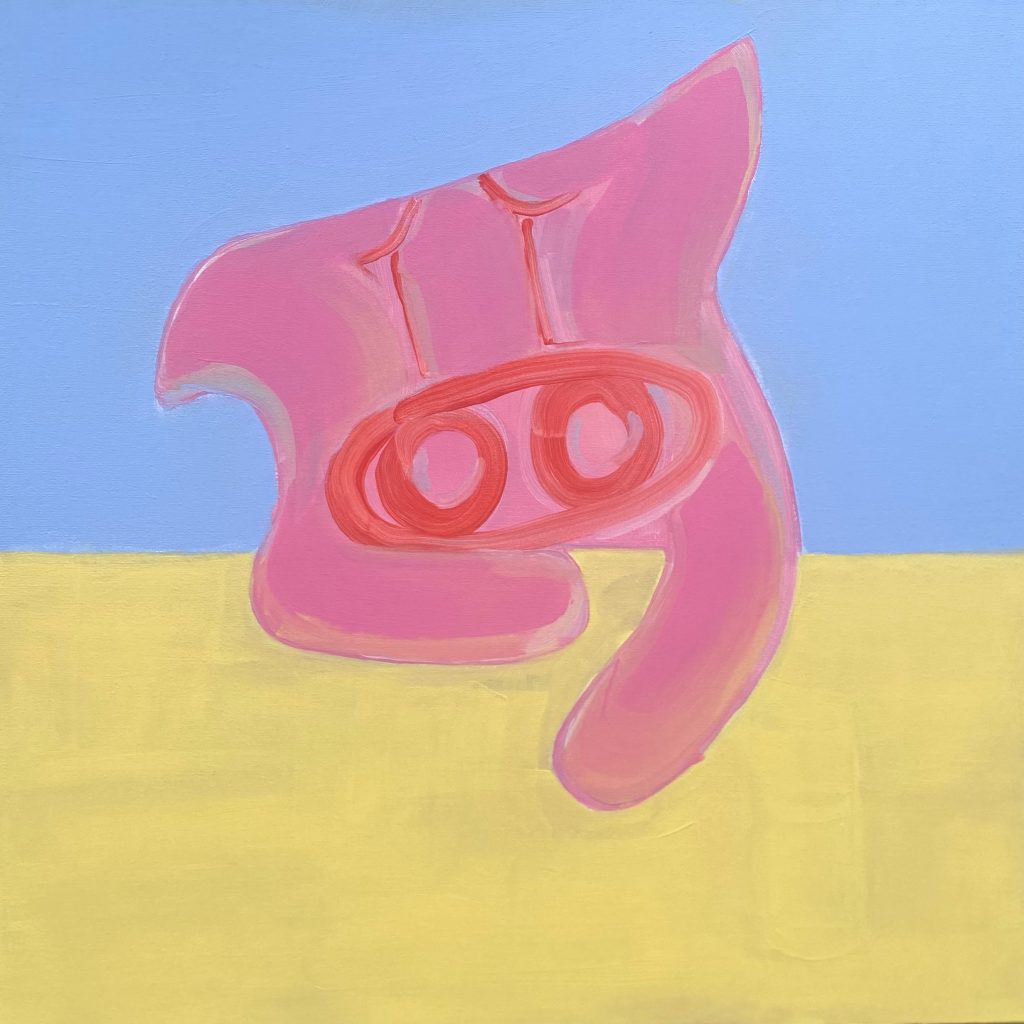
Part One begins from the ending. 36-year-old Pink checks into a psychiatric hospital. The number is gone. “Each time I wanted to call, I couldn’t remember the number.” — This is not metaphor. This is bodily rupture: memory severed, connection severed, identity severed — all at once. The dual-timeline narrative reaches its peak in Part Two: 35-year-old Pink driving fast, working at a fast-food restaurant, sitting发呆 in a coffee shop; at the same time, 1999 Pink waiting for someone to open the classroom door, waiting at the Rainbow Bar at Workers’ Stadium for a person who would never come. Two time periods existing simultaneously, pulling simultaneously, consuming simultaneously. The doctor delivered the diagnosis: emotional age frozen at 18. This is not rhetoric. This is a precise clinical description of the contemporary spiritual predicament — the body moves forward through time, while emotion stays stuck at some unreachable point, circling endlessly, consuming itself.
CHAPTER THREE: FALLING IN DEEP
Meta-narrative & Entrepreneurship History
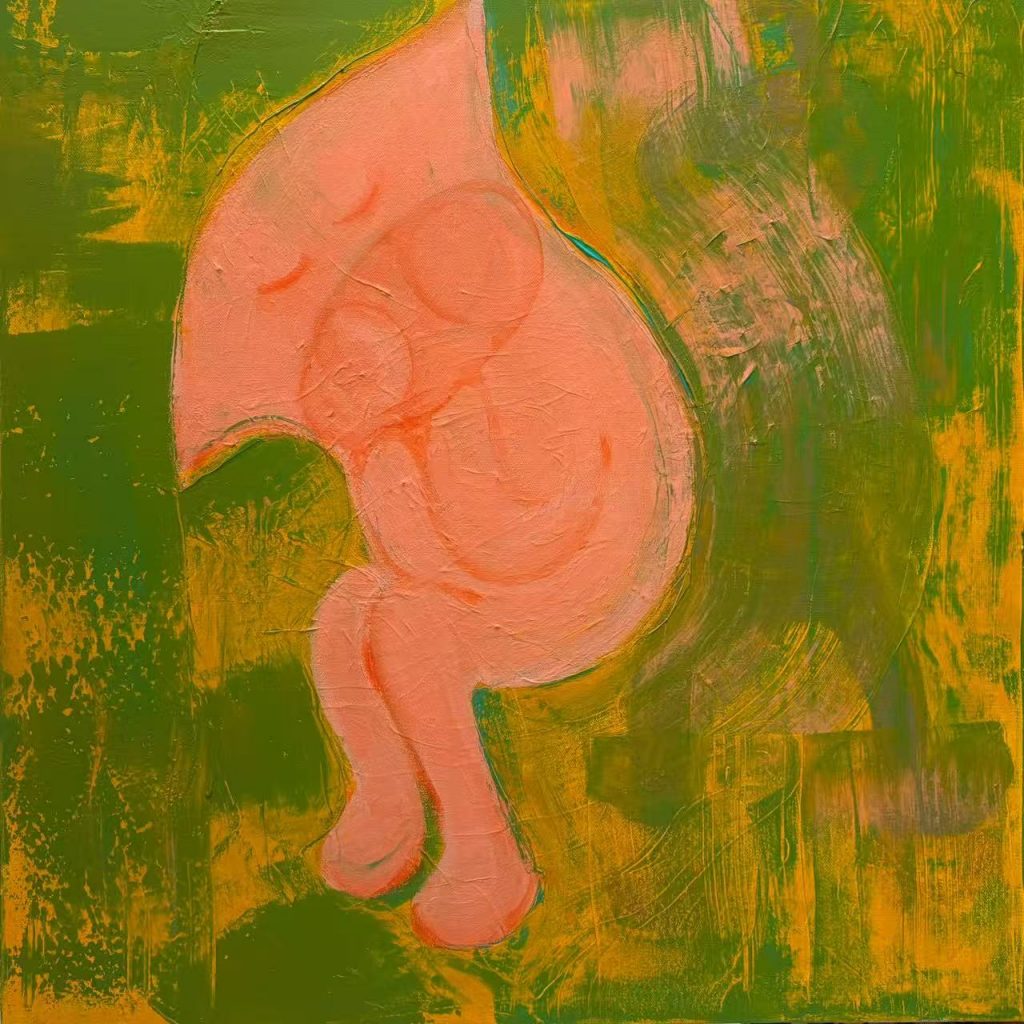
Part Three spans 2004 to 2018. Pink graduates from college, meets the third Black, founded Dongke (animation community forum), user base breaks 300,000, no revenue model. SARS, Wenchuan earthquake, smog, Beijing’s housing prices — this is era as bodily fact. Not background. The reality that presses down, the shared spiritual air of a generation. The third Black signs a contract, breaks the contract, borrows money to do clothing, disappears, and finally goes to the UK for school and marriage. Pink helps Black pay off debts, pay tuition, delete dating apps. Then checks into the psychiatric hospital again. “I can still write it.” — Pink says. Writing as in writing. Able as in standing firm. This pun is the eye of the entire trilogy: the creator spends twenty-two years transforming their life experience into visual narrative, while simultaneously completing a critical examination of that very experience. Meta-narrative is established at this moment: the creator knows what they are doing, and is doing it anyway.
CHAPTER FOUR: REBUILDING
The Unfinished Circuit
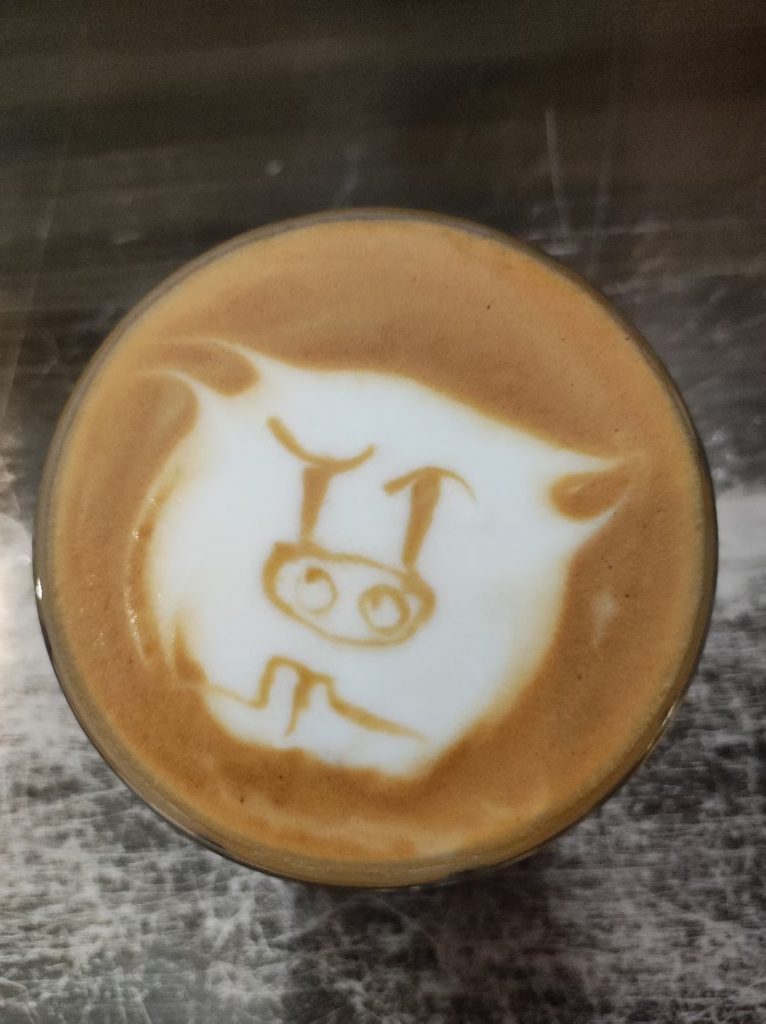
The number is forgotten. But the impulse remains. Post-discharge Pink sits in a coffee shop, spacing out, wanting a Long Island Iced Tea. Pink attends the Venice Metaverse Art Exhibition, wanting to take photos at the Venice Biennale. This is rebuilding. Rebuilding is not “moving on.” Rebuilding is the impulse still there — wanting to be found, wanting to be connected, wanting to know the answer. The overall narrative structure of the trilogy is flashback and cycle. Looking back from the ending, how did a person step by step walk toward that endpoint. Then you realize: this is not a line, it’s a circle. Walked a round, grown a little, returned to the starting point. The one standing at the starting point is no longer the original person. The unfinished circuit is meaning itself.
WHAT READERS SAY
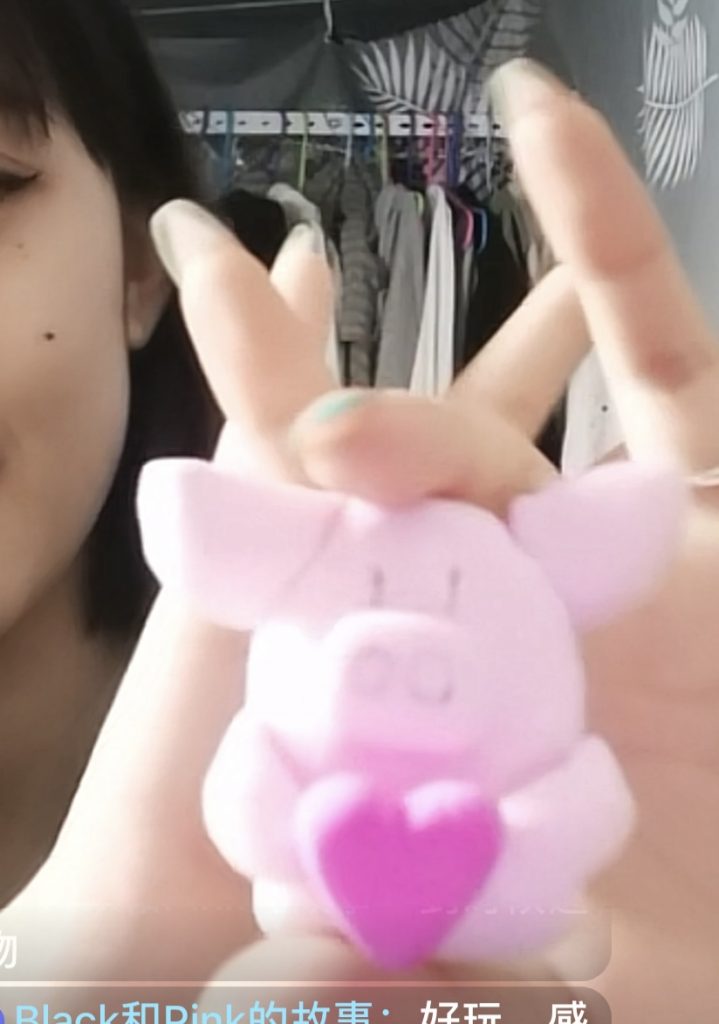
“Reading your comics is like looking into a mirror that talks back.” — @LonelyObserver
“Everyone has two characters inside them. Maybe everyone has been Pink or Black at some point.” — @SplitPersonalitySyndrome
“Thank you for letting me know I’m not the only one counting scars in the dead of night waiting for dawn.” — @4AMStars
“This isn’t a comic. This is my ripped-open diary.” — @InsomniacColaCan
“Concrete poured over my heart. Your comics let me know — I wasn’t the only one.” — Anonymous comment
“Please, I’m begging you, give us a side story! Let Pink meet a rabbit that truly cherishes him.” — @ProtectiveMomAlliance
WHAT THE CREATOR SAYS
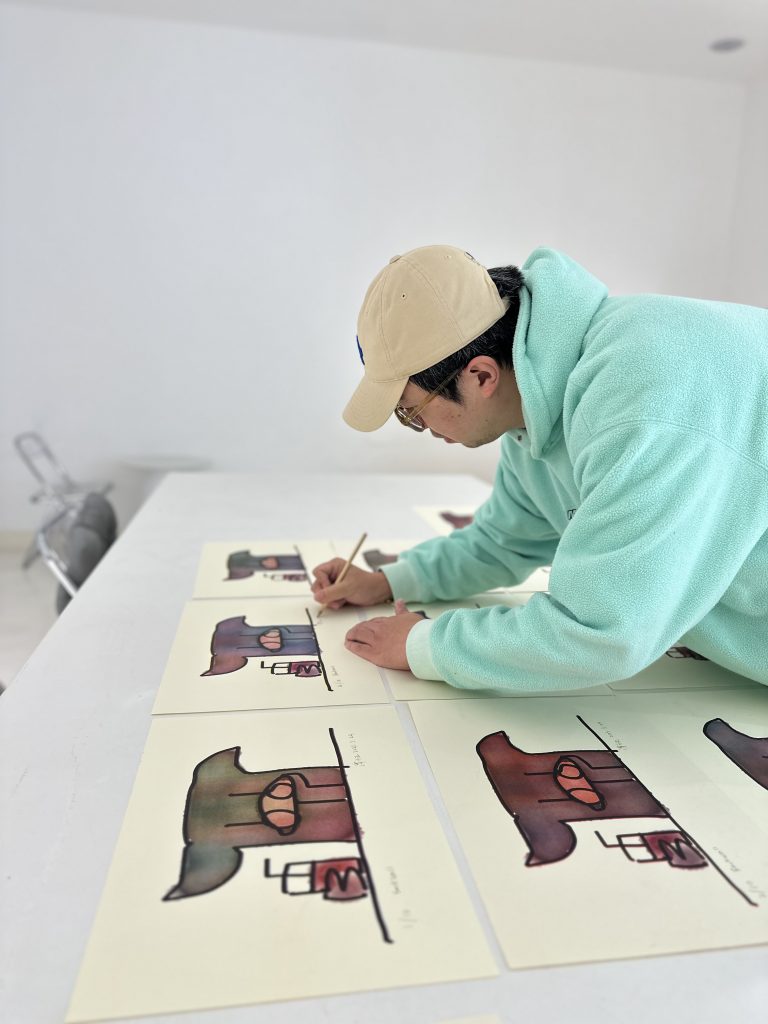
I made animation for twenty-two years. Black Rabbit Pink Pig is the longest work I’ve ever done. Trilogy, one hundred episodes each, four panels per episode — each one excavated, piece by piece, from my insomnia, impulses, breakdowns, and rebuilds over those years. They are not my works. They are my evidence. Proof that I lived. Proof that I’m still alive.
EPILOGUE
The number is forgotten. But the impulse remains. This is not fiction. This is a twenty-year bodily narrative. The body’s unseen experiences, finally captured by image. Now it’s your turn.