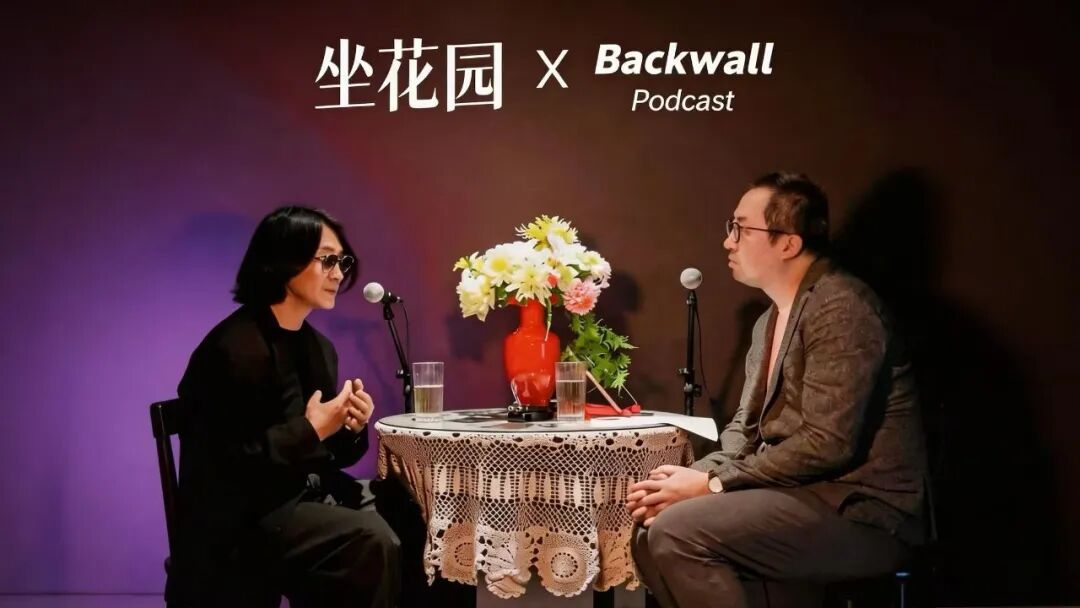
How a Family Story Became a Work of Art
A conversation between artist and designer Yin Jiulong and Tan Xiaozheng
What happens when an artist spends decades trying to leave a place — and eventually finds himself returning?
For artist and designer Yin Jiulong, returning home was not about going backward.
It was about seeing his past from a different perspective.
Recently, Tan Xiaozheng Field Notes visited Yin Jiulong’s exhibition 《坐花园 One Family》 at Jinyue Children’s Art Museum in Chengdu.
This was not a traditional artist interview about style, technique, or career success.
Instead, we talked about something much more personal:
Family.
Memory.
Home.
And the stories that quietly shape who we become.
Art Begins With Life
In contemporary art, artists often begin with ideas, theories, and concepts.
But Yin Jiulong started with something much closer:
His own life.
The project behind Zuo Huayuan: One Family comes from his childhood memories, family history, and hometown experience.
When asked why he chose such a personal subject, Yin explained that his family was not simply something he observed from the outside.
He was part of the story.
These were his own memories.
His own emotions.
His own history.
That difference is important.
French philosopher Paul Ricoeur suggested that personal identity is created through the stories we tell about ourselves.
We understand who we are by revisiting where we came from.
For Yin, art became a way to return to those memories.
Not to rewrite them.
Not to idealize them.
But to understand them.
Leaving Home at 18
Yin Jiulong remembers leaving home when he was 18 years old.
His mother gave him 300 yuan.
At that time, it was a significant amount of money.
With that small amount, he bought his first new pair of shoes and his first new clothes.
He wanted to leave beautifully.
That small moment reveals something important.
His story is not only about personal ambition.
It reflects the experience of many young people in China during the 1980s and 1990s:
Leaving rural hometowns.
Entering cities.
Searching for a different future.
When Yin was young, he discovered information about an entrance exam through a newspaper.
But another important influence was television.
Hong Kong films, TV dramas, and popular culture opened a window to a larger world.
For many people of his generation, television was the first moment they realized:
Maybe the world is bigger than the place where we were born.
Images created imagination.
And imagination created the desire to leave.
As philosopher Walter Benjamin discussed, modern media does not only change what we see.
It changes how we imagine our lives.
Why Do We Return to What We Once Left Behind?
Many people spend their youth trying to escape their past.
We want independence.
We want to build a different identity.
We want to become someone new.
But as time passes, many people begin to look back.
Not because they want to return to the past.
But because they want to understand it.
Yin’s exhibition focuses on his family — a large family with siblings, relatives, and different generations.
It is not simply a family portrait.
It is a record of ordinary lives.
Behind every family are countless stories:
Love.
Conflict.
Sacrifice.
Distance.
Loss.
Memory.
Through his artwork, Yin transforms these private experiences into something others can connect with.
Zuo Huayuan: One Family
Turning Folk Memory Into Contemporary Art
The title of the exhibition, 《坐花园 One Family》, comes from a traditional cultural practice from Yin Jiulong’s hometown in Sichuan.
“Zuo Huayuan” is not simply a physical garden.
It represents a moment of gathering, remembering, and storytelling.
In this traditional ritual, people share stories about:
Childhood.
Growing up.
Leaving home.
Marriage.
The transition into a new stage of life.
Yin describes this tradition as something similar to:
“a rural form of rap.”
It is a way for ordinary people to record their own lives through words, songs, and memories.
For generations, these stories were rarely written into official history.
But they are still history.
The history of ordinary people.
Through contemporary art, Yin gives these memories a new form.
One Family, Universal Stories
The subtitle “One Family” is meaningful because the exhibition is not only about Yin’s own family.
It speaks about something universal.
Every family carries:
Unspoken memories.
Different personalities.
Old conflicts.
Deep affection.
Moments of separation.
Moments of reunion.
A family is not only a private space.
It is also a small reflection of society.
By looking closely at his own family, Yin explores larger questions:
How do we belong?
How do families shape our identities?
How do personal memories become collective memories?
From Designer to Artist: A Changing Creative Identity
Yin Jiulong is also a designer.
For more than thirty years, he has worked across graphic design, branding, cultural projects, and creative industries.
Many people ask:
“When did you become an artist?”
But Yin sees the question differently.
He does not believe the boundary between design and art is fixed.
Traditionally, people think:
Design serves a purpose.
Art expresses personal ideas.
But reality is more complicated.
Design can contain philosophy.
Art also exists within social systems.
Artists work with galleries, collectors, and audiences.
Designers also create personal expressions.
This connects with French sociologist Pierre Bourdieu’s idea of the artistic field:
An artist’s identity is not created alone.
It develops through culture, society, institutions, and personal practice.
Today, many creators move between design, art, business, and cultural projects.
This is not confusion.
It is the reality of contemporary creativity.
The Hidden Side of Creativity
During our conversation, Yin described himself as:
“an optimistic pessimist.”
From the outside, he appears energetic.
Always creating.
Always exploring.
Always moving forward.
But behind that energy are also:
Doubt.
Pressure.
Loneliness.
For this exhibition, the biggest challenge was not producing the work.
It was opening something deeply personal to the public.
Once private memories become art, they enter a shared space.
They can be understood.
They can be misunderstood.
They can be interpreted in different ways.
But this vulnerability is exactly what gives art its power.
The Courage to Use Your Own Life as Material
Many contemporary artworks begin with theories, concepts, and academic references.
But what makes Zuo Huayuan: One Family powerful is its honesty.
It does not avoid ordinary experiences:
Family.
Home.
Growing up.
Aging.
Loss.
Time.
These are not small subjects.
They are the foundation of human experience.
Art critic John Berger once wrote about the relationship between seeing and understanding.
To look is not simply to observe.
It is a way of connecting with the world.
Yin Jiulong’s work is an act of looking again.
Looking at his family.
Looking at his hometown.
Looking at the person he once was.
Leaving Was Not the End. Returning Was the Beginning.
Leaving and Returning is not only Yin Jiulong’s story.
It is a question many creators eventually face:
Where do we come from?
Why did we leave?
How do we understand our past?
At 18, Yin left home with 300 yuan.
Decades later, he returned through art.
But this time, he was not the young person searching for an escape.
He was an artist looking back with understanding.
Art is not an escape from life.
Art is a way of returning to life.
Maybe freedom is not about cutting ourselves away from the past.
Maybe freedom is learning how to carry the past forward.
Tan Xiaozheng Field Notes
Recording real conversations with artists, designers, and creators.
Guest
Yin Jiulong
Artist / Designer
Host
Tan Xiaozheng
Exhibition
Zuo Huayuan: One Family
Episode
Leaving and Returning