Interview and words by Tan Xiaozheng · BACKWALL
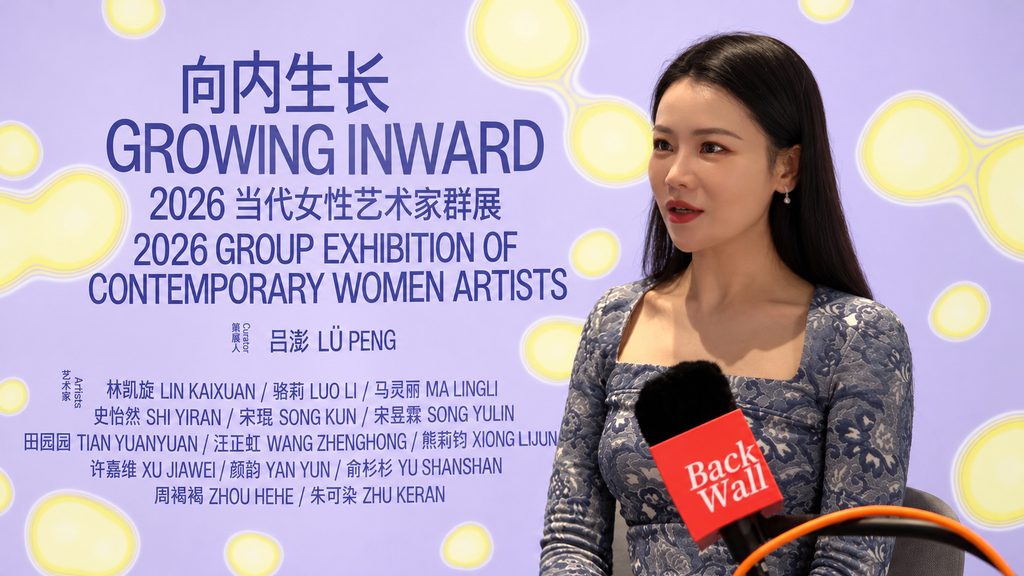
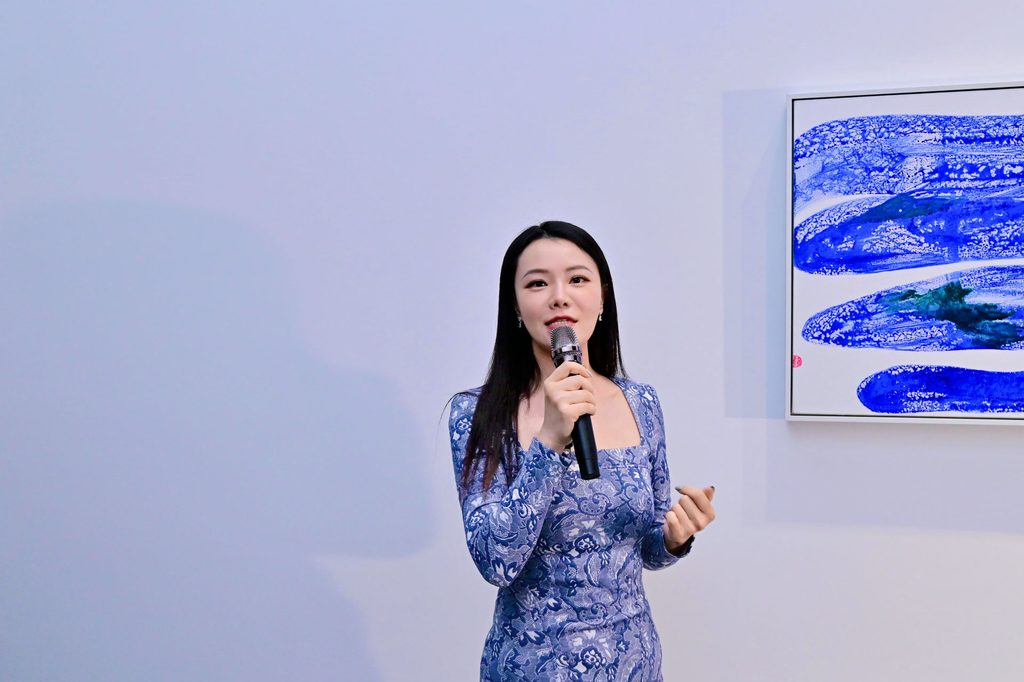
From October 10 through November 22, 2026, Growing Inward, a group exhibition of contemporary women artists curated by Lü Peng, is on view in Hall B2, Zone B, at the Chengdu Art Museum. On October 10, BACKWALL spoke with participating artist Yan Yun at the exhibition.
Yan graduated from the oil painting department at the Sichuan Fine Arts Institute and now teaches at a university. She has been making art for twenty years, beginning during her college days.
Looking at her abstract paintings, I wanted to bring the larger questions about humanity, nature, and the universe back to everyday life: When life leaves you feeling unsettled or off balance, what can painting do?
Her answer was simple: “A way to sort through my thoughts and feelings.”
That became my starting point for understanding the works she brought to this exhibition.
Three Paintings, Three Inner States
Yan hopes viewers will look at the three paintings in a particular order:
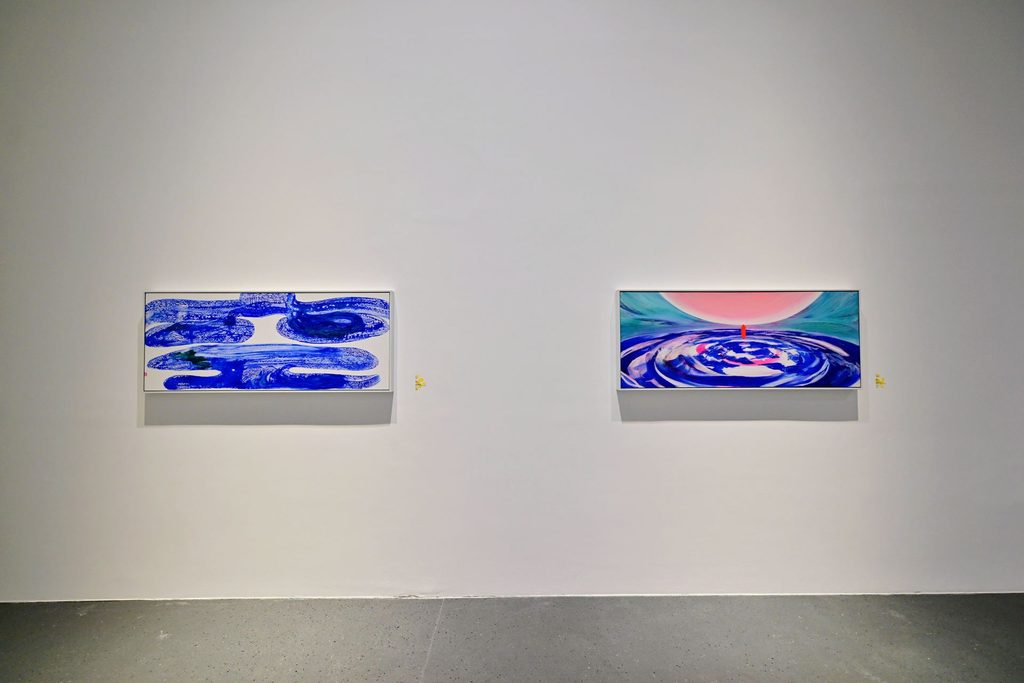
Kong (空) → Dan (丹) → Huan (圜)
The sequence moves from thoughts flowing through open space, to holding on to an inner center amid upheaval, and finally to looking within and finding a sense of wholeness.
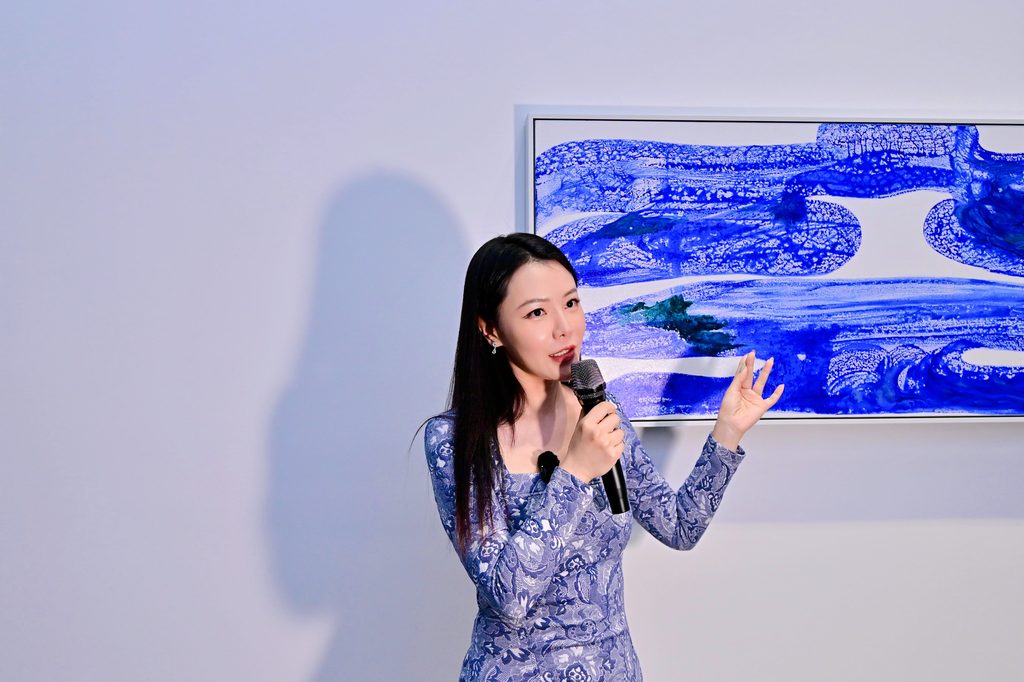
The first painting is Kong.
Its blue evokes reflection and immersion, while the forms suggest mountains and rivers in motion. Yan connects this recurring flow of life with the movement of thought: ideas return and circle around, while open spaces leave room for different directions and possibilities.
Under the pressures of daily life, she needs a state of mind in which she can settle and reflect. Here, “emptiness” does not mean nothingness. It is a space for moving among possibilities. The movement in the painting carries something of her own inner state.
The second painting is Dan.
A disc-like form in the lower part draws inward like a spiral or whirlpool. Above it sits a red core, which she describes as an inner “anchor,” marked with the pattern of a human fingerprint. For her, mountains, rivers, and celestial forms reflect inner emotions.
Even when modern life feels turbulent and uncertain, she sees a need for a steady, warm center within.
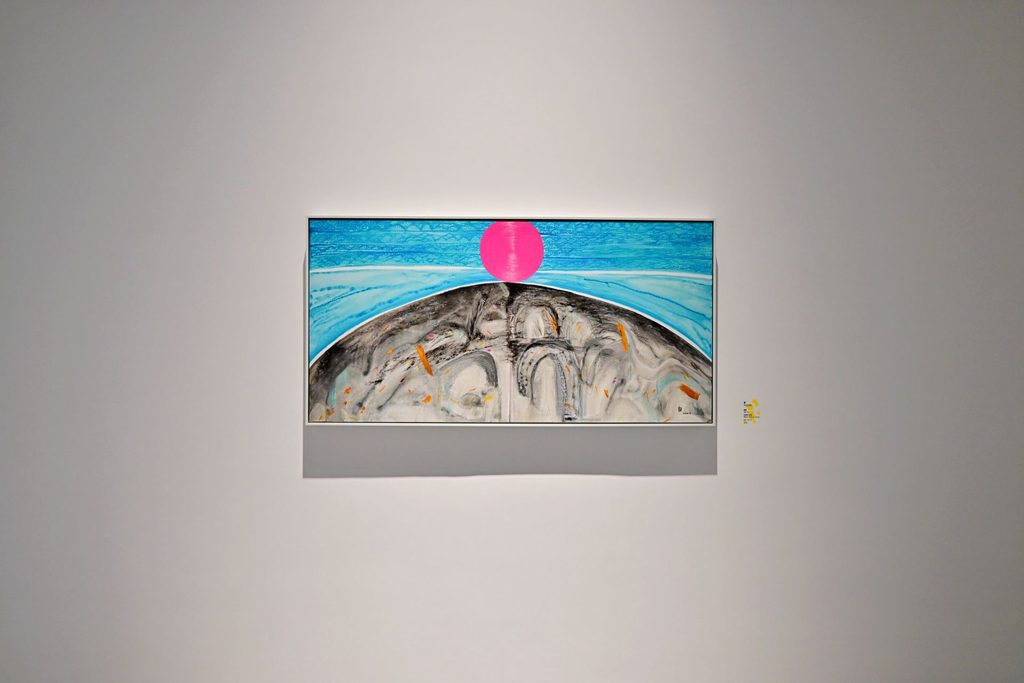
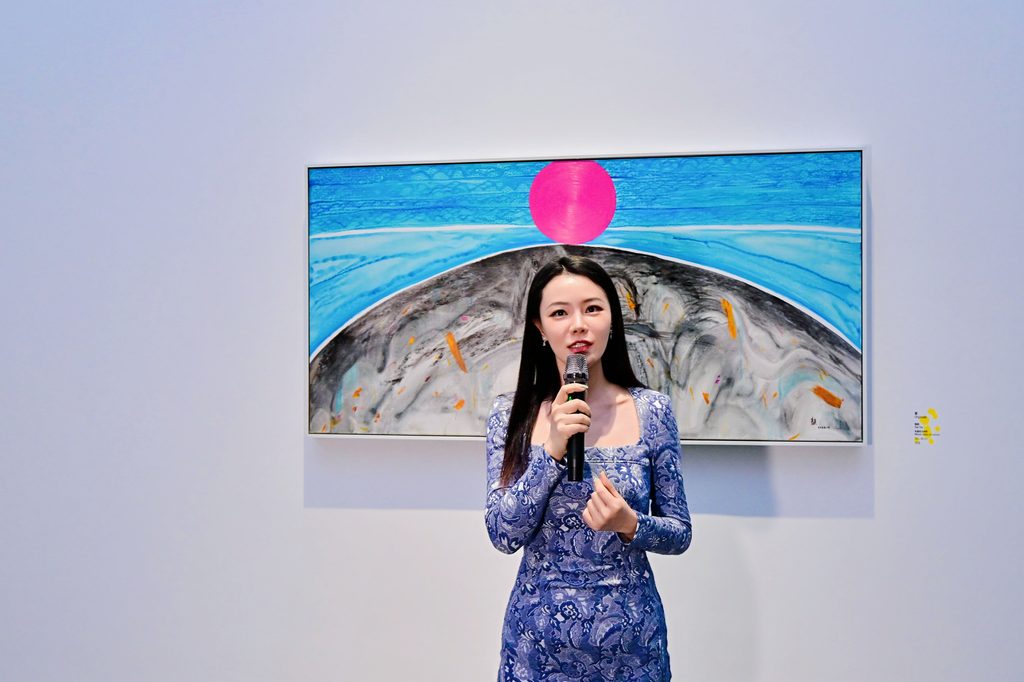
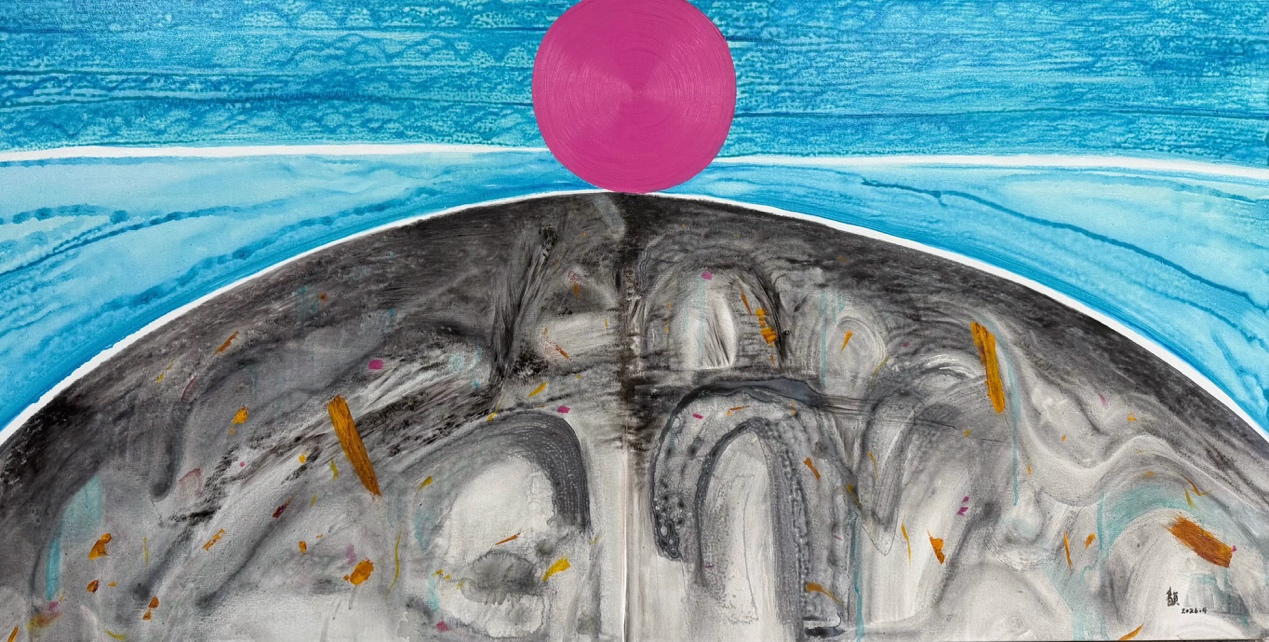
The third painting, Huan, reveals more complex layers of inner life.
Her recent thinking draws on the Chinese understanding of yin and yang. The dark gray forms at the bottom resemble a cavern and hold what she calls the “folds and shadows” within us. Gold elements appear there too, representing vitality that persists through crisis. At the center, a full red moon hangs where mountains meet the sea.
Huan carries meanings of circularity and wholeness. In her reading, looking inward and accepting our complexities allows the world beyond us—heaven, earth, sun, and moon—to feel whole as well.
Abstraction Leaves Room for Feeling
Since the exhibition focuses on women artists, I asked Yan how her experiences as a woman enter her painting.
She began with the choices she faces in life.
At important moments, she finds herself pulled in different directions, experiencing contradiction and conflict. She works through those experiences by giving them visual form.
When painting, she often enters a state of flow. Color, shape, and brushwork become ways of processing what she feels.
Why choose abstraction rather than depict those experiences more directly?
She feels abstraction offers a subtler approach and allows viewers to bring their own circumstances into the work.
The paintings leave traces of feeling without spelling out every experience behind them. Viewers can begin with what they see and find connections to their own lives.
As she sorts through her thoughts and feelings, she also leaves space for others to recognize theirs.
From Cartoon Figures to the Flow of Ink
Yan’s work today looks quite different from her early paintings.
During the interview, she recalled working at the Tank Loft at the Sichuan Fine Arts Institute, where her work caught the attention of curator Victoria Lu and led to participation in related exhibitions. At that stage, she leaned toward cartoon imagery, with elements drawn from women’s experiences.
Her painting later moved through several phases, including larger canvases and more abstract explorations.
She also enjoys spending time in different places and observing how people live. Those encounters have led her to reconsider the cultural roots of her practice.
Her current paintings have the flowing, spreading effects associated with ink wash. Although she trained in oil painting, her thinking has become increasingly connected to traditional Chinese culture.
The Daoist idea of following nature, the relationship between heaven, earth, and humanity, and traditional views of the cosmos remain ongoing areas of study.
Through these changes, she continues to adjust her visual language to reflect what she feels now. Mountains, water, and celestial imagery give form to the inner conflicts of contemporary life.
Bringing Cultural Roots into a Contemporary Visual Language
Yan also teaches digital media and has participated in international art exchanges and curatorial projects.
Across painting, teaching, and these exchanges, she keeps returning to a question: How can ideas rooted in Chinese culture become a visual language that speaks to people today?
She approaches it on two levels.
Conceptually, she wants to identify and understand those cultural roots with care. Visually, she wants to respond to how contemporary audiences see.
She believes that immediate access to cultures from around the world has brought people’s aesthetic experiences into closer contact. Artists therefore need to consider both where their ideas come from and how their visual symbols communicate with people from different backgrounds.
In her teaching, she works with software, AI, and human-computer interaction. She also emphasizes the importance of art history, encouraging students to bring their learning together and develop a language of their own.
She is considering future collaborative work involving computers and other technologies, though the direction is still taking shape.
For her, new tools and media open up possibilities. Deciding what to express and developing her own language remain ongoing work.
Finding an Inner Center Amid the Turbulence
Before the interview, I had read vulnerability, unease, and self-protection into parts of the exhibition. After hearing Yan explain her three paintings, those impressions became more specific.
She spoke about pressure and choice. She painted the shadows and folds of inner life while making room for vitality and the possibility of harmony.
These states coexist within one person.
Her understanding of “growing inward” connects with the way she describes painting as a process of sorting through thoughts and feelings. She brings life’s contradictions onto the canvas, considers them through color and form, and finds her bearings again.
That red “anchor” stayed with me.
The forms around it are still in motion. Within that movement, she wants to hold on to a clear sense of who she is and what she wants.
Exhibition: Growing Inward — A Group Exhibition of Contemporary Women Artists
Curator: Lü Peng
Dates: October 10–November 22, 2026
Venue: Hall B2, Zone B, Chengdu Art Museum
Based on Tan Xiaozheng’s on-site interview with Yan Yun on October 10, 2026. Spoken remarks have been lightly edited for clarity and concision.